QuickSwap just pulled off something that most DeFi protocols only talk about on conference panels. The automated market maker, which has processed over $200 billion in lifetime trading volume across Polygon and Base, went live with a KalqiX integration on July 7 that routes trades through a central limit order book when doing so gets users a better price. The kicker: the frontend looks exactly the same.
The integration works through Avail Atomic, a settlement layer that ensures every routed trade either executes fully on-chain or reverts completely. No partial fills, no trust assumptions, no custodial handoffs. For users, it means tighter spreads and lower slippage on trades that were previously at the mercy of standard AMM curves.
How the plumbing actually works
KalqiX operates as a zero-knowledge central limit order book DEX, delivering what it claims is sub-10 millisecond latency while maintaining self-custody for users. In English: it runs at centralized exchange speeds but your funds never leave your wallet until a trade actually settles on-chain.
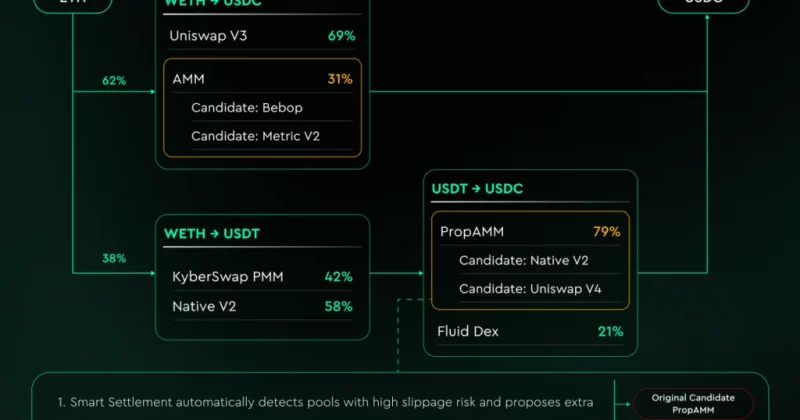
The integration is intelligent about routing. When a user submits a trade on QuickSwap, the system checks whether KalqiX’s order book liquidity offers better execution than the standard AMM pool. If it does, the trade routes through Avail Atomic for atomic settlement. If the AMM pool is competitive, nothing changes.