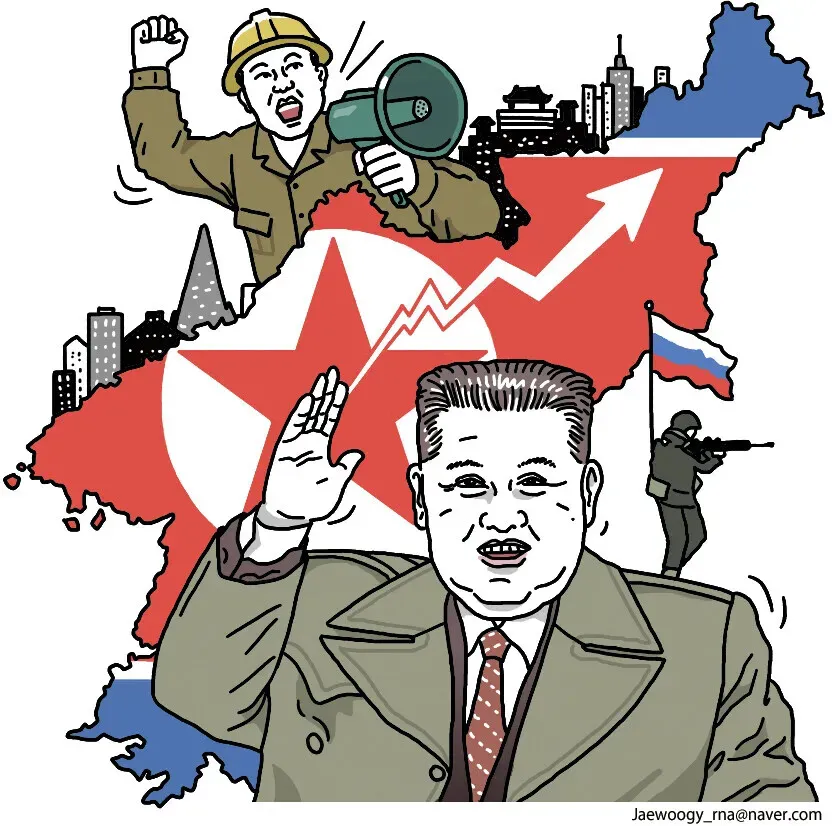
China’s early economic reforms, led by Deng Xiaoping in the late 1970s, are frequently cited as the main basis for comparison when it comes to North Korea’s economic improvement measures implemented by Kim Jong Il and later continued by Kim Jong Un. However, despite certain institutional similarities, head-to-head comparisons are deceptive. To understand North Korea’s current economic structure, it is first necessary to examine the original socialism of the Soviet Union upon which the North Korean system was built, as well as the ideological transformations that emerged following the collapse of the Soviet Union and the Eastern Bloc.
After World War II, North Korea emerged under Soviet patronage as a communist state modeled closely on the Stalinist system. Kim Il Sung established a regime grounded in centralized authority, state ownership, and party-led control over economic and social life. North Korea’s early political and economic structure closely mirrored what Hungarian economist János Kornai later identified as the defining characteristics of socialist economies.
In Kornai’s classical framework, socialist systems rest upon five interconnected pillars that together sustain the structure and functioning of the socialist state.