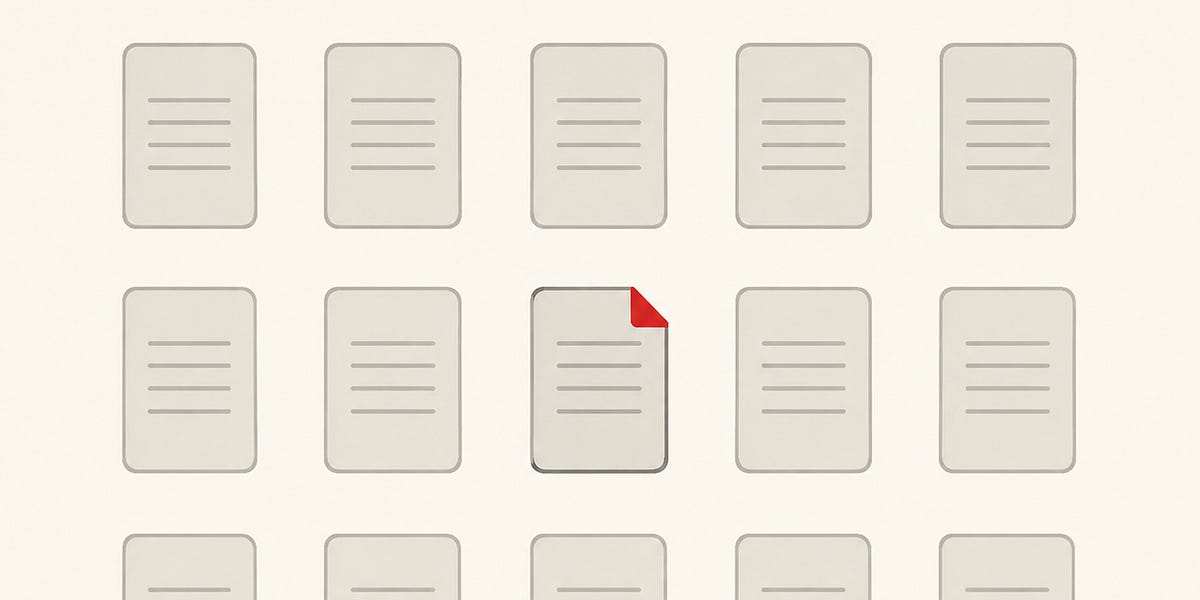
When AI produces a mediocre draft from a messy folder, the prompt is almost never the problem. The room is.The model has been handed a strategy doc, two slightly different versions of the operating plan, a transcript with two meetings in it, and a deck that no longer matches reality. It is asked to write a memo. To do that, it has to do two jobs at once: figure out what the project actually is, then produce the artifact. The first job is the hard one. The second job is the one that shows up in the draft.A sharper prompt won’t fix this. You need to prepare the room first.I recently worked on a project where the real work did not live in one place. A strategy doc, meeting transcripts, a budget spreadsheet, trip-planning notes, org-design drafts, old PDFs, follow-up emails, half-finished notes. Some clearly current. Others superseded. A few useful only because they showed how the thinking had changed.The useful first prompt was much more boring than “write the plan.” It was something like: help me build the room. Find the relevant materials. Preserve the originals. Make an inventory. I needed to know which files were authoritative, which were duplicates, which were old, which were missing. I asked it to summarize each source before synthesizing across them, and explicitly told it not to write the final deliverable yet.Only after that did the writing prompt become simple. Use the current operating plan for the numbers, the transcript for decision context, the older PDF only as background, and flag unsupported claims rather than smoothing them over. The room made those distinctions visible before the writing started.This kind of workflow was not really available a year ago. Agents could draft, summarize, and answer questions, but they were uneven at walking a folder tree, opening files in sequence, comparing dates across documents, and inspecting metadata without losing the thread. In the last few months that has changed. The current generation of agents is good at the small, boring, file-level operations the work actually requires. Which means the bottleneck has moved. It is no longer “can the model produce the artifact.” It is “is the source set in shape for the model to do anything useful with it.”Here’s what’s inside:What is an AI project room. What a bounded workspace looks like for one serious job, and which tools to use for which source types.Why AI fails with messy source files. Why serious work fails when you skip the preparation step and jump straight to generation.How to build an AI source inventory. How to build the artifact that makes everything downstream inspectable.Summaries, duplicates, and missing context. The three preparation layers that prevent bad synthesis before it starts.The writing prompt, once the room exists. What changes when you draft from a clean work surface instead of a raw file dump.Grab the four prompts. A room-builder for file-system tools, an inventory-and-audit for uploaded docs, a grounded-draft prompt that cites every claim back to a source, and a refresh prompt for when new files arrive.Let’s build the room.
Most AI failures do not start at the prompt. They start in the folder. + 4 prompts to fix the room in 45 minutes.
Watch now | The first useful agent workflow is not generation. It is getting the work surface into shape.
510 words~2 min read