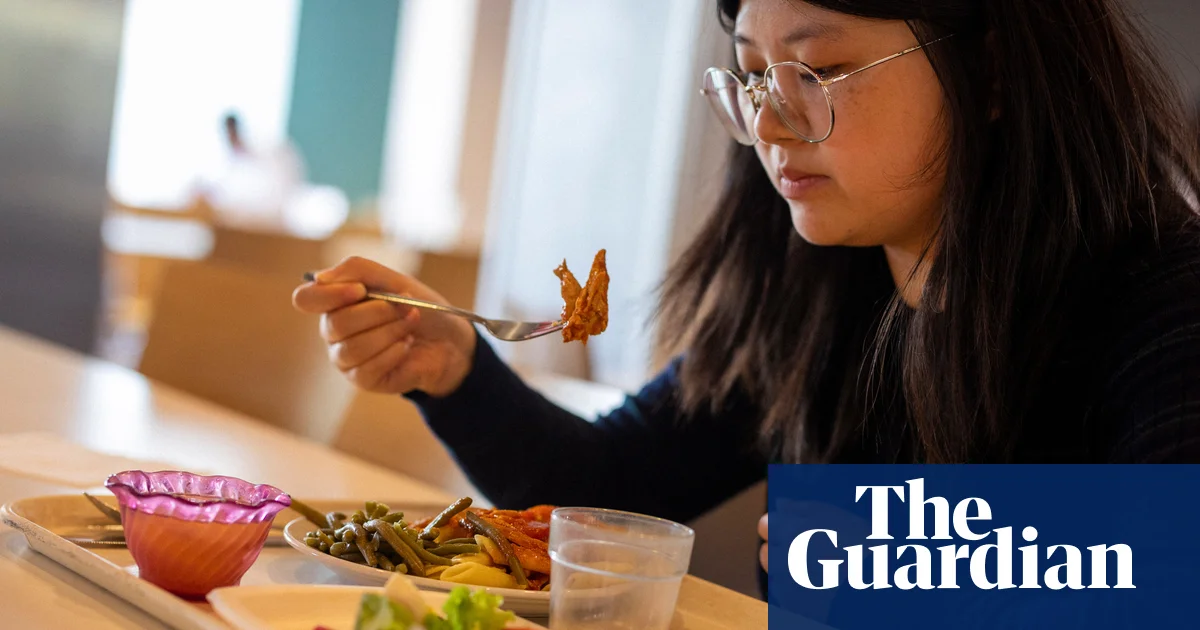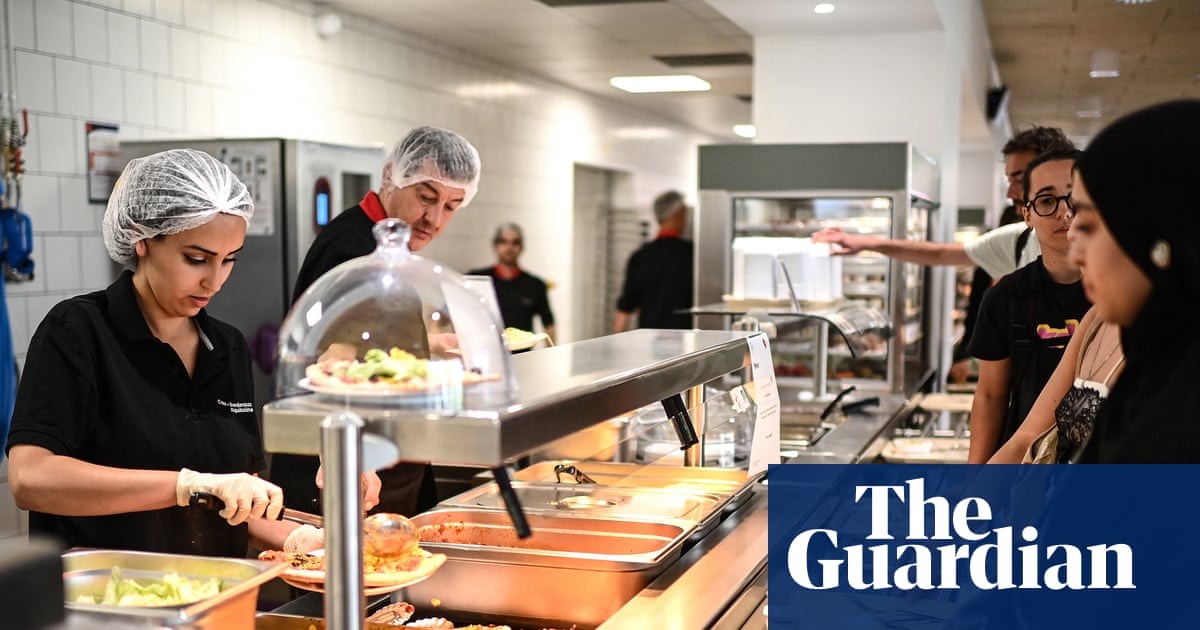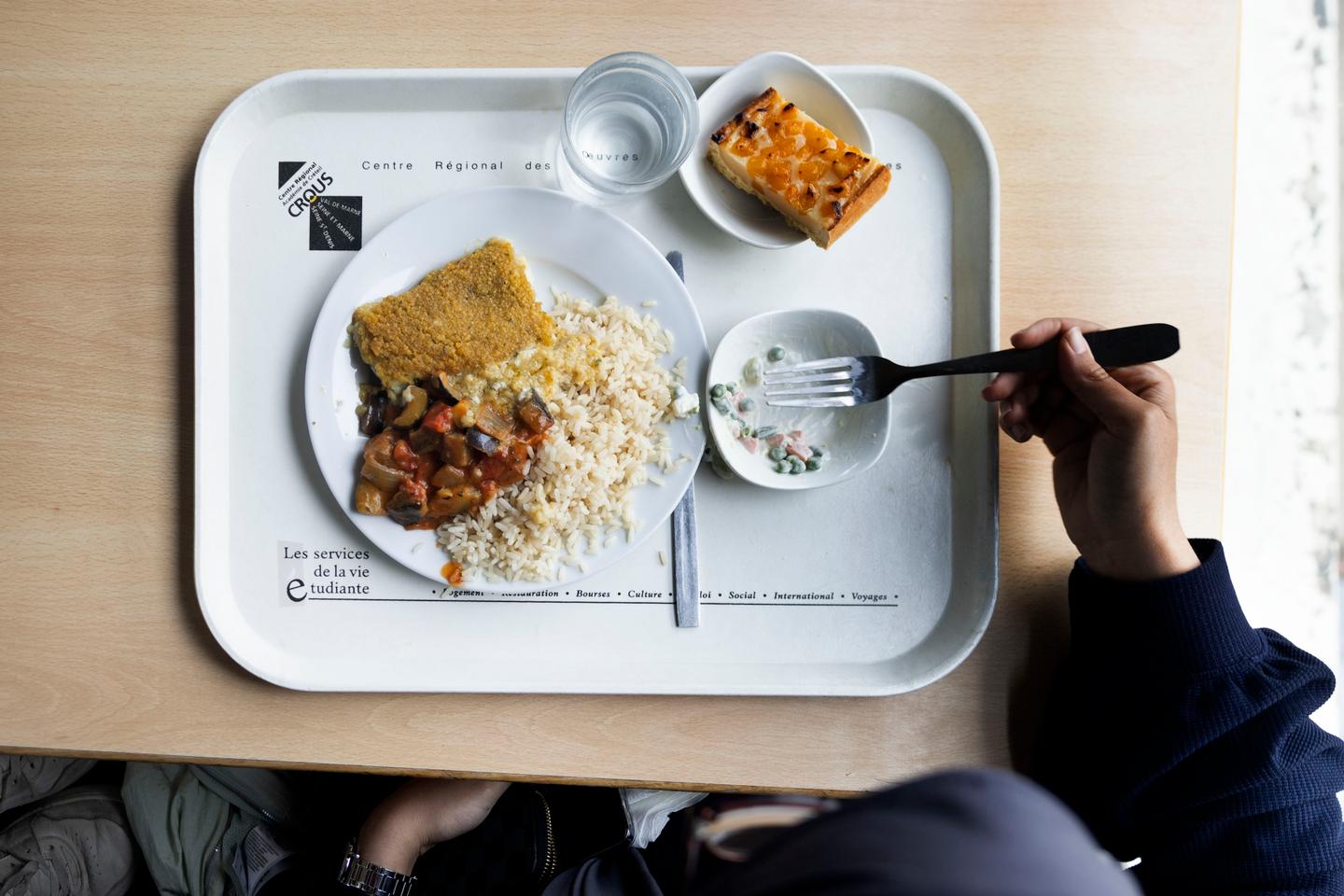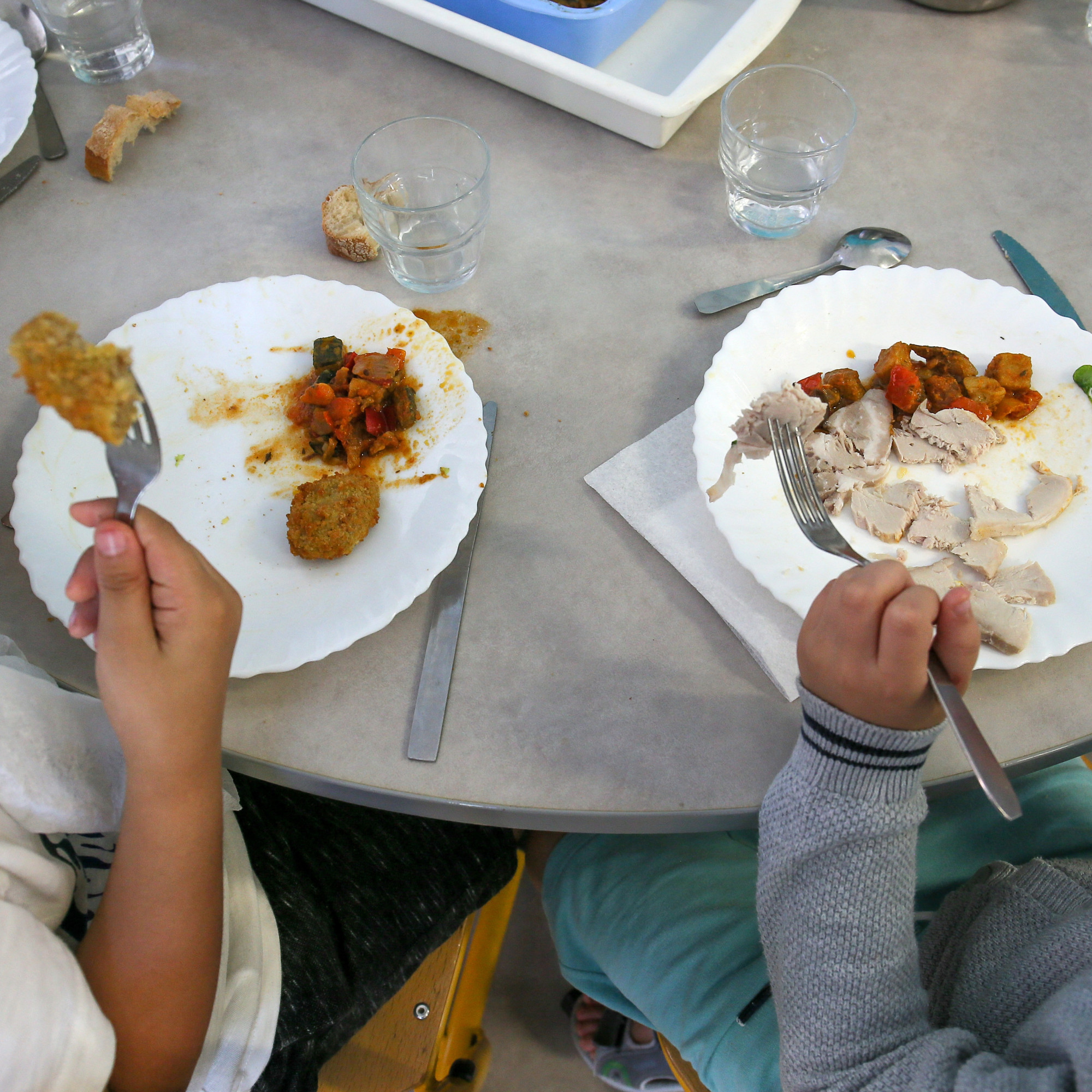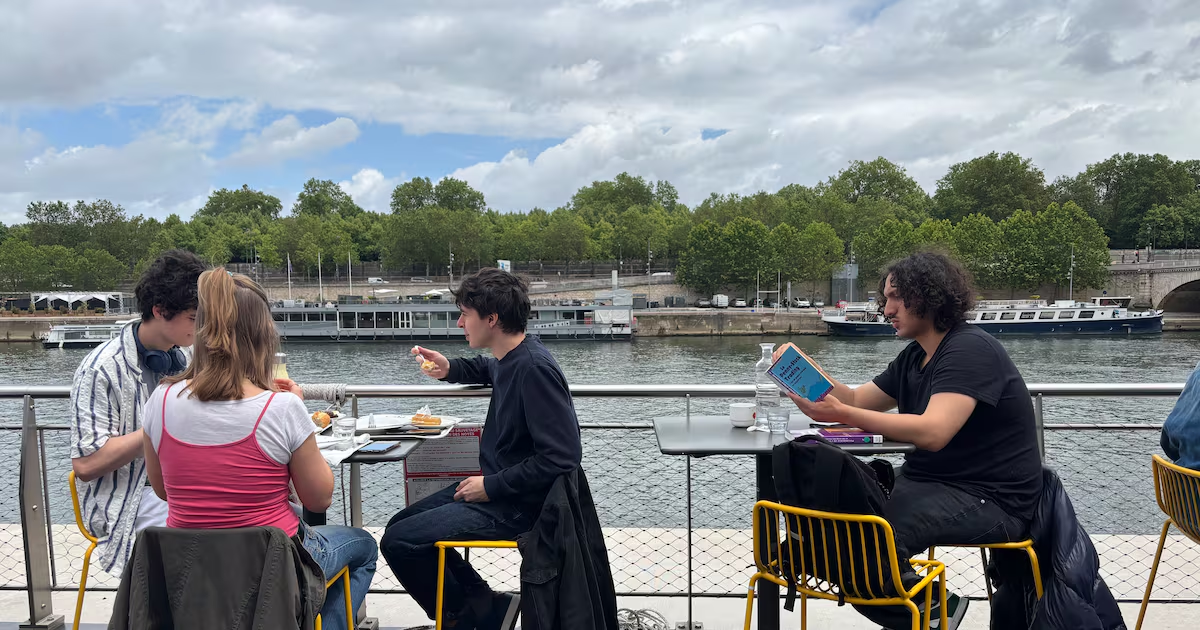
Cheap three-course lunches are aimed at easing financial hardship among young peopleNaomi O'Leary reports from Paris, where the French government has introduced €1 meals for students to help combat rising costs. Video: Naomi O'Leary Fri May 22 2026 - 11:36 • 4 MIN READFish stew? Sausage with rice and vegetables? Burrito? Or quiche, perhaps? Students line up at the counter to choose one of the main courses on offer before taking their trays to the salad bar to pick up a starter and perhaps a chocolate eclair for dessert. This is the food on offer for students at this university restaurant on a barge on the Seine in Paris, where a meal of three courses costs just €1.The new price was introduced at hundreds of university canteens across France this month after the government backed the measure in a bid to combat financial hardship among students. On a bright early afternoon this week there were no shortage of takers.“I had sausage with broccoli, rice, some salad to start with. It’s really good, I’m very happy,” Sorbonne Business School student Yasmeen (24) says as she sits at a quayside table with friends. The €1 meals became available to all students this month. Photograph: Naomi O’Leary “It’s important for students in general, because we don’t have salaries that allow us to eat well.”The price of €1 includes a main course and up to two side dishes of a starter, a dessert, a cheese plate or fruit. Coffee is 60 cent, extra side dishes can be added for 55 cent each.The €1 meals were introduced in 2020 for students on means-tested scholarships or who were in financial hardship, while the rest of the students paid a rate of €3.30.However, student unions campaigned for the €1 price to be made available to all, releasing a survey last year that showed almost half of students skipped meals to save money, with almost a quarter doing so several times a month.In January, French prime minister Sébastien Lecornu announced his government’s backing, so €1 meals became available to all students in May, on the presentation of an active student card, at an estimated public cost of €90 million a year. Sarah, a student at Université Paris-Panthéon-Assas, says students without scholarships can also struggle financially. Photograph: Naomi O'Leary “I think it’s important, because economic precarity doesn’t just affect scholarship students. It depends how much family support you have. There are students with no scholarship who don’t have family support,” says Sarah, a student at Université Paris-Panthéon-Assas, as she sits with a tray of waffle and yoghurt.The meals are served at a network of hundreds of restaurants and cafeterias run by the Crous organisation, which manages student accommodation and welfare services. It describes its food offering as “certified organic and local products, prepared in-house”.On a typical day the barge restaurant, open since 2015, serves about 800 meals to students from a cluster of nearby universities. The university restaurant is also open to non-students, who pay the full price of €9.50 for three courses. Photograph: Naomi O'Leary Students can sit on lounging chairs along the quayside, play boules and table football. DJs play on the barge upper deck. A beer is €4.50. On sunny days, the place can get packed.The restaurant manager, Jean-Félix Ramm, eats the food himself each day, sitting down at the long tables with his tray at lunchtime to gauge the reaction of the clientele.“I always look at the trays. If the trays are empty, it’s a good sign. I think they’re quite happy,” Ramm says over his meal of burrito, bread, fruit, and a heap of carrot salad.Restaurant manager Jean-Félix Ramm says footfall has risen 10-20 per cent since the price drop. Photograph: Naomi O'Leary “It’s a public service, a service for the students. The students are in a situation of economic precarity, not all of them but many of them.”He has noticed a rise in footfall of 10 per cent to 20 per cent since the price of the meal dropped. There is pressure not to let increased demand lead to a drop in quality.The restaurant is open to the public, too, and some families come to eat on the weekends, paying the non-student full price of €9.50 for the three courses.The daily offer always includes vegetarian options as well as some kind of animal protein. Naomi O'Leary enjoys a meal in the interior of the barge university canteen On this day the salad bar has beetroot salad, potato salad, Russian salad, boiled eggs and cheese. For dessert there is a choice of chocolate tarte, eclairs, waffles, fruit, yoghurt or purée.For the purpose of journalistic rigour, I have a meal myself, opting for sausage with rice, carrot, and broccoli, Russian salad and an apple. It’s standard canteen food, nothing too fancy, but it seems healthy. There is certainly plenty of it and I struggle to finish my plate. Wildlife are known to share the lunches at times with students. Photograph: Naomi O'Leary The students seem to appreciate it, and the local wildlife is getting in on the action, too, as one diner feeds his bread roll to a resourceful duck.Yet not everyone is entirely won over by the move. History students Killian (22) and Elodie (21) say the €1 meals are welcome, but the cost pressures on students are a far greater issue.“The €1 meal isn’t scratching the surface,” Elodie says. “What should be done is to make rents cheaper. This can’t be fixed through publicity stunts.”Killian says the €1 meal is a great help, but without cheaper accommodation he will still struggle with costs.“I’m in private housing, I have a nine-metre square apartment by myself, but it costs me €650; it’s something huge. I couldn’t access scholarships or student housing because they have very restrictive conditions, despite the fact that my parents don’t earn much,” he says. “There may be €1 meals, but other more pressing issues are left unresolved.”IN THIS SECTION
France rolls out €1 student meals – but what’s on the menu?
Cheap three-course lunches are aimed at easing financial hardship among young people
988 words~4 min read