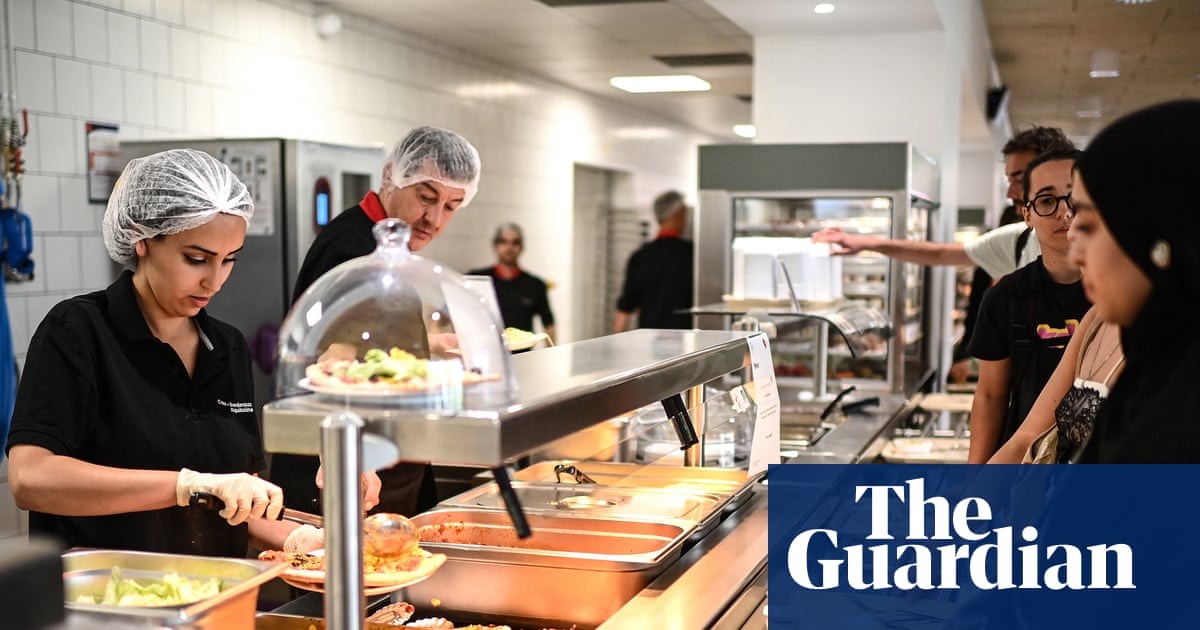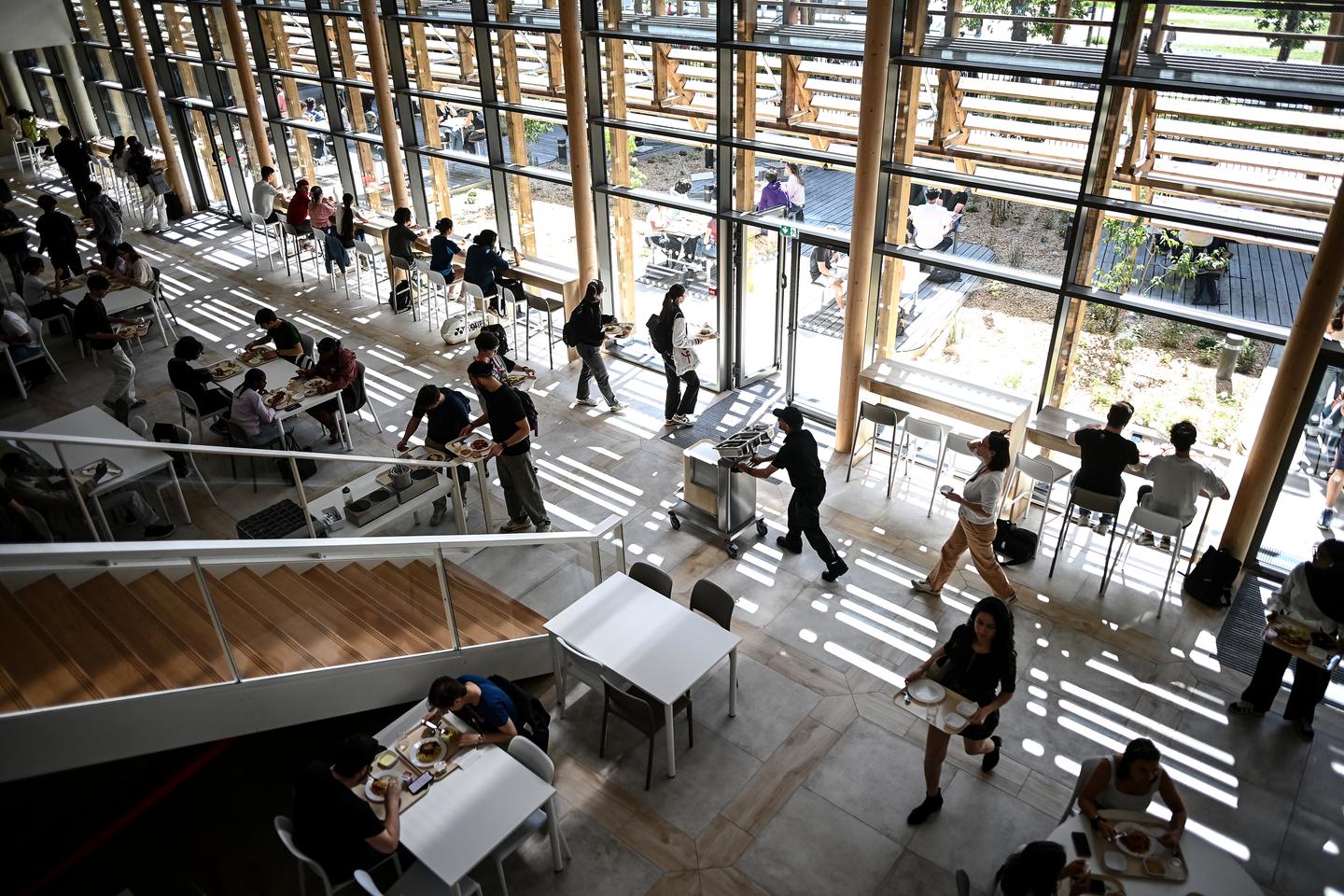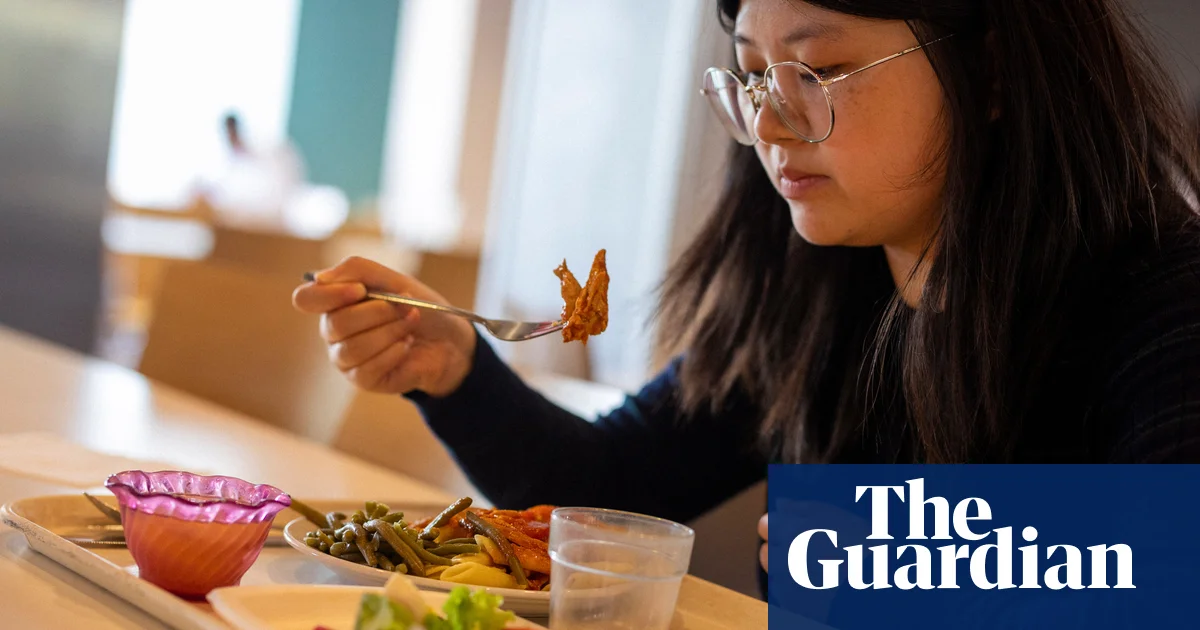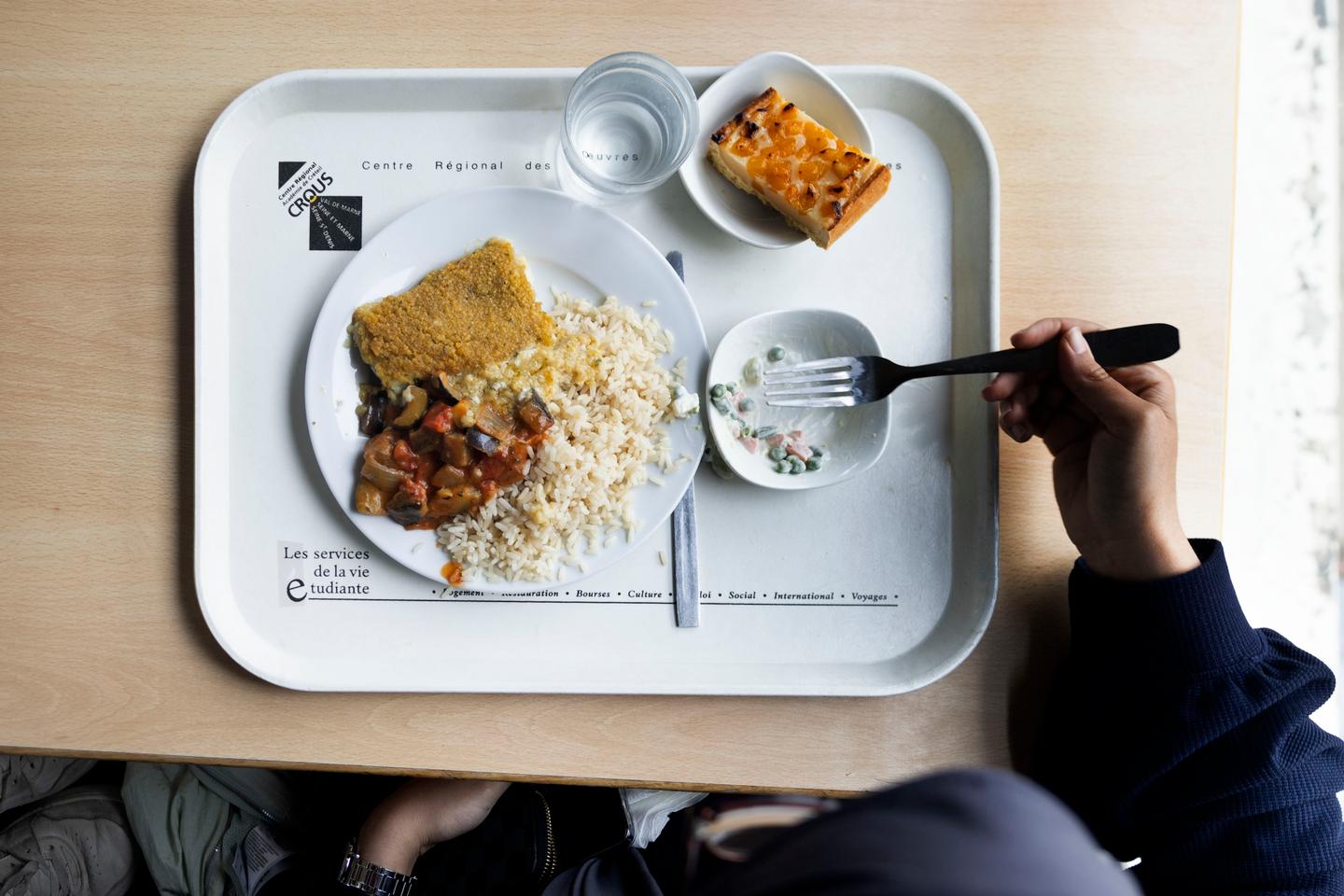
A €1 meal served at the CROUS restaurant in Villetaneuse, Seine-Saint-Denis (northern suburbs of Paris), May 5, 2026. AXELLE DE RUSSÉ FOR LE MONDE
Just before noon on Tuesday, May 5, students crowded into the restaurant of the Regional Centers for University and School Activities (CROUS, the regional student welfare organization) in Villetaneuse (northern suburbs of Paris), on the Sorbonne-Paris Nord University campus. Regulars mixed with others who were less familiar with the place.
That was the case for Emilie (those quoted by first name only requested anonymity), 20, a third-year undergraduate student studying applied mathematics. As a non-scholarship student, she previously had to pay €3.30 per meal, compared to €1 for scholarship recipients. "I brought my own food every day for lunch because I could make meals for less than €3," she explained. Since May 4, Emilie, like all students, has benefited from the €1 flat rate.
This new price, posted on every wall of the university restaurant, originated from the agreement between the Parti Socialiste and Prime Minister Sébastien Lecornu, allowing the 2026 budget to pass. Launched at the start of the 2020 academic year in response to the Covid-19 crisis, the €1 meal price was initially reserved for students receiving need-based scholarships and those officially recognized as being in financial hardship. Access was temporarily extended to all students between January and August 2021. Philippe Baptiste, the Minister of Higher Education, initially opposed expanding the program – before eventually backtracking.