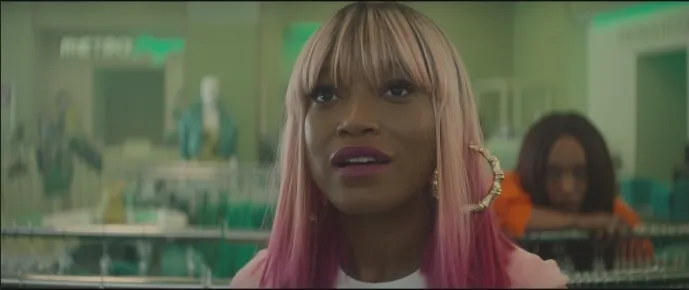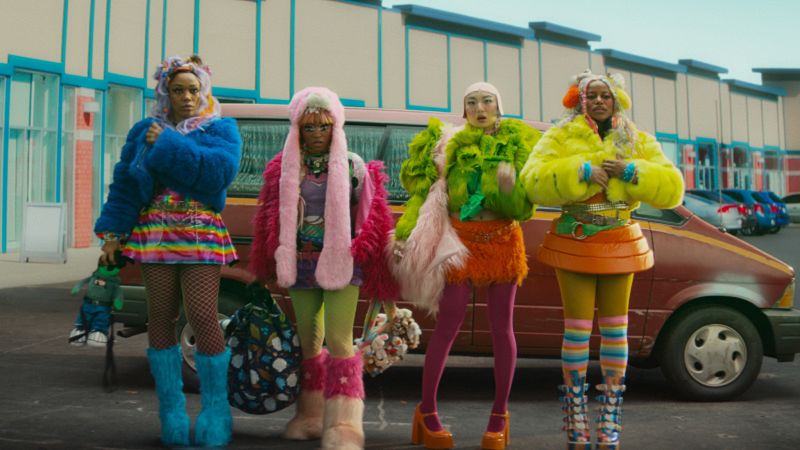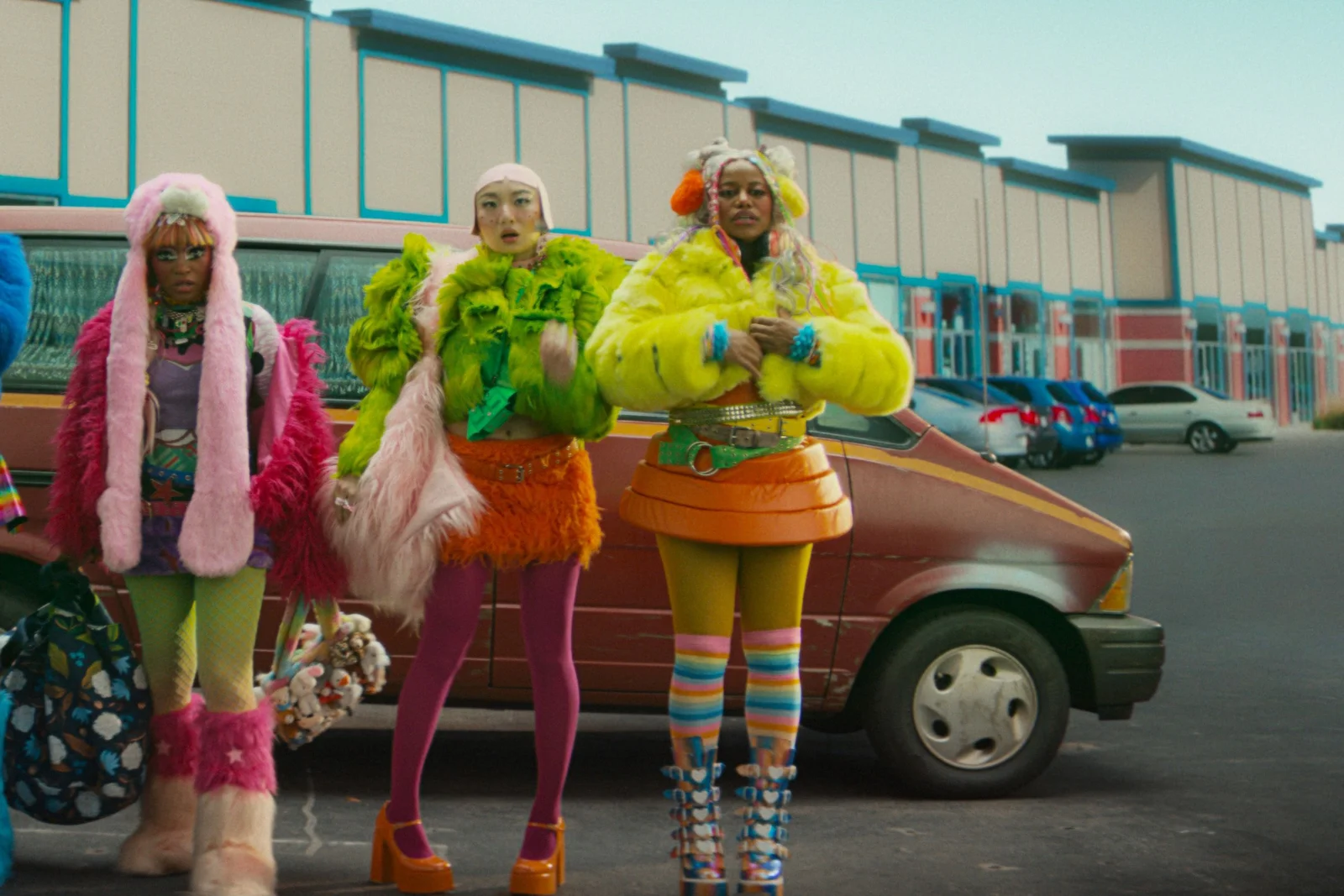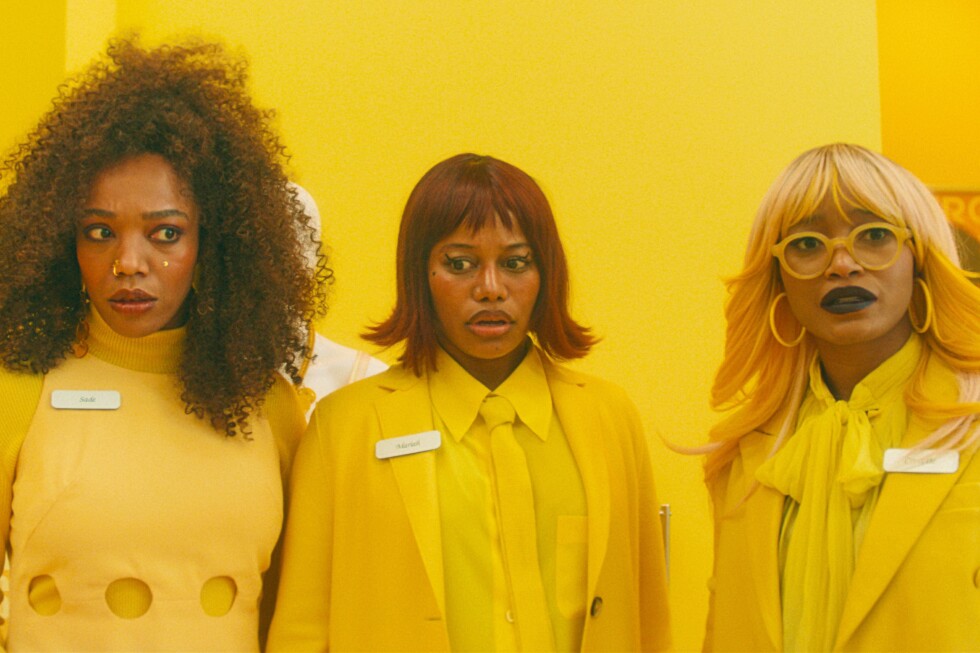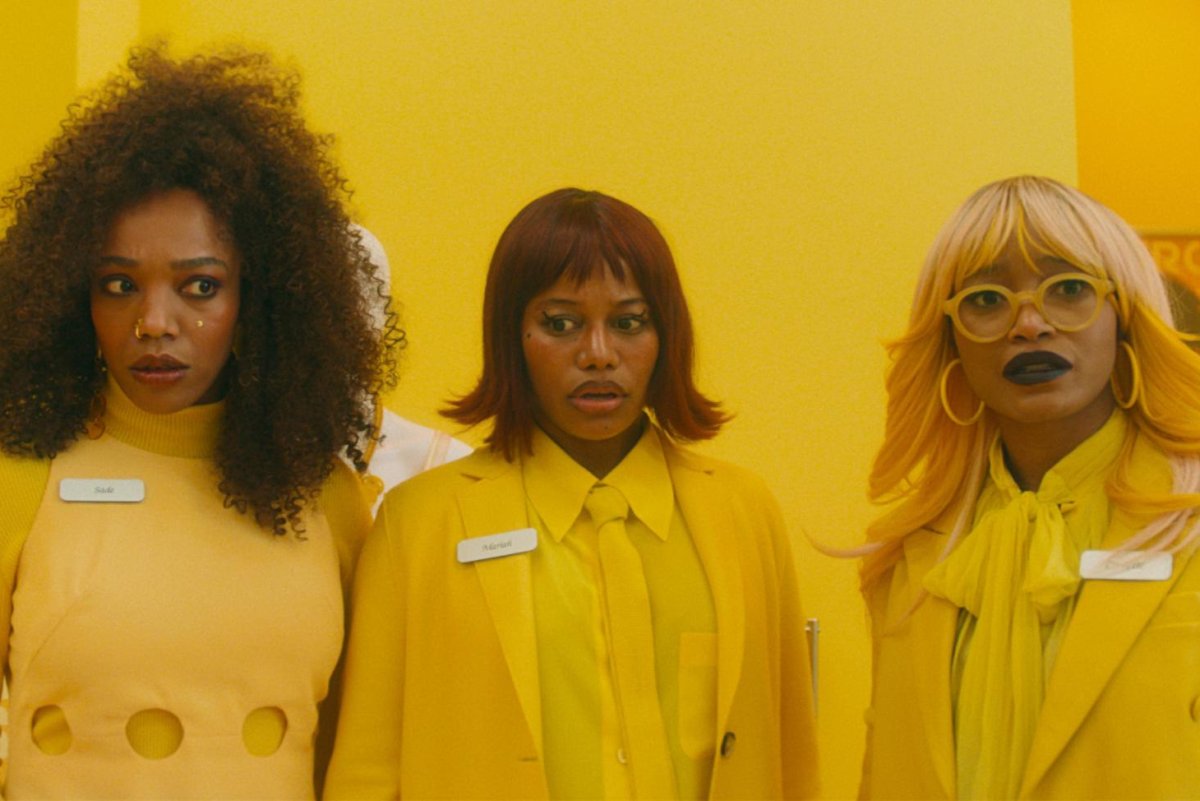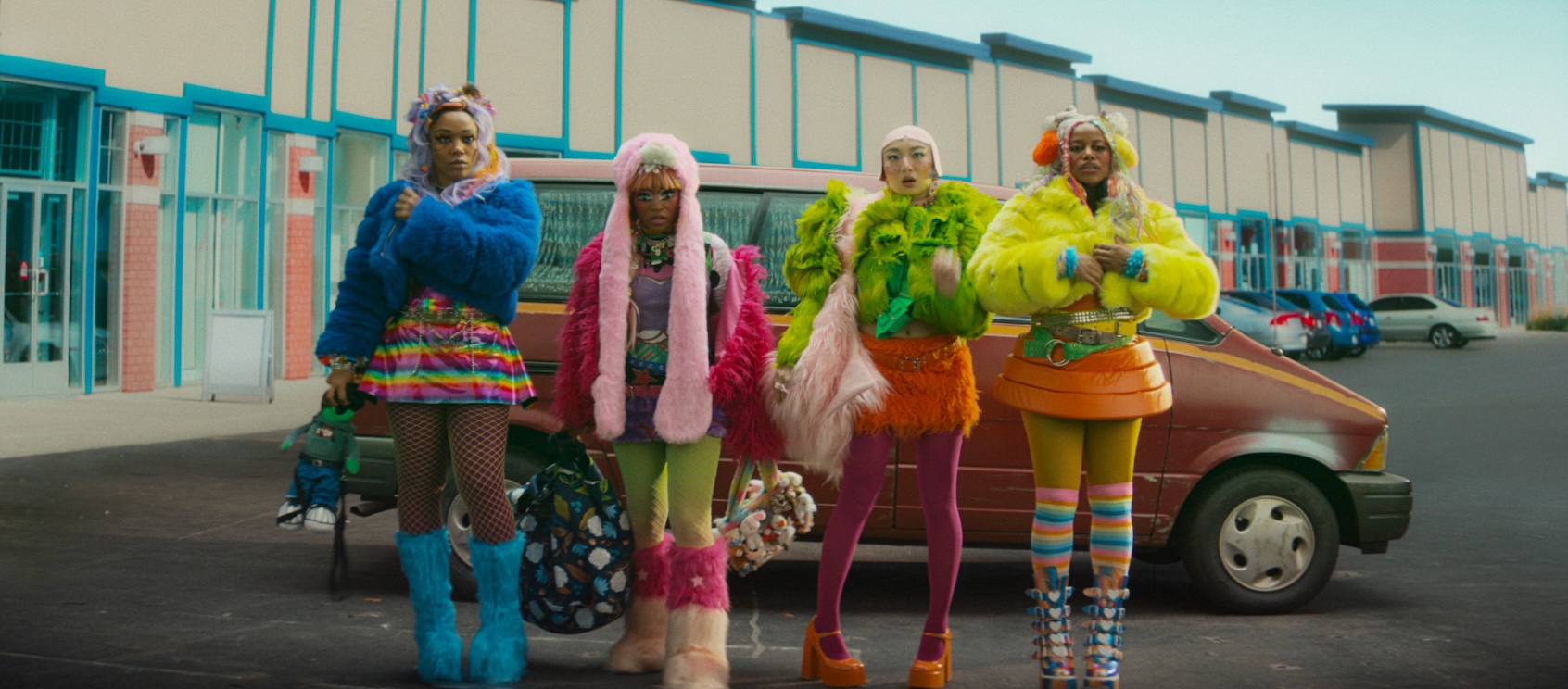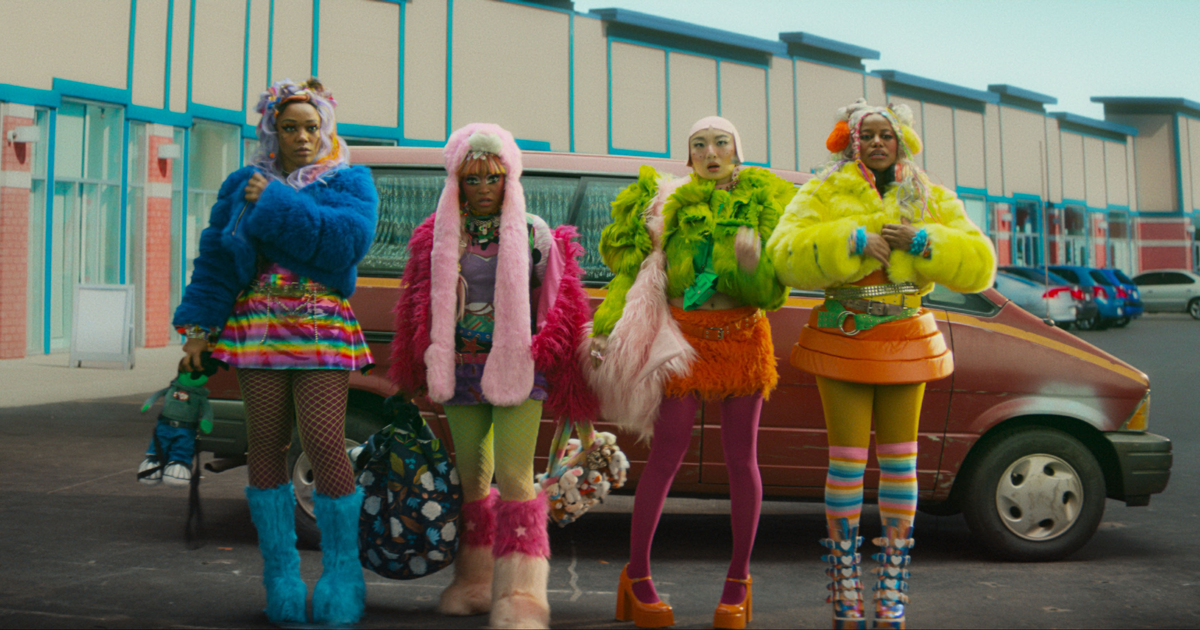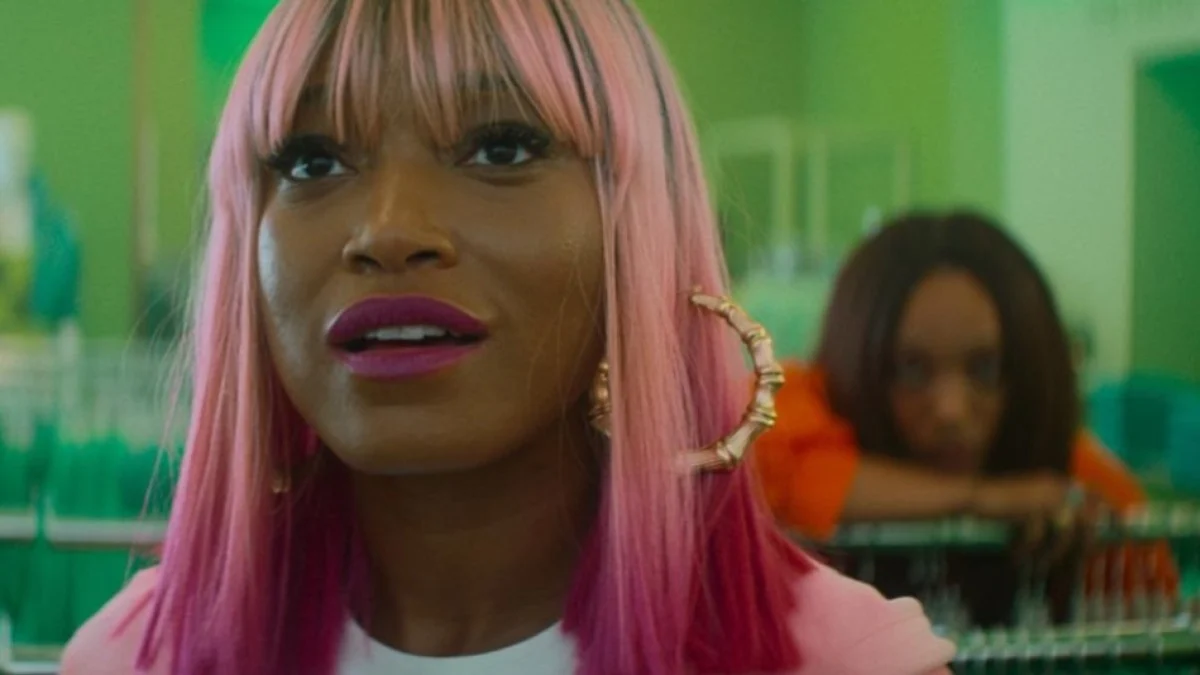
One of the most famous scenes in “The Devil Wears Prada” has always rung false to me—the one in which the editor Miranda Priestly lectures Andy, her unfashionable new assistant, on how trends trickle down from big-name designers’ exotic creations to Andy’s bargain-basement casuals. What Miranda’s bravura monologue misses is the upward flow of style from the streets to the runways, the power of vernacular fashionistas to inspire haute couture—in other words, you could say that it ignores the dialectic. But this very idea is at the heart of a new fashion-focussed film, Boots Riley’s “I Love Boosters,” an exuberantly inventive but overstretched comedy about the redistribution of luxury goods and the chic that goes with them.For starters, Riley offers a heist movie, set in the Bay Area, centered on a trio of women “boosters”—shoplifters who resell their wares—known as the Velvet Gang. Each member has her own motive. Mariah (Taylour Paige) wants to start a movement called Fashion Forward Filanthropy. Sade (Naomi Ackie), who has children, needs the money. Corvette (Keke Palmer), the leader of the pack, is an ambitious designer who wants a foot in the door. The movie opens with Corvette luring a man from a club to her apartment—which is more of a showroom, where she intends not to seduce him but to sell him a pair of shoes. She’s got loot from all sorts of places, but the gang has one main target: a chain of street-glam stores called Metro Designers, owned and run by a celebrity designer named Christie Smith (Demi Moore).This setup is built along color lines, both racial and otherwise. The Velvet Gang’s members are Black, and their heists involve the partnership of a white woman who serves as a decoy, by monopolizing salesclerks’ attention and leaving the threesome free to slip out with loads of merchandise. (In one of the film’s many flamboyant gags, Corvette stuffs her sweatsuit full of items, waddling through the parking lot like a Michelin Man in pink.) Christie, who is white, takes to local TV news to inveigh against the boosters, deriding them as “low-class urban bitches.” The remark fills the trio with righteous rage, and makes them all the more determined to swipe from her stores.Christie is preparing to launch a mysterious new line of suits, at a hundred thousand dollars apiece, a plan that the three women catch wind of when Corvette actually manages to get a foot in the door—by sneaking into Christie’s apartment. This inner sanctum of fashion is situated, wondrously, in a sharply leaning San Francisco luxury tower (based, as Emily Nussbaum reported in a profile of Riley for this magazine, on the city’s actual, slightly leaning Millennium Tower). The resulting scene is spectacular, with the apartment’s inclined and polished floor giving rise to physical comedy of absurdist pathos in the vein of Jerry Lewis, and Corvette’s frantic struggle for traction revealing the earnest undertones of her fraught visit.As an aspiring designer herself, Corvette has a complex relationship with Christie: infuriated though she may be by Christie’s racist and classist condescension, Corvette also considers her a creative idol. Corvette lives in an abandoned fried-chicken restaurant that she has converted into a studio, where she passionately turns out samples and designs. She dreams of a career in fashion—she admits to Mariah, “I’m even lonely when I’m with people,” but adds, “When I’m designing, I feel like I’m touching the world”—and she has submitted a design to a contest that Christie is running. So there’s some serious fangirling involved in Corvette’s pre-heist stalking of Christie’s home, not to mention some calculated self-promotion: she shows up in the tilted apartment wearing an elaborately crafted gown that she designed and made. Seeing the dress, Christie delivers a high-handed verbal riff—reminiscent of the trickle-down speech in “The Devil Wears Prada”—on whether it’s turquoise or aquamarine.“I Love Boosters” is quite literally a colorful film, an exhilarating splatterbox of unnatural and acidulous tones. For one thing, Christie’s commercial empire runs on an inspired gimmick: each of her stores offers clothing in only one color per month, with décor to match, and the wall-to-wall uniformity gives the shops the look of movie-musical sets. But Christie’s color sense seems to derive in part from her eye for what’s happening on the streets, because the members of the Velvet Gang are artists in their own right, bringing a jubilant sense of freedom to their own outfits, which feature harmonious clashes of colors, textures, and shapes. (The film’s ingenious mix-and-match costuming is by Shirley Kurata.) And it turns out that Christie is doing more than just gleaning ideas—she’s stealing them outright, as Corvette discovers when she finds an item for sale at Metro Designers that looks just like a design that she posted on Instagram. Thus, the Velvet Gang’s great revenge tour begins: the women plot not just to steal a trove of garments but to clean out a store’s whole stock, and they soon meet similarly aggrieved allies who are ready to join their quest.Call it a campaign of redress, pun intended, for injustices committed with impunity up and down the fashion supply chain. Ideas aren’t the only thing that Metro Designers is stealing. The stores’ monthly merchandise overhaul proves to be a wage-theft scheme, because the salespeople are required to buy and wear the company’s latest offerings, leaving two young employees, Violeta (Eiza González) and Mansion (Najah Bradley), with paychecks of about forty dollars. The clothing, meanwhile, is made in a Chinese sweatshop, whose oppressive and dangerous working conditions Riley depicts in flashbacks and interpolations. The arrival of a woman who works in the sweatshop, Jianhu (Poppy Liu), jolts the story into a new direction, and even a new dimension. Jianhu got to the Bay Area by way of a secret high-tech Chinese-government gizmo that she purloined from the sweatshop—a teleporter, she calls it, which the factory manager had planned to use to beam garments across the seas to avoid shipping charges. The device plays a major role in the heist that follows, and takes the film beyond the realm of a style-crime caper into political science fiction.Riley breaks his narrative frame to pile in an inspired cornucopia of genres and plotlines, moods and tones. The movie is something of a live-action cartoon, as when Corvette, struggling to climb Christie’s slippery floor, revs her legs like Road Runner’s, and when a giant ball of bureaucratic papers, including an eviction notice, rolls menacingly toward her when she feels stressed. Along the way, there’s a self-help satire involving Dr. Jack (Don Cheadle), a motivational speaker who’s actually running a pyramid scheme. There’s a horror-movie thread involving a suave seducer (LaKeith Stanfield) who turns, involuntarily, into a supernatural sexual predator. There’s creative lampooning of workplace indignities, with store clerks’ thirty-second lunch break staged as a sprint at a track meet, in sped-up motion. There’s skewering of the media, in TV news segments that spotlight apparently random people, most of them Black, as talking heads for right-wing positions. (One woman, for instance, complains that rent control curtails her freedom to pay higher rent.) And the teleporter turns out to have additional uses, as a “situational accelerator” that employs dialectical materialism to heighten the contradictions of whatever it’s aimed at, and as a “deconstructor” that’s effectively a time machine, returning its targets to prior states of being.These hyperbolic fantasies of socialist surrealism are often exhilarating, but Riley’s wild spectrum of images and ideas doesn’t fit readily into a clear critique. In his prior feature, “Sorry to Bother You,” he shaped the story’s surreal elements to address the quasi-apocalyptic implications of unhinged profit motives, inhumane technology, and unmitigated racism; the result was a pointed vision of techno-fascism. In “I Love Boosters,” he doesn’t quite pursue his strongest impulses to their logical conclusions. Some scenes and details play like they’re there to check off boxes for each of the featured genres, such as a hectic car chase of little originality and a further expansion of the teleporter’s powers to seemingly limitless, and therefore just about pointless, possibilities. As clever and eye-catching as Riley’s imaginative extravagances are, he too often relies on them to resolve story lines with a hand-waving facility.“I Love Boosters” is ultimately suspended between competing desires. Riley conjures vivid characters—especially Corvette, whom he endows with a creative fury akin to his own—but the movie’s messaging constrains their range of activity and leaves out the personal side of their passions. Riley neglects the contradictions in Corvette’s fascination with the work of the venom-filled Christie, for instance, and says little about the inspiration and drive behind Corvette’s artistic ambition. The psychological and aesthetic core of the story’s premise is the exchange between high fashion and the streets, yet Riley offers no sense of what the boosters achieve, socially or stylistically, with their redistribution of luxury goods. The result is a fashion movie that takes the art at its center for granted, a work of radical narrative freedom which falls back on last season’s tropes. ♦
“I Love Boosters,” Reviewed: A Socialist-Surrealist Shoplifting Fantasy
Boots Riley’s new film is an exuberantly inventive but overstretched comedy about the redistribution of luxury goods.
1,498 words~7 min read