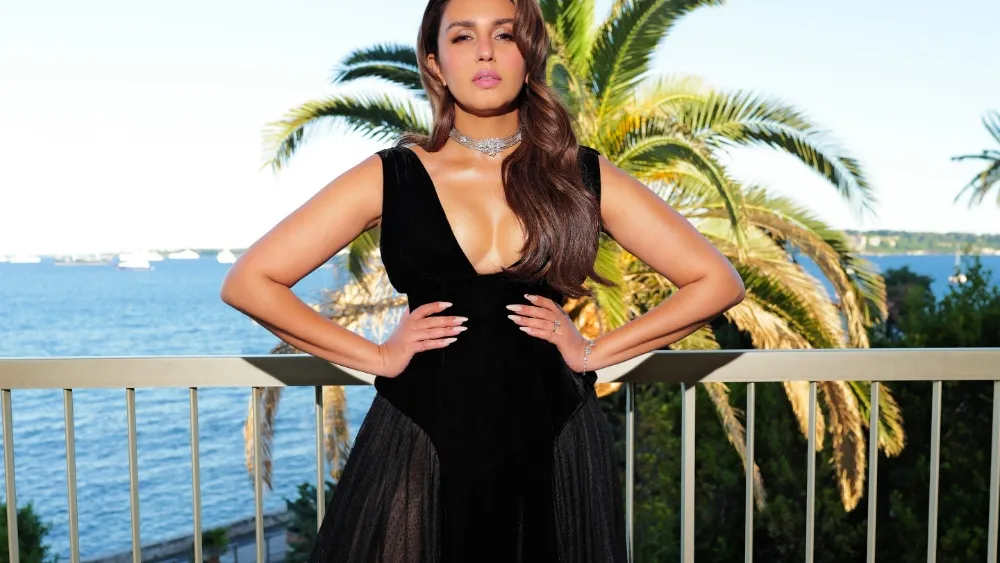
It is a warm May evening on the Croisette and Huma Qureshi is, by her own cheerful reckoning, in the middle of everything. She is at Cannes for the fourth time. She has been to Berlin twice, Toronto once, Busan. Venice and Sundance remain on the list.
This year she is here for the Red Sea Film Foundation Women in Cinema event at the Cannes Film Festival – which brought together participants from across the Arab world, Africa and India – and as an ambassador for BMW, whose carpet she walked. There is no film in competition. “Not with a film, unfortunately,” she says. “Another time, next year, inshallah.”
The inshallah lands less like resignation than like the patience of someone who is building toward something. In the 14 years since Anurag Kashyap’s epic “Gangs of Wasseypur” introduced her to the world at this same festival in 2012, she has ranged across commercial Bollywood spectacle, streaming prestige and international festival selections with a deliberateness that is, she says, only partly planned. The rest is the logic of following what she actually wants to do.
Right now, that means more than she can fully talk about. There is the Yash-starrer “Toxic,” directed by Geethu Mohandas, in which she plays a character named Elizabeth. There is “Baby Do Die Do,” a Mumbai-set noir she co-produced with her brother Saqib Saleem through their banner Saleem Siblings – and in which she also stars, as a deaf-mute assassin, in a role that required learning sign language. There is the fifth season of “Maharani,” the political drama that became, she argues, one of India’s most-watched shows while the English-language press was largely looking elsewhere. And there are several more films she is not yet permitted to announce, waiting for the producers to move first.