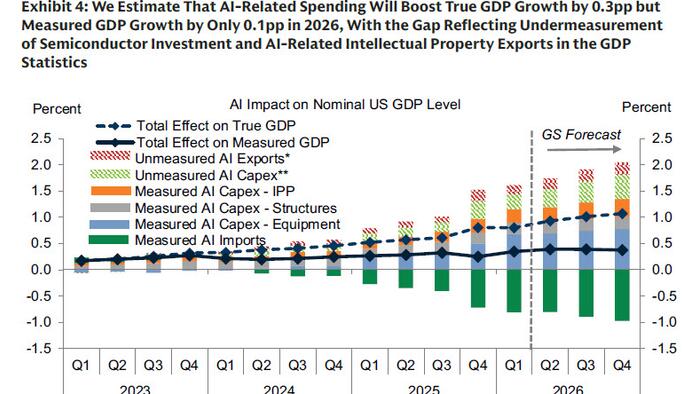
There has been much discussion of the future contribution of artificial intelligence to increased economic productivity and, hence, rising income growth — and that higher incomes would lower the federal budget deficit through increased tax revenues. This mechanism appears to be a significant part of the Trump administration’s calculations in positing a future annual rate of real gross domestic product growth of 3%, compared to the 2% others assume and most recently experienced. Along with higher tariffs and assumed lower interest rates, this leads the administration to project a halving of the deficit over 10 years rather than doubling. Recent compelling independent economic research suggests that AI can raise productivity growth over the next 10 years by 0.9 percentage points from its current rate of about 1.8% to 2.7% — essentially a 3% GDP growth rate when modest labor force growth is added. More thorough consideration of the broader implications of this productivity jump, however, leads to the opposite budget result. Absent a change in fiscal and healthcare policy, the deficit, currently around 6% of GDP, will continue to increase and even deepen. Higher productivity, while raising incomes, also raises interest rates and, therefore, federal interest spending, given high debt levels. It also raises the prices of, and demand for, services in the inefficient healthcare sector, and therefore government spending on Medicare, Medicaid, health exchanges, veterans’ health benefits, and so on. A run of my economic growth, healthcare, and budget model shows that these spending increases more than swamp rising tax revenues.
Can AI avert the impending federal budget crisis?
Research shows that AI boosts gross domestic product, but it comes with significant drawbacks that could cancel out the success.
761 words~3 min read