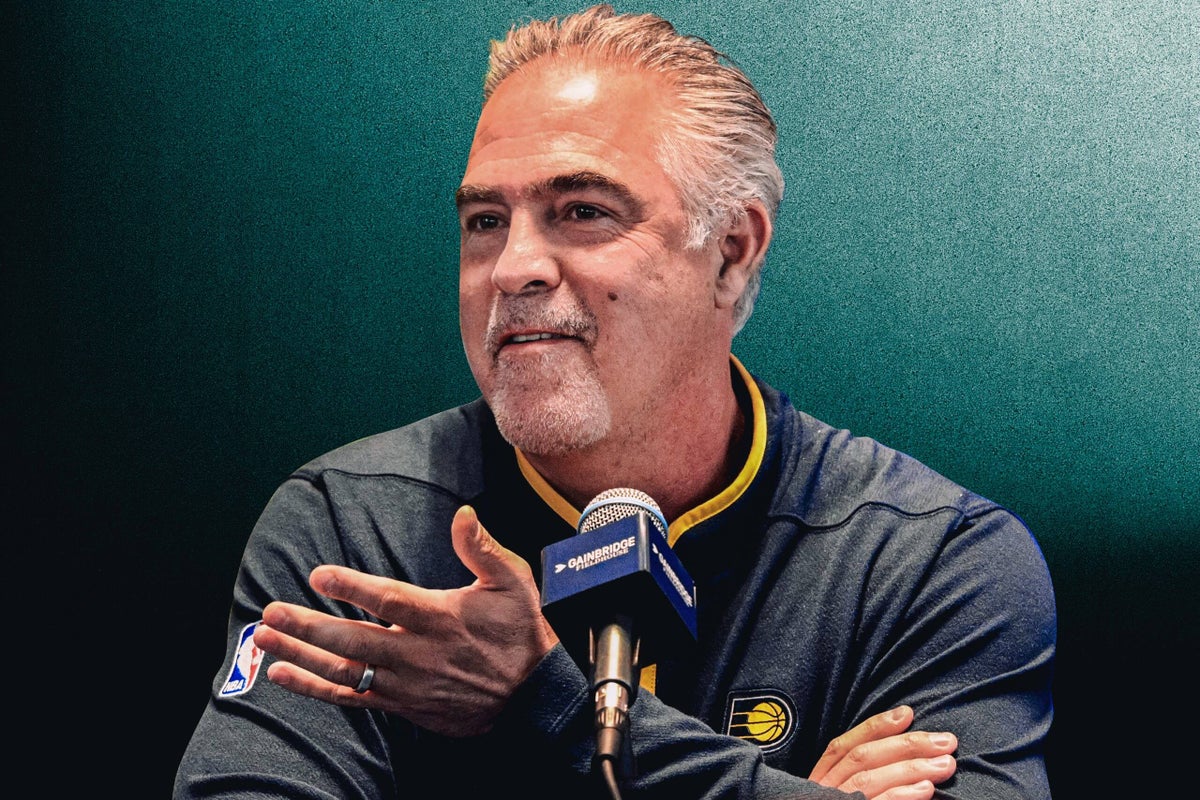
This story is part of Peak, The Athletic’s desk covering the mental side of sports. Sign up for Peak’s newsletter here.Dr. Jennifer Lerner is a professor of public policy, decision science and management at Harvard. She served as the first chief decision scientist for the U.S. Navy. Dr. Brian Gill is a senior researcher at GiveWell and a senior fellow at Mathematica, whose work seeks to navigate uncertainty to support better decision-making. Both are Boston Celtics fans.Last week, a curious event happened in the NBA. Kevin Pritchard, the president of basketball operations of the Indiana Pacers, apologized to fans after the NBA Draft Lottery did not go Indiana’s way.The debate over the trade at its center is already well aired. However, the story is worth briefly recounting because it offers an unusually clear window into how we humans think about decisions, luck and blame.A few months earlier, Pritchard had executed a trade with the LA Clippers for center Ivica Zubac. One of the key pieces in the trade involved Indiana’s first-round draft pick this year. Because the Pacers had one of the league’s worst records, the pick was almost certain to land in the lottery and had a meaningful chance of becoming one of the top selections in a draft loaded with talented prospects.As is common in NBA trades, Indiana “protected” the pick by setting conditions on it: If the lottery balls landed such that the pick was in the top four, the Pacers would keep it and send another first-round pick in the future. If it fell outside the top four, the pick would go to the Clippers.Both teams were making a calculated gamble.When the season ended, Indiana had roughly a 52 percent chance of landing in the top four and keeping the pick. But the pick landed at No. 5 and went to the Clippers. Pacers fans understandably felt disappointed. But did the result warrant an apology from the team’s top basketball decision-maker?As researchers who study judgment, uncertainty and risk, we spend a great deal of time thinking about how people evaluate decisions whose outcomes are partly shaped by luck. One of the most robust findings in decision science is known as outcome bias: the tendency to judge a decision by how it turned out rather than by the quality of the reasoning at the time it was made.In a classic 1988 study, decision scientists Jonathan Baron and John Hershey presented people with scenarios in which physicians made the same medically reasonable decision based on the same information. When the patient recovered, research participants rated the doctor’s decision highly. When the patient died from a rare complication, they judged the same decision much more harshly.
We study decision-making. The Pacers-Clippers trade offers us an unusually clear window
As researchers who study judgment, uncertainty and risk, we spend a great deal of time thinking about how people evaluate decisions.
1,177 words~5 min read