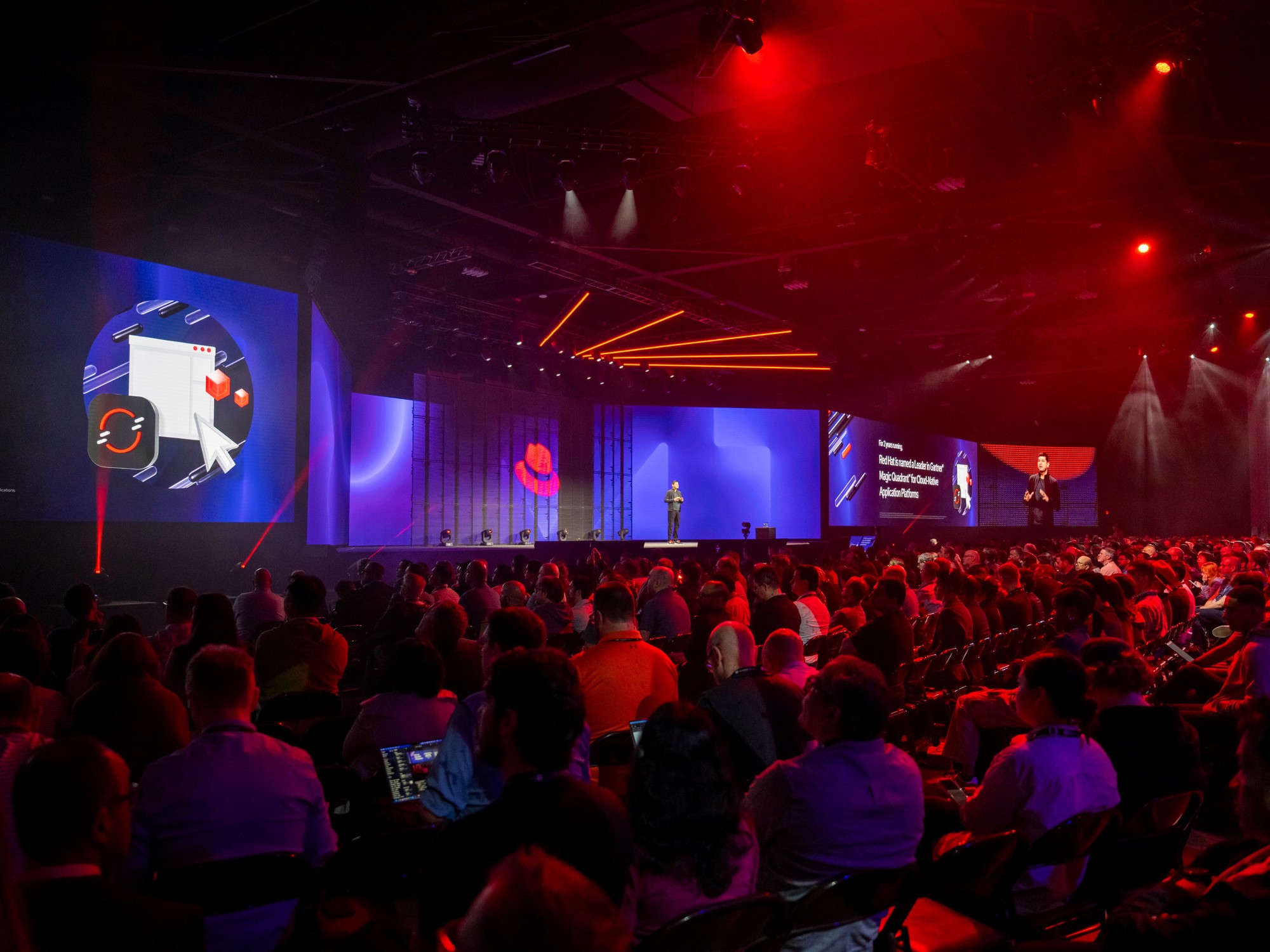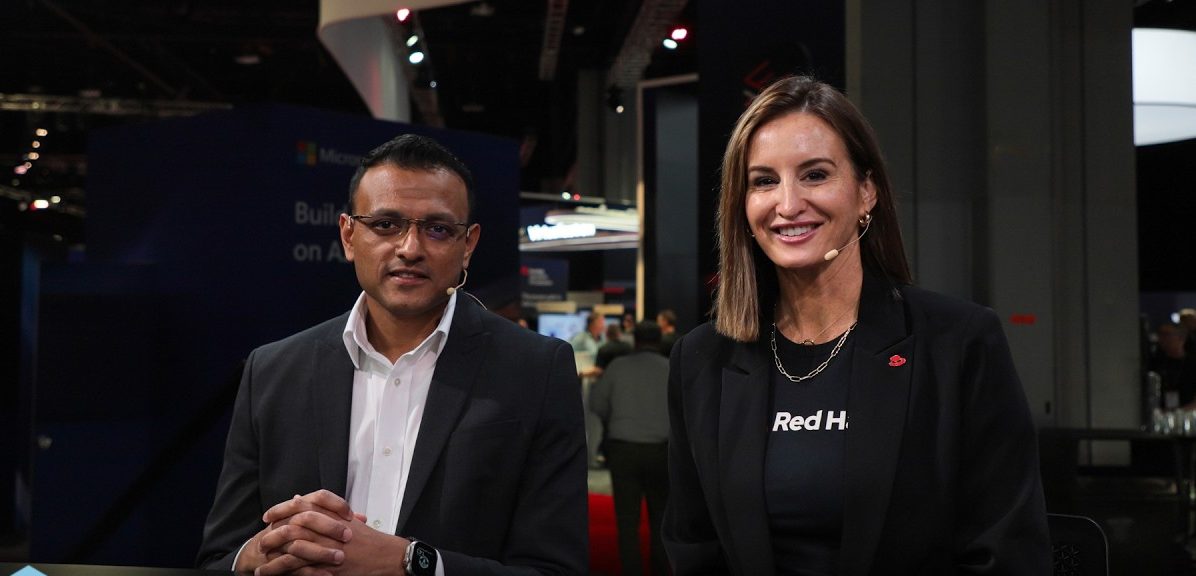
Recently at Red Hat Summit 2026, Amazon Web Service (AWS) showcased the breadth and depth of its nearly 20-year collaboration with Red Hat, spanning agentic AI development, AI inference optimization, open source infrastructure innovation, and expanded Red Hat software availability on AWS Marketplace. For the engineers, architects, and technology leaders who have been building on Red Hat platforms and AWS infrastructure, the latest milestones in our collaboration have the potential to materially change how they develop, deploy, and operate workloads—and how much it costs to do so.Kiro and Red Hat OpenShift Dev Spaces: Bringing agentic AI to cloud-based developmentRed Hat and AWS have integrated Kiro, the agentic AI-powered integrated development environment, with Red Hat OpenShift Dev Spaces. OpenShift Dev Spaces provides developers with consistent, security-focused, containerized workspaces that run directly on an OpenShift cluster. Into this enterprise-grade environment, Kiro brings a new generation of AI-powered development capability. Unlike traditional code completion tools, Kiro uses a spec-driven development methodology: it converts high-level requirements into structured specifications before generating code, with autonomous AI agents that break features into sequenced tasks complete with unit tests, integration checks, and documentation. The integration uses a local-to-remote SSH workflow—developers run Kiro on their local desktop while connecting over SSH to the containerized workspace running in the OpenShift cluster. Kiro delivers AI-powered coding assistance inside a workspace already tailored to the project, taking advantage of the cluster's compute and storage resources rather than the developer's local machine.For development teams, the practical impact is significant. New developers can onboard in minutes rather than days, navigating to Dev Spaces, selecting a repository, launching a workspace, and writing code with full AI assistance in an environment identical to every other team member's. For platform engineering and security teams, centralized control over development environments is preserved: security policies, compliance requirements, resource limits, and network access remain under IT governance even as developers gain access to cutting-edge AI tooling. For organizations as a whole, the integration accelerates time to market by removing friction from the development process and redirecting developer attention from environment management to feature development.OpenShift Dev Spaces 3.25 is available now, and the Kiro integration is available for teams running this release. Read more at: https://aws.amazon.com/blogs/ibm-redhat/cloud-development-meets-agentic-ai-kiro-and-red-hat-openshift-dev-spaces/AWS Neuron Operator for AWS Inferentia: Enterprise AI inference on purpose-built siliconRunning AI inference workloads at production scale demands specialized hardware. AWS Inferentia chips are engineered precisely for this, delivering high throughput, low latency inference at a cost point that makes production-scale AI economically viable.The challenge, historically, has been integration. Enterprises running Red Hat OpenShift as their Kubernetes platform have invested significantly in building operational practices around OpenShift—monitoring, policy enforcement, role-based access control (RBAC), lifecycle management, and governance workflows. Incorporating specialized AI accelerators into that environment has traditionally required custom engineering: driver management, device plug-in configuration, node labeling, and workload placement logic that sits outside standard OpenShift tooling.The AWS Neuron Operator for AWS Inferentia resolves this integration complexity. Red Hat and AWS are collaborating to bring Inferentia support directly into the OpenShift operator model, which is the same pattern OpenShift uses to manage databases, messaging systems, and other infrastructure components. The AWS Neuron Operator abstracts the configuration complexity of deploying and managing AI models on Inferentia instances, exposing Inferentia's acceleration capabilities through the standard OpenShift interfaces that platform teams already manage.For customers running production AI workloads, this means access to Inferentia's purpose-built inference performance, delivering higher throughput and lower cost per inference compared to general-purpose GPU instances without departing from the unified operational model they have established on OpenShift. AI workloads run alongside traditional containerized applications, managed through the same tools, policies, and workflows. For organizations at the stage of scaling AI from pilot to production, this unification of the operational model is as valuable as the hardware performance improvement itself.Read more: https://aws.amazon.com/blogs/ibm-redhat/running-red-hat-ai-on-openshift-with-aws-neuron/Red Hat AI Inference and AWS Trainium: Optimizing inference at scaleAs organizations move deeper into production AI deployment, inference cost becomes the dominant variable in total cost of ownership. Training large models is expensive, but it happens once. Inference—serving those models to users, applications, and automated pipelines—happens millions or billions of times, and the cost accumulates accordingly. For enterprises running gen AI applications, recommendation systems, real-time content analysis, or autonomous agent workflows, inference infrastructure optimization is not an abstract concern. It is a line item that grows with adoption.AWS Trainium chips were designed with this reality in mind. Built on custom silicon optimized for deep learning workloads, Trainium delivers compelling price-performance for inference at scale, particularly for transformer-based models that characterize the current generation of large language models (LLMs) and embedding systems. Red Hat AI Inference, in turn, provides the enterprise-grade model serving layer that organizations need: vertical and horizontal scaling, telemetry, and the operational consistency that enterprise support requires.Now, Red Hat and AWS are working together to expand Red Hat AI Inference’s support for AWS Trainium chips, improving the combination that addresses the inference cost problem with an enterprise operational model. Customers can deploy production AI inference workloads on Trainium's purpose-built architecture while maintaining the Red Hat support, compliance posture, and operational consistency they rely on across their platform. For organizations running LLMs, real-time AI applications, or high-volume inference pipelines, this collaboration represents a path to meaningfully reducing inference costs while preserving the enterprise operational framework they have built.Read more: https://aws.amazon.com/blogs/ibm-redhat/running-red-hat-ai-on-openshift-with-aws-neuron/Simplifying enterprise AI procurement and compute provisioningFor enterprises evaluating enterprise AI platforms, procurement complexity is a surprisingly significant barrier to adoption. Red Hat AI Enterprise is now available on AWS Marketplace, enabling AWS customers to use their existing cloud spend toward licensing Red Hat AI Enterprise, including committed spend agreements established through the AWS Enterprise Discount Program, private pricing agreements, and AWS Marketplace Private Offers. For technology leaders, this availability changes the evaluation calculus. Organizations that have consolidated their spending commitments with AWS can now deploy Red Hat AI Enterprise without requiring a separate budget cycle or a standalone vendor negotiation. For procurement and finance teams, this simplifies reporting and chargeback. For platform engineers, Red Hat AI Enterprise can be provisioned and managed alongside existing AWS infrastructure with the familiar tools, dashboards, and billing workflows already in place. The path from AI experimentation to production deployment gets meaningfully shorter.Additionally, Red Hat is improving compute capacity and node lifecycle management for Red Hat OpenShift Service on AWS (ROSA) through the Red Hat build of Karpenter, which is a fully-managed autoscaler based on the upstream project, Karpenter. This delivers significant infrastructure cost savings through right-sizing, spot optimization, and continuous consolidation, eliminating the operational burden of manual node scaling. Red Hat’s build of Karpenter will be generally available in the next minor release of Red Hat OpenShift in all AWS regions where ROSA is generally available. To learn more, read this AWS blog: https://aws.amazon.com/blogs/ibm-redhat/cut-costs-scale-smarter-with-rosa-karpenter-automates-compute-provisioning/Looking aheadTaken together, these innovations address the full lifecycle of enterprise AI deployment: from the developer writing the first line of code to the platform engineer managing the infrastructure that serves it to the technology leader responsible for the cost and compliance posture of the entire stack. That comprehensive view reflects how AWS and Red Hat think about collaboration—not as a collection of integrations, but as a shared commitment to making enterprise technology simpler, more capable, and more economically efficient.Join us on May 28 for a hands-on experience with Red Hat and AWS experts to try Red Hat OpenShift Service on AWS.To learn more about the AWS and Red Hat collaboration, visit www.redhat.com/aws.
AWS and Red Hat at Red Hat Summit 2026: Accelerating AI, innovation, and open source infrastructure
Explore the latest milestones in the collaboration between Red Hat and AWS, including AI development, inference optimization, open source infrastructure innovation, and expanded Red Hat software availability on AWS Marketplace. Learn about the integration of Kiro with Red Hat OpenShift Dev Spaces, AWS Neuron Operator for AWS Inferentia, and Red Hat AI Inference with AWS Trainium.
1,231 words~6 min read