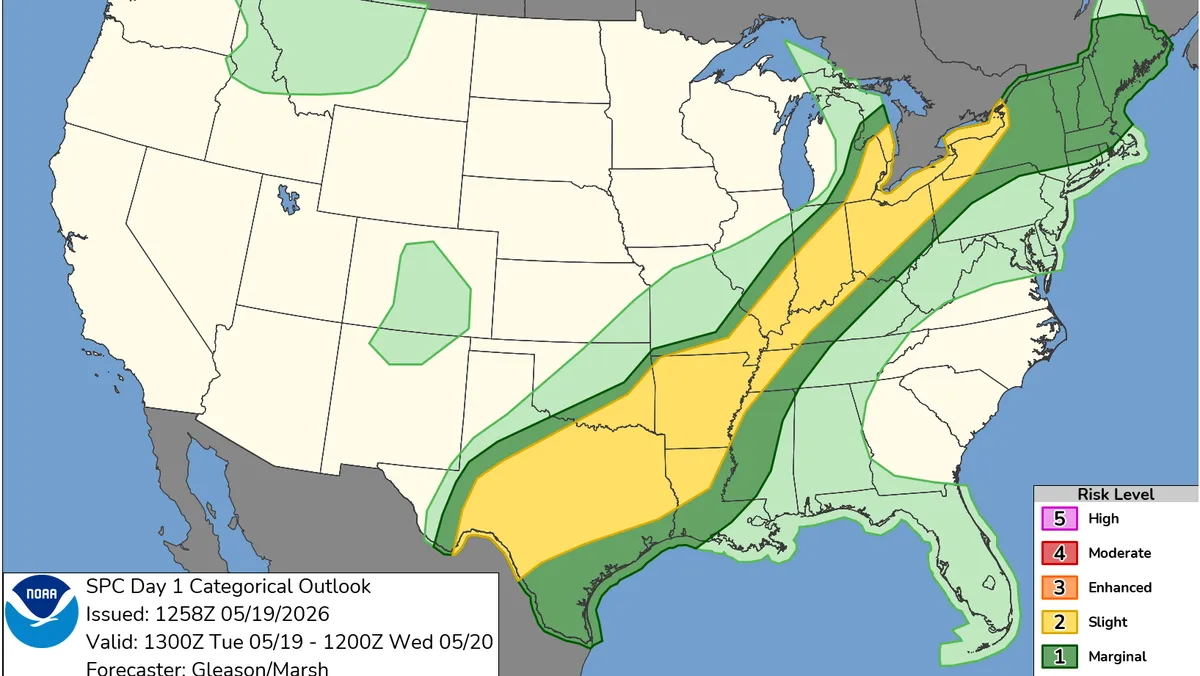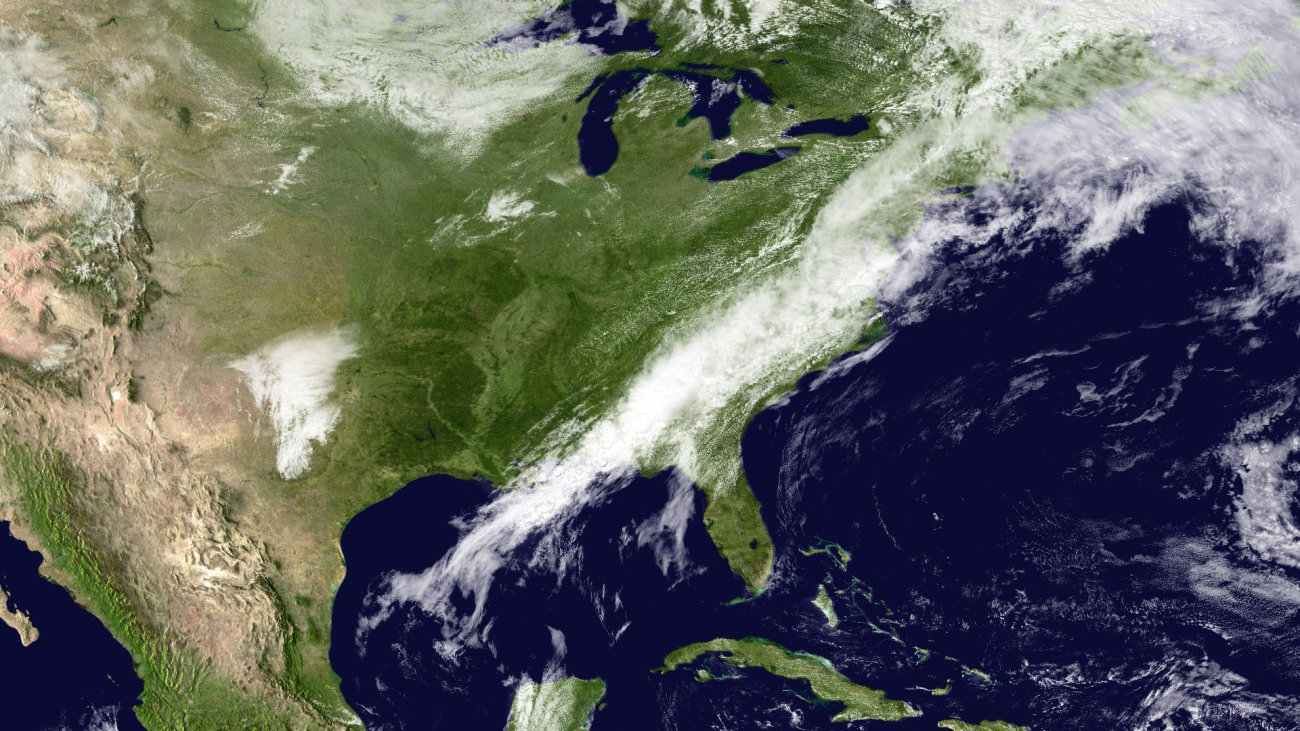
A 2010 storm system moving eastward, which brought severe weather to the Atlanta region. Image credit: NOAA NESDIS Environmental Visualization Laboratory; NOAA GOES-13 Satellite
The peak of the severe weather season is nearing its end, but in Georgia, it's been a quieter period than residents have become accustomed to in years past, devoid of the flurry of tornado warnings, heavy rain bands, and thunderstorms. Zachary Handlos, director of the B.S. in Atmospheric and Oceanic Sciences degree program, explains that the region lacked a major component of the severe weather formula. 1. Moisture 2. A mechanism to lift air upward 3. Instability4. Wind Shear Despite drought conditions persisting throughout the state, there is sufficient moisture in the air, carried by warm air from the Gulf of Mexico and the Atlantic Ocean, to create favorable conditions for severe weather. Instability is created as the air warms, and wind shear is created by the changing direction and speed of the wind. According to Handlos, what was missing this season was a consistent lifting mechanism.
The flow of air associated with a high-pressure system (left) versus a low-pressure system (right) in the Northern Hemisphere. Graphic courtesy: UCAR Center for Science Education