Superhydrophobic materials are found in many forms in nature, from scales on shark skin that reduce drag to lotus leaves whose surface enables water to roll off and remove dirt particles in the process. The way in which water interacts with these surfaces in nature is inspiring the work of a team of researchers from Carnegie Mellon University.
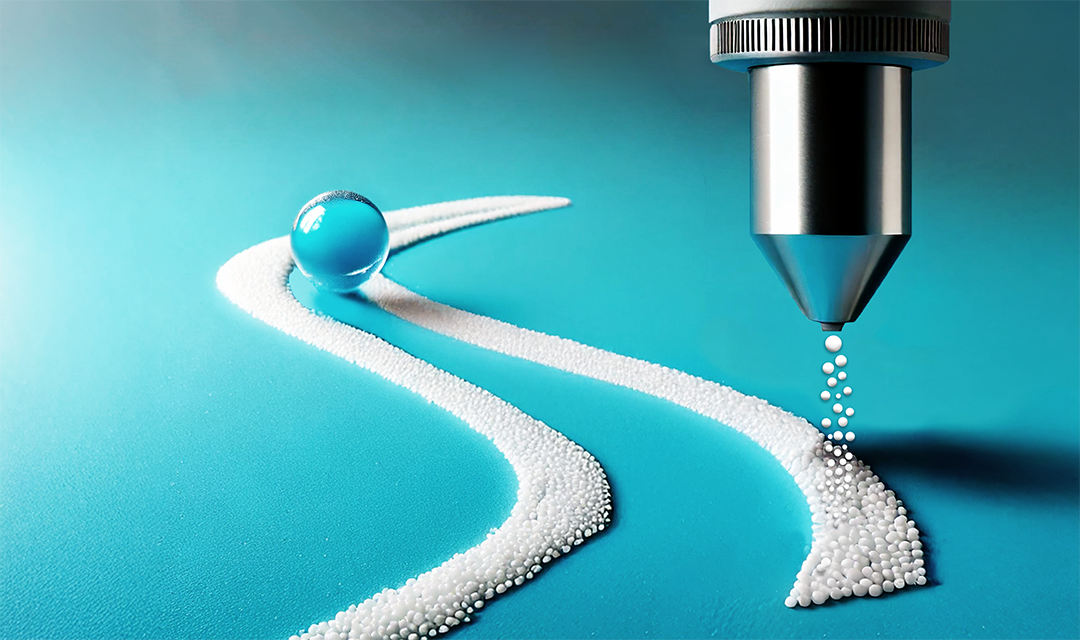
A study published in Advanced Materials Technologies illustrates a new method for creating superhydrophobic surfaces using an aerosol jet printer and polymer solutions. The findings illustrate a technique through which polymer microgel particles are deposited onto a substrate in a specific pattern. This new method is unique in that it offers precise control over the shape and location of the structures, while requiring no post processing.
“The polymer we used is slightly hydrophobic and is widely utilized in wearables due to its durability and flexibility,” said Mohammad Islam, a professor of materials science and engineering who contributed to the research. “The superhydrophobicity of the surface can be attributed to its unique surface characteristics.”
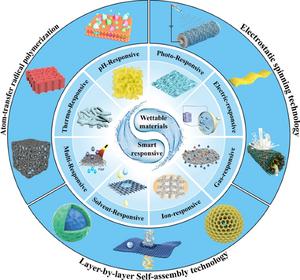
High-resolution SEM images (top right insets) capture the microstructure of each printed surface, which consists of the gelled droplets deposited on the surface of different polymer solutions. The shape of a water droplet on each printed surface (top left insets) reflects the hydrophobicity.