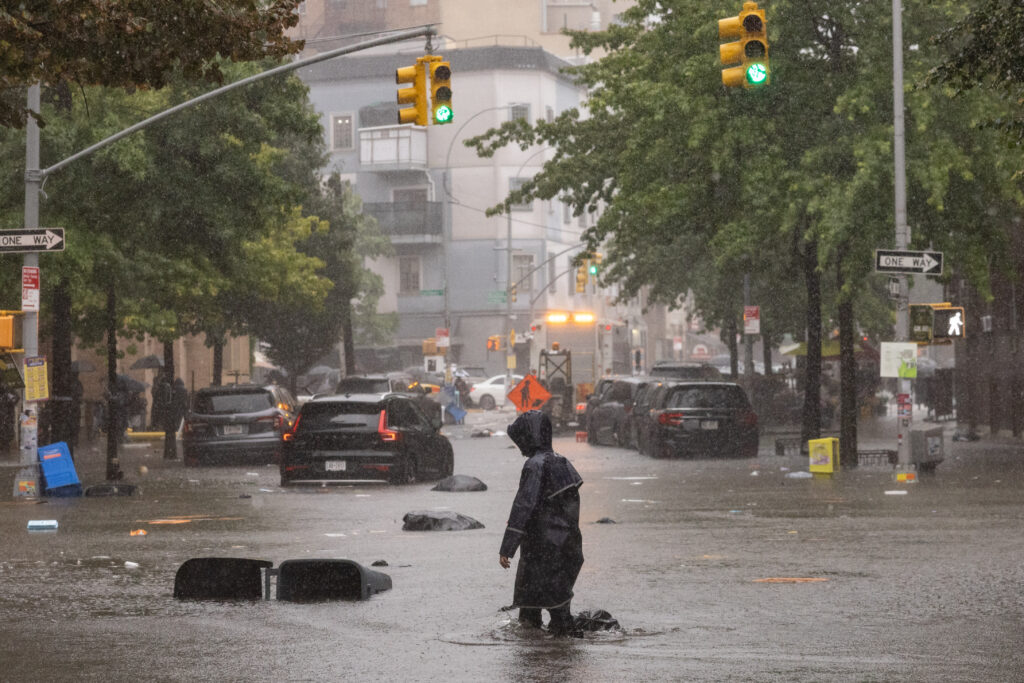
As climate change brings heavier rainfall, rising temperatures, and increased flooding to the Northeast, communities are facing growing strain on infrastructure that wasn’t designed for these extreme conditions. In Allegheny County, home to Carnegie Mellon University and the city of Pittsburgh, steep hillsides, aging stormwater infrastructure, and more than 100 municipalities intersect, making these challenges especially urgent, yet increasingly complex to solve.
With support from the National Science Foundation’s Regional Resilience Innovation Incubator (R2I2) program, civil and environmental researchers at Carnegie Mellon are leading a new effort to help the communities in their own backyard respond. The project brings together engineers, scientists, educators, and local partners to develop a county-wide climate adaptation strategy to scale “green infrastructure,” or nature-based solutions that work with the environment to mitigate climate impacts.
Green infrastructure encompasses systems like rain gardens, native meadows, tree canopies, and bioswales that absorb and filter stormwater, reduce urban heat, and improve water quality. They can be implemented as an alternative to traditional “gray infrastructure,” or engineered systems like pipes, sewers, and treatment plants that are designed to move water quickly, but often at a high financial and environmental cost. Despite its promise, green infrastructure has been difficult to implement at scale due to a range of bureaucratic barriers from limited funding to maintenance capacity.