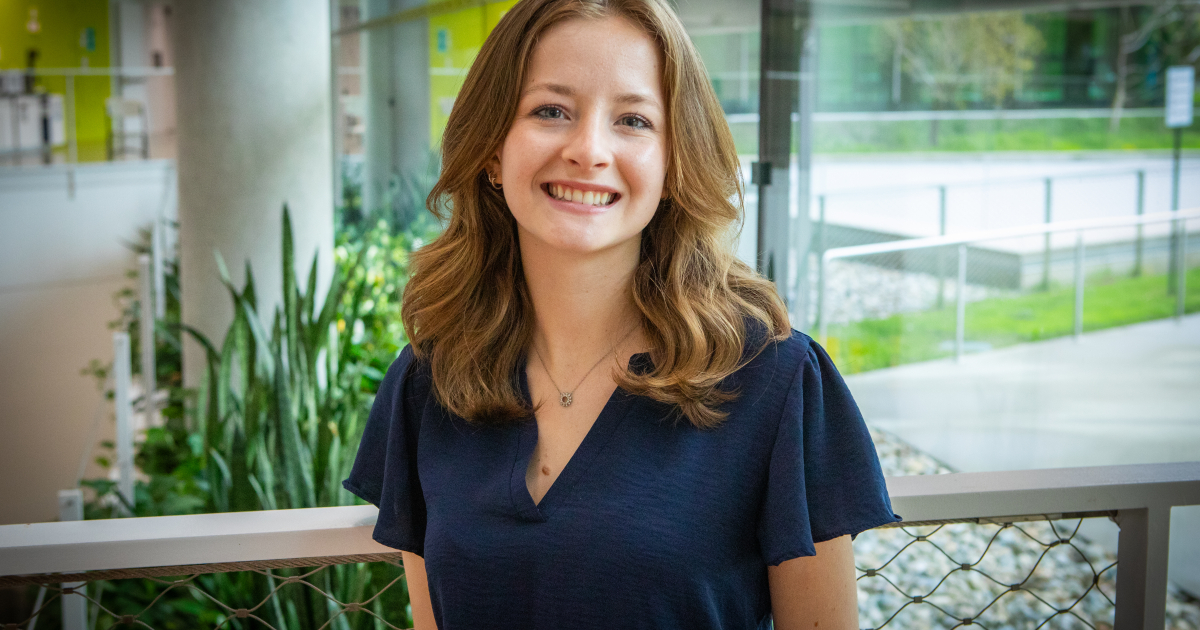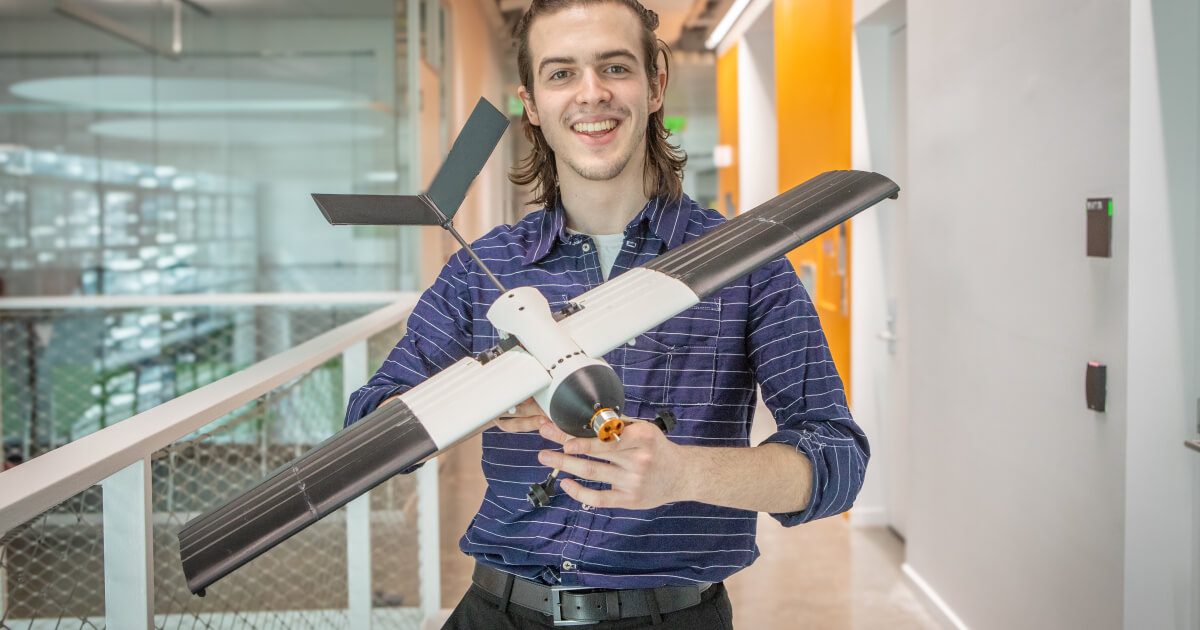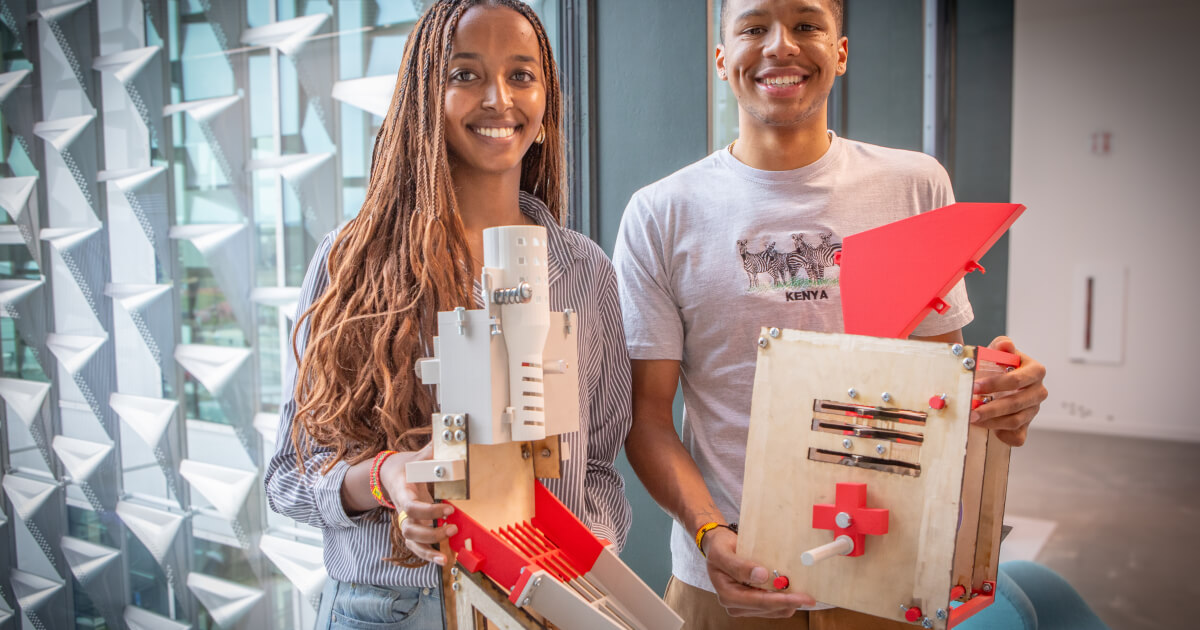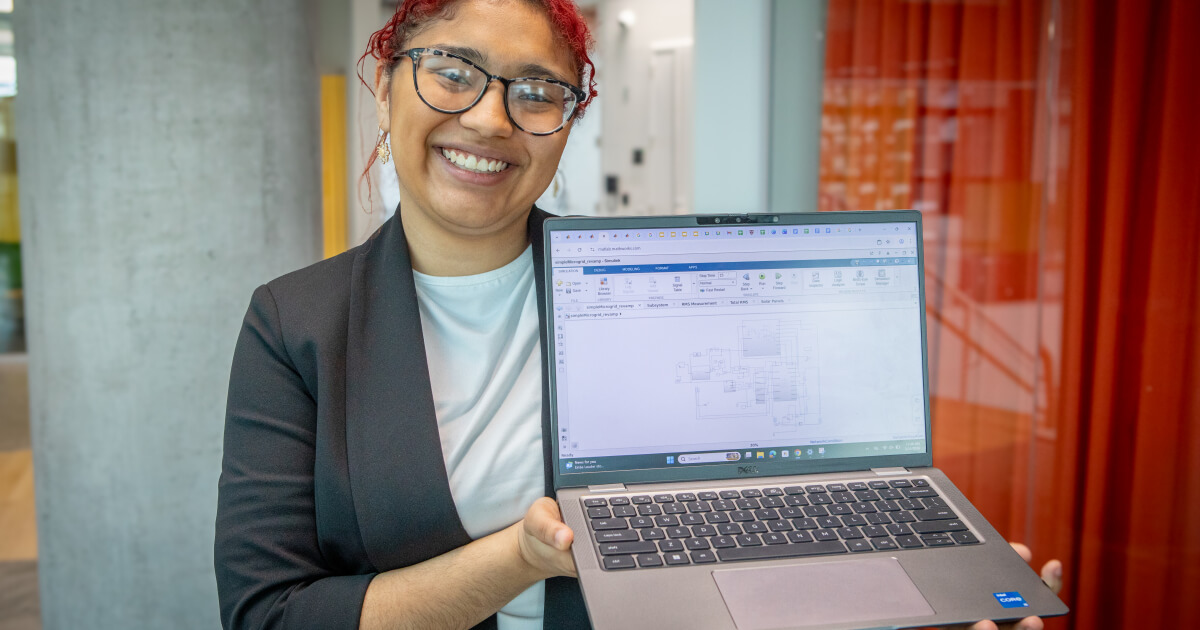
For her senior capstone project, Mia Montrose devised a way to turn waste wool into building cladding panels (Eliza Grinnell/SEAS)
Engineering Design Projects (ES 100), the capstone course at the Harvard John A. Paulson School of Engineering and Applied Sciences (SEAS), challenges seniors to engineer a creative solution to a real-world problem.Upcycling WoolMia Montrose, S.B. ‘26, Environmental Science & EngineeringAdvisor: Leonard Palmer and Jonathan Grinham
• Please give a brief summary of your projectMy ES100 project was using waste wool to make building cladding panels as an example of sustainable materials. About 1 billion kilograms of wool gets wasted per year. Waste wool can come from farmers, from textile mills before the wool gets made into clothes and used by consumers. • What real-world challenge does your project address?When you think about traditional building materials, they're not super sustainable. There's a need for more sustainable building materials, and because there's such a large stream of waste wool, the idea was to sort of address both problems at once. Because the waste wool ends up just getting burned, it can lead to viral or bacterial growth, and that's not really great for anyone. Wool has already been used in our buildings as insulation inside the walls, and the intervention here was to look for a more structural application of the waste wool.• How did your project work?Wool is a fiber, and inside of that fiber there's a protein called keratin, much like our hair. What I did was break open the wool fibers, and extract the keratin from inside. Once we extract that keratin, we can adhere the wool fibers together by applying heat and other chemical processes to link the wool fibers together. These fibers are a little bit more structural than the fuzzy wool that we think of in clothing. I then turned those structural fibers into building cladding panels. Shingles act as cladding panels on a house, protecting the building from the weathered environment such as the rain or sun. It's protecting the foundation of the building, and so that's where my project sits. It is meant to be used on the very outside of a building, unlike insulation.• What part of the project proved the most challenging?Something that I didn't expect was all the fabrication challenges when you're working with a biomaterial like wool. It varies from sheep to sheep. No two sheep have the same wool, and that meant that they would react differently when I was processing them, look differently when I tried to make them into the panel, and behave. You try to account for all of that when you're testing, but it was a lot more variation than I thought it would be.