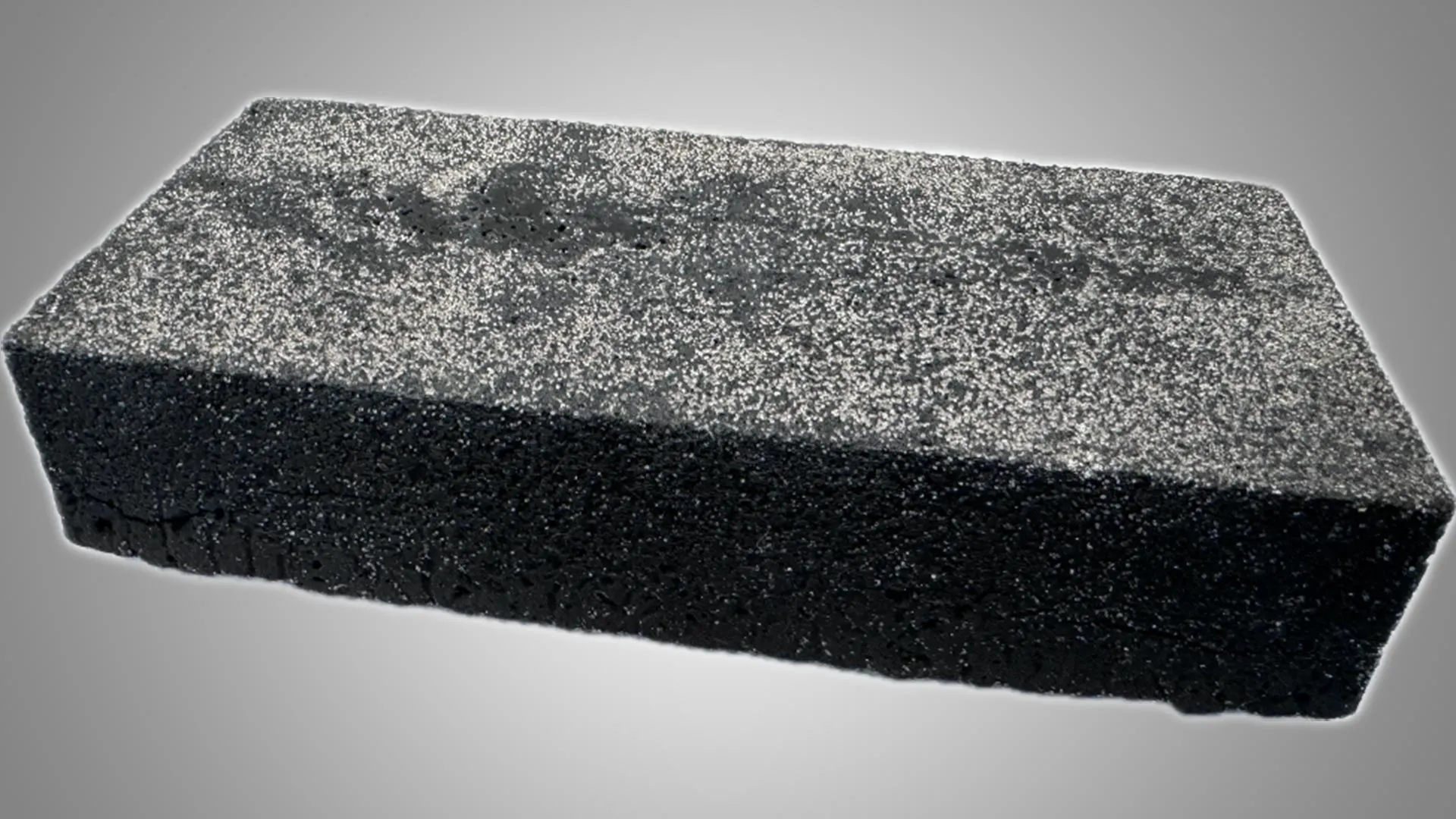
Researchers at Worcester Polytechnic Institute (WPI) have developed a new building material that removes more carbon from the atmosphere than it produces. The advance, reported in the high-impact journal Matter, describes a material called enzymatic structural material (ESM). It is designed to be strong, long-lasting, and recyclable, while requiring far less energy to make than traditional construction materials.
The project was led by Nima Rahbar, the Ralph H. White Family Distinguished Professor and head of the Department of Civil, Environmental, and Architectural Engineering. His team created ESM using an enzyme that helps turn carbon dioxide into solid mineral particles. These particles are then bonded together and cured under gentle conditions. The process allows the material to be shaped into structural components within hours.
Conventional concrete must be produced at very high temperatures and can take weeks to fully cure. In contrast, ESM forms quickly and leaves a much smaller environmental footprint.
Cutting Emissions by Capturing Carbon
"Concrete is the most widely used construction material on the planet, and its production accounts for nearly 8% of global CO2 emissions," said Rahbar. "What our team has developed is a practical, scalable alternative that doesn't just reduce emissions -- it actually captures carbon. Producing a single cubic meter of ESM sequesters more than 6 kilograms of CO2, compared to the 330 kilograms emitted by conventional concrete."