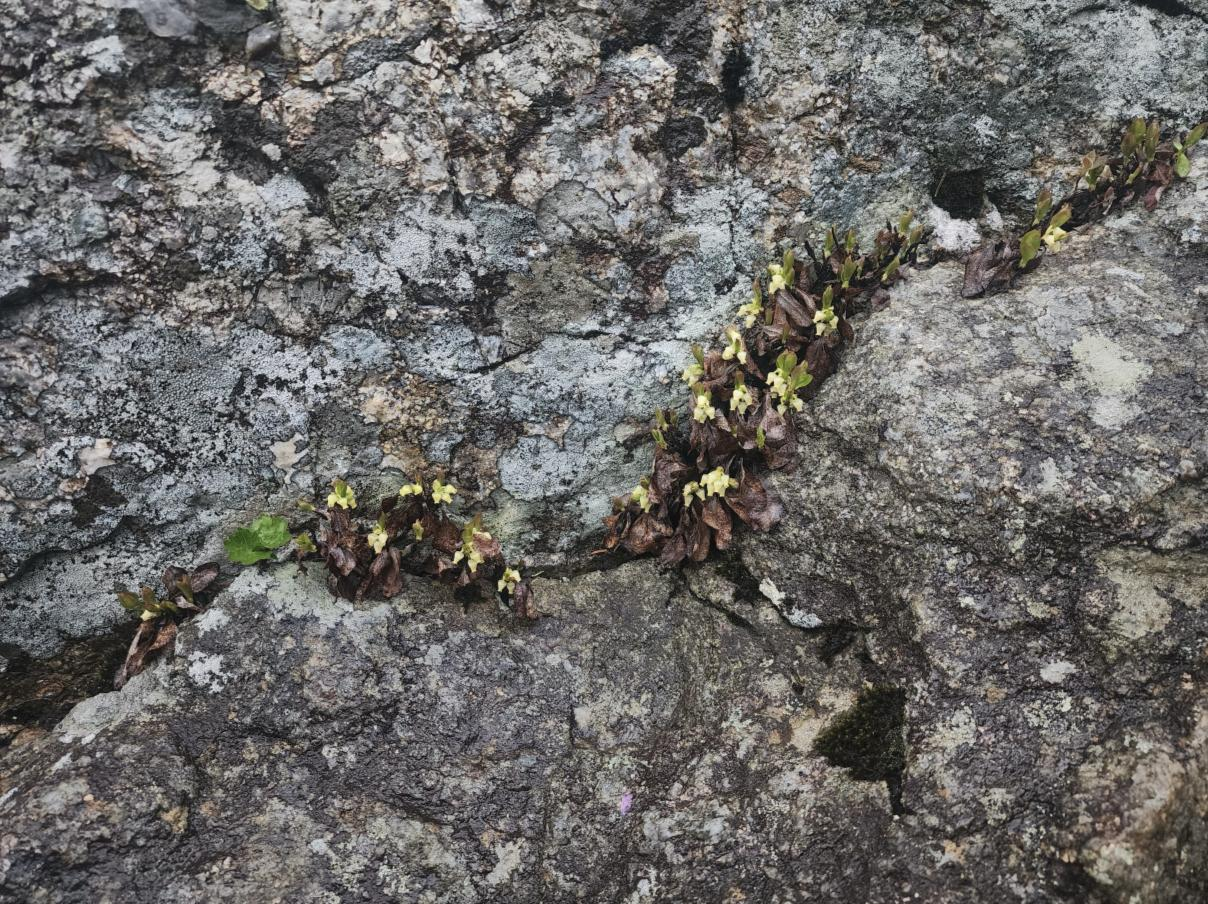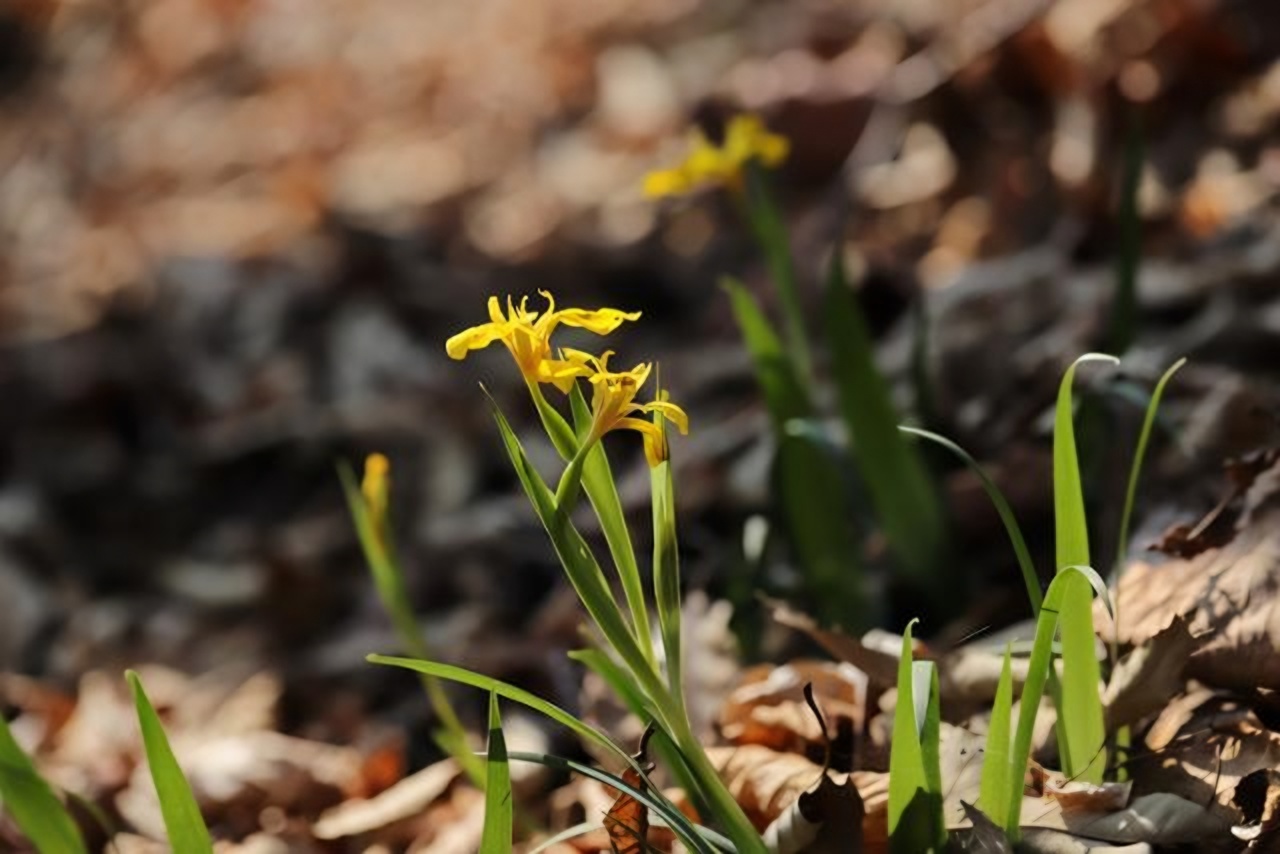
A rare yellow iris (Iris koreana), a species typically native to the southern regions of Korea, photographed in Bonghwa County, North Gyeongsang Province. Yonhap
Deep inside rocky mountain slopes across Korea, pockets of cold air are quietly keeping some of the country’s rarest plants alive, as rising temperatures squeeze fragile ecosystems and redraw the boundaries of survival.
The Korea National Arboretum said Friday that so-called “punghyeolji,” a kind of microclimate with cooler air than the surrounding environment, are becoming increasingly important as natural refuges for rare, endemic plant species threatened by climate change.
The announcement was released in conjunction with the International Day for Biological Diversity, observed Thursday.
These microclimates form naturally along rocky slopes where cold underground air escapes during the summer, creating sites significantly cooler than surrounding lowland areas.