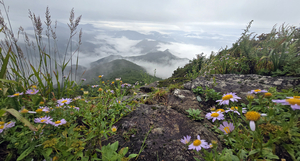
Bukhansan may face 82 heat-risk days a year as climate change intensifies Low clouds blanket the ridges of Jirisan National Park as seen from the Nogodan area in Gurye, South Jeolla Province, on Sept. 25, 2025. (Jirisan National Park) Extreme heat could replace cold waves as the main weather risk leading to trail restrictions at Korea’s national parks as climate change accelerates, according to a new study.The Korea National Park Service and the Global Sustainable Tourism Council on Wednesday published a study projecting how climate change could affect the number of days when mountain-type national parks meet weather-related criteria for restricting trail access.The study analyzed 18 mountain national parks, including Jirisan, Seoraksan, Bukhansan and Naejangsan, under two climate scenarios through 2100.The sharpest change was projected in heat-related restrictions.Under a high-emissions scenario, the average number of days meeting heat-related restriction criteria across the parks could rise from the current 2.9 days a year to 42.8 days in the late 21st century.Bukhansan National Park, one of the most accessible mountain parks for Seoul residents, showed the most dramatic increase.The study projected that the park could meet heat-related restriction criteria for about 82 days a year between 2076 and 2100 under the high-emissions scenario.By contrast, restrictions linked to cold waves are expected to fall sharply.The current average of 24.3 cold wave-related days a year could drop to 2.8 days under the same high-emissions scenario, suggesting that summer heat may become a greater safety concern for hikers than winter cold.The study also found that heavy rain would likely cause only a modest increase in restriction days.Snow-related restrictions, however, may not decline as quickly as expected, as warmer air can hold more moisture and raise the risk of heavy snowfall in the medium term before more precipitation falls as rain in the longer term.The findings point to a shift in how national parks may need to manage visitor safety. Korea began restricting access to trails during weather alerts after deadly flooding at Jirisan National Park in 1998, which killed 27 people.A Korea National Park Service official said climate change is increasingly affecting decisions on park access. The study noted that the number of heavy rain advisory days in national parks and daily maximum rainfall have both increased in recent years.The projected figures, however, do not represent actual closure days.Researchers said they used weather alert data to estimate the number of days that could meet restriction criteria, as direct records of trail closures were difficult to confirm.
Hotter summers may force more trail restrictions at national parks
Extreme heat could replace cold waves as the main weather risk leading to trail restrictions at Korea’s national parks as climate change accelerates, according
TL;DRAI
South Korea's national parks study projects heat-restriction days rising from 2.9 to 42.8 annually by 2100; Bukhansan could face 82-day closures under high-emissions scenario. Climate adaptation signals that infrastructure must scale prediction and alert systems—critical for IT leaders planning resource management amid accelerating environmental change.
412 words~2 min read