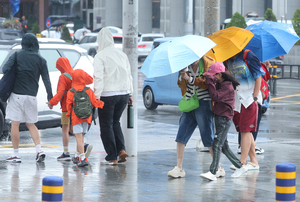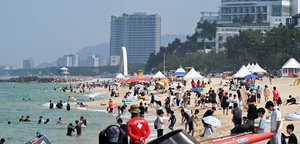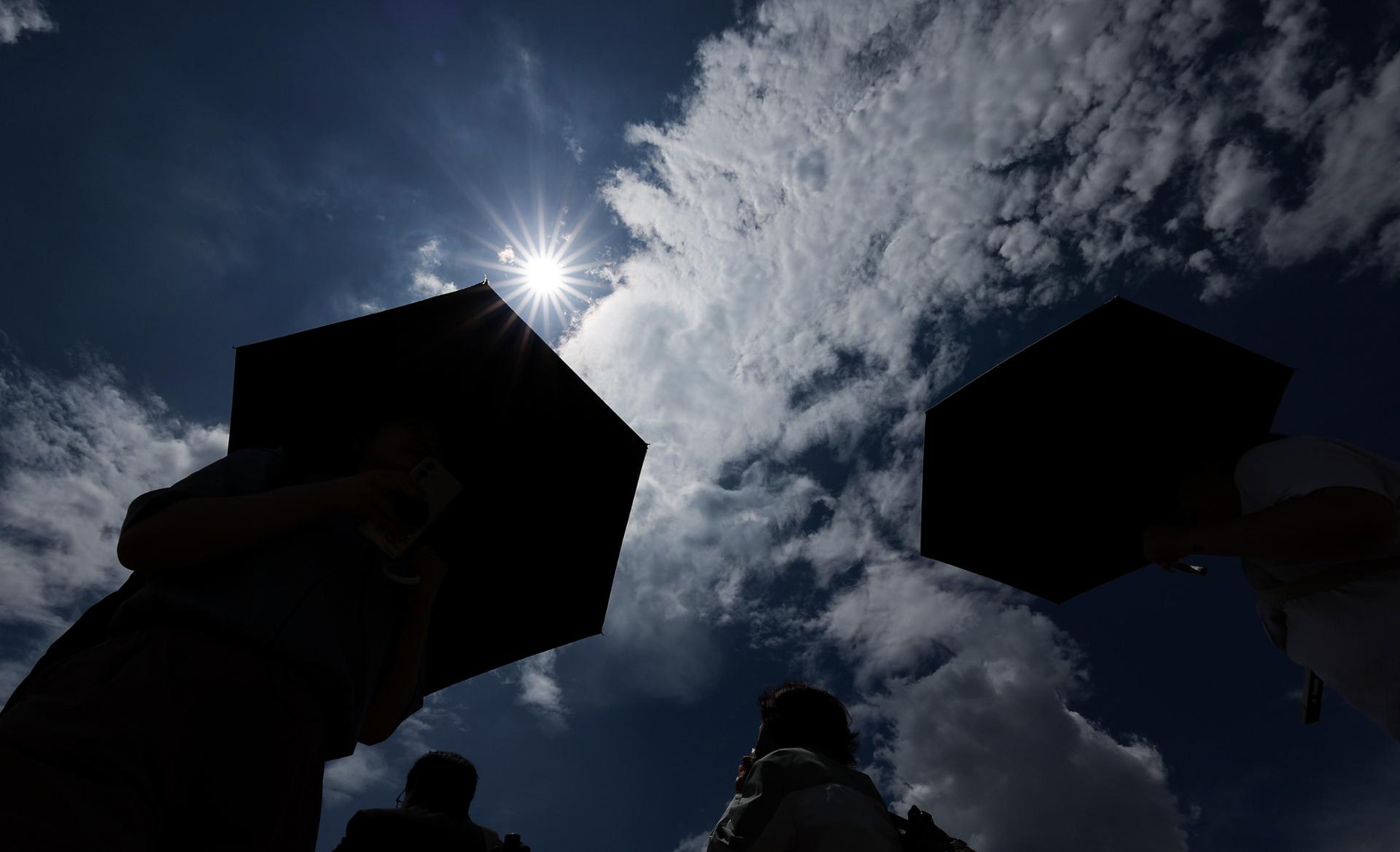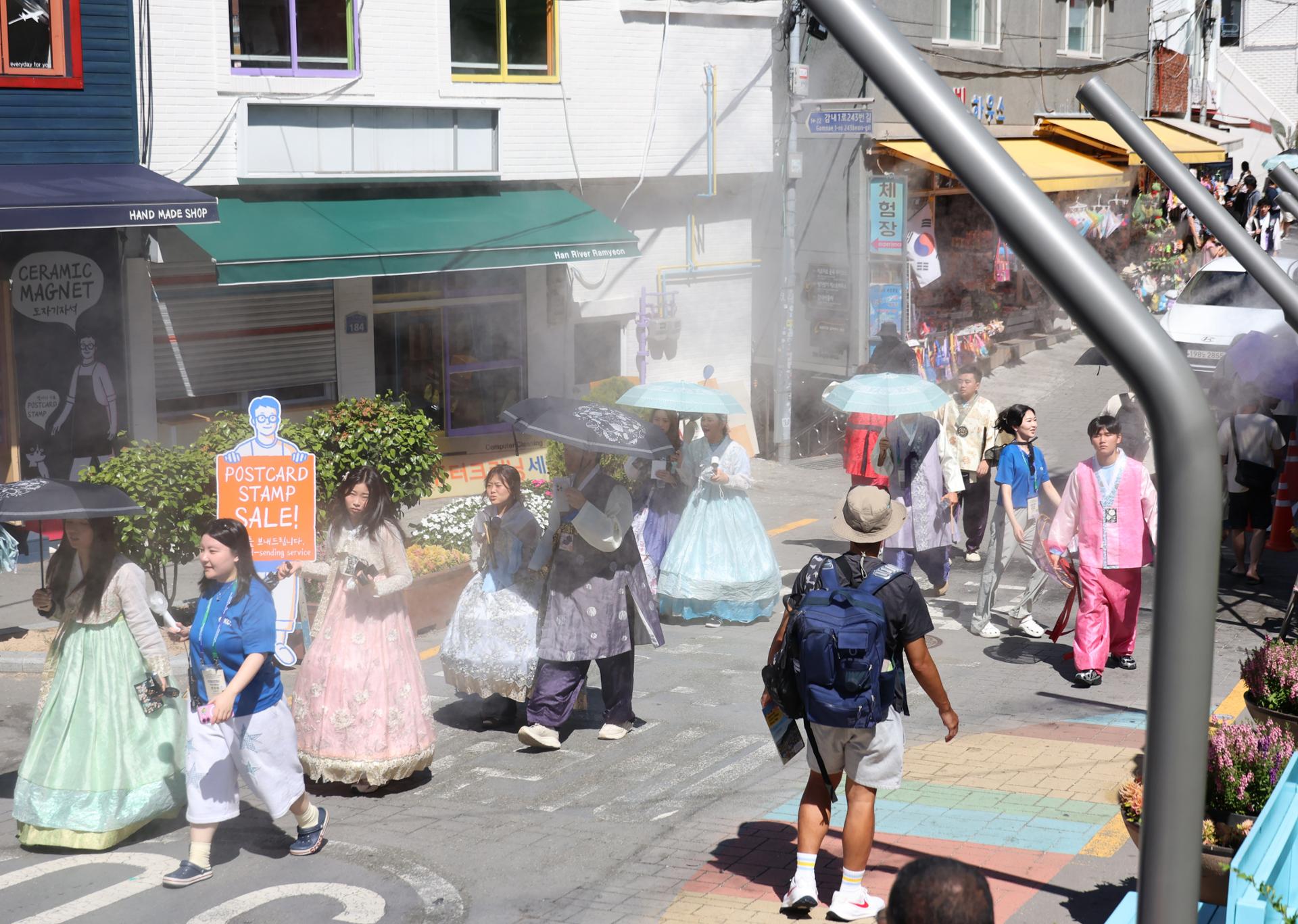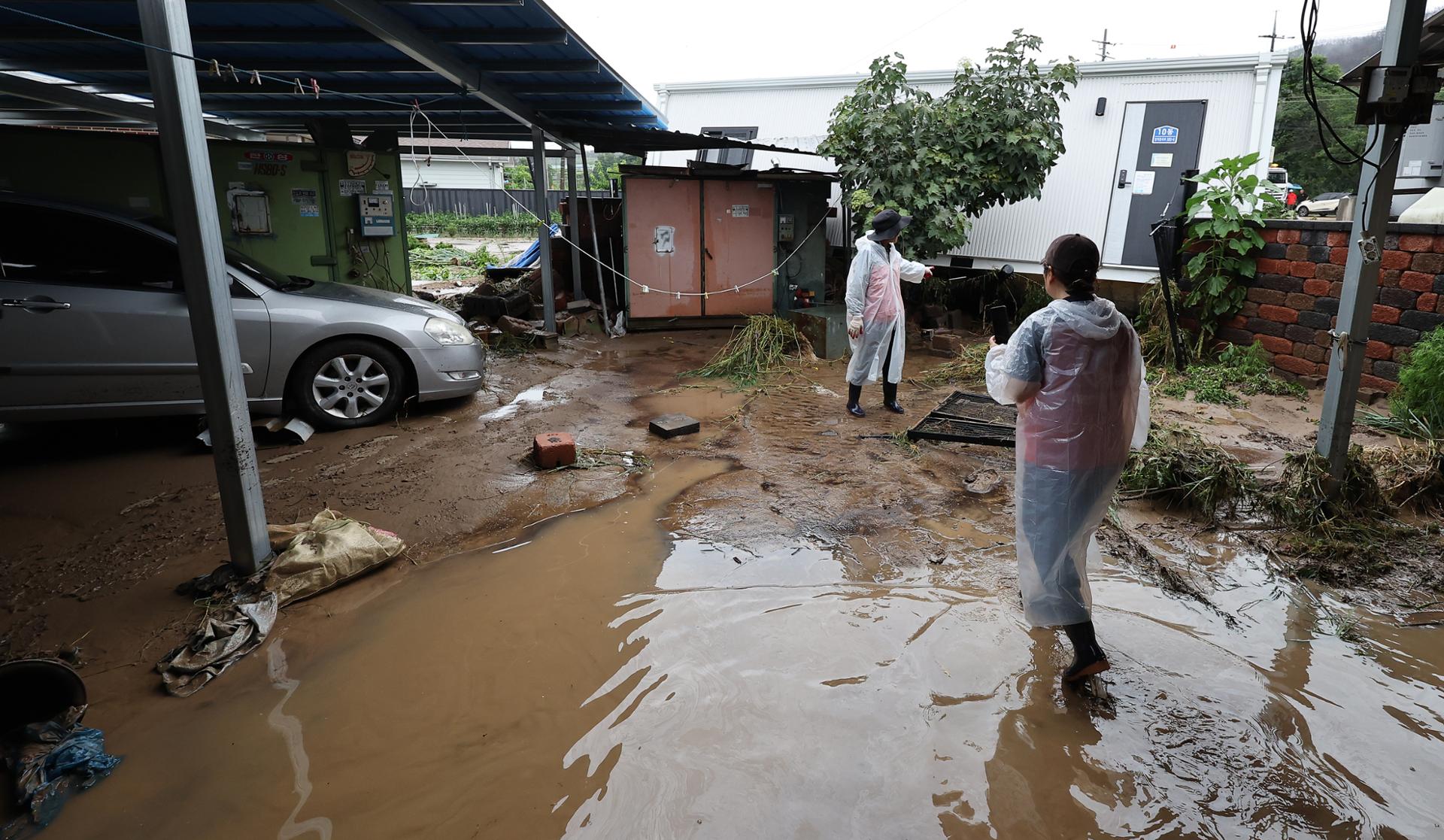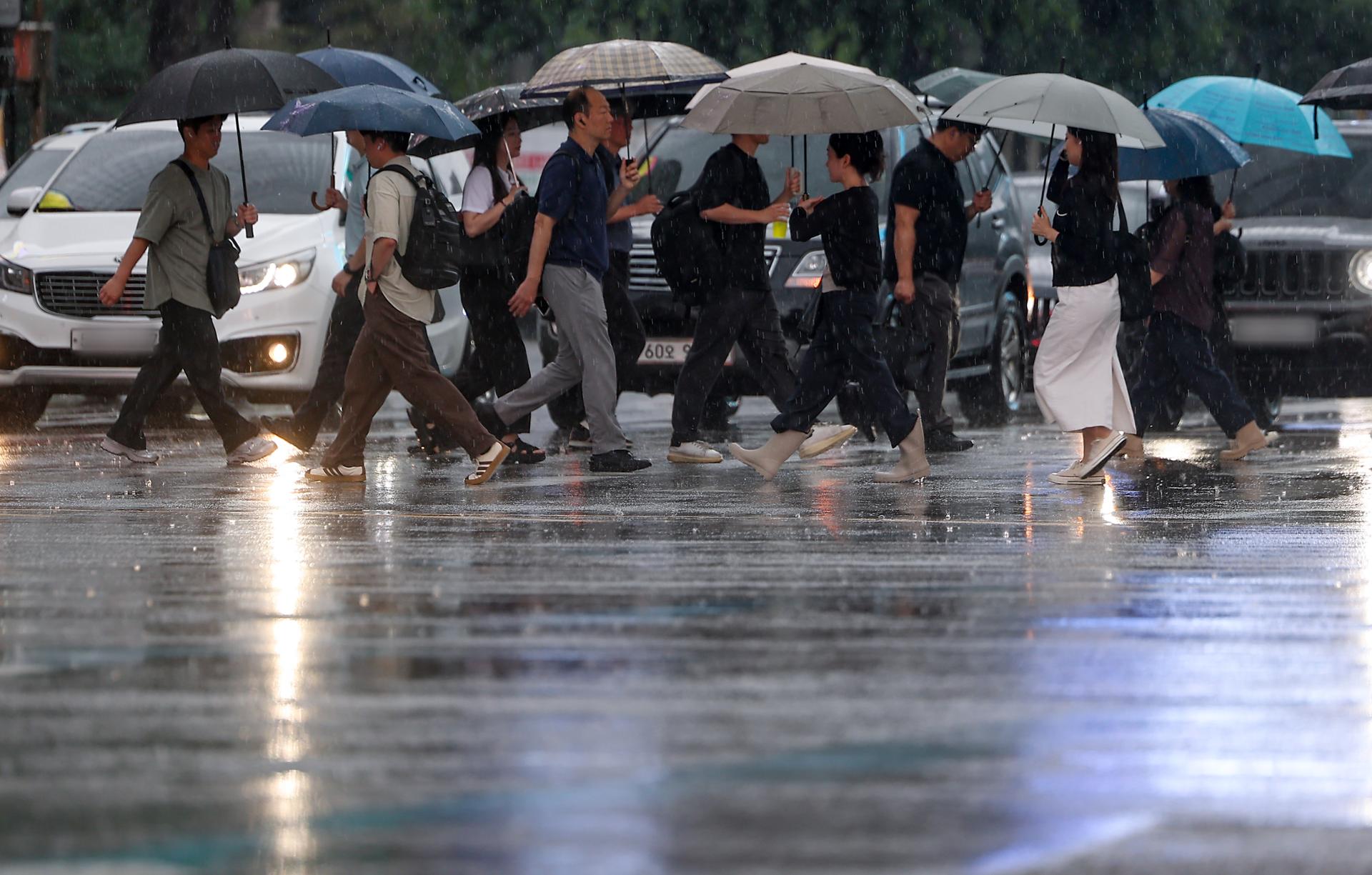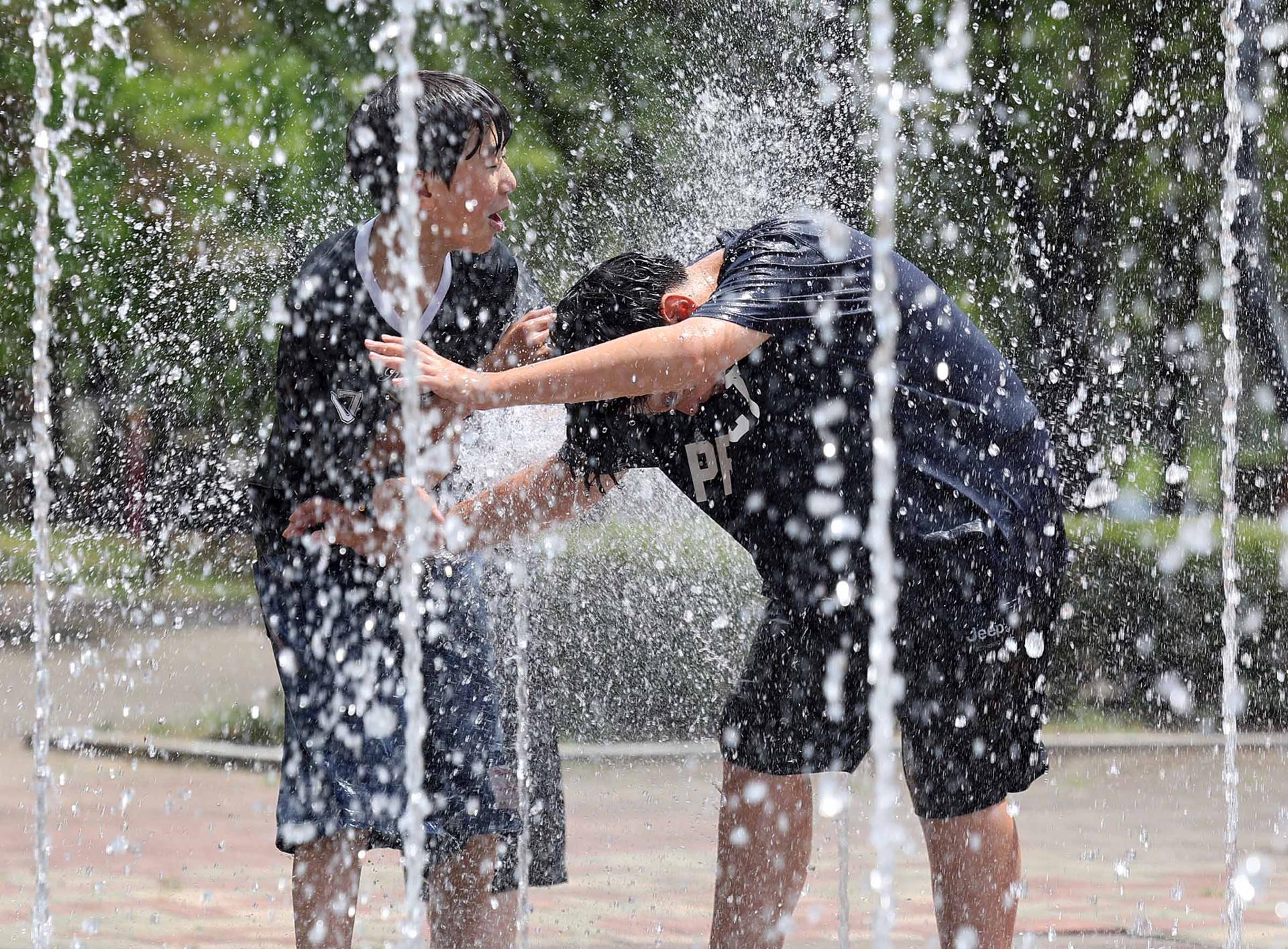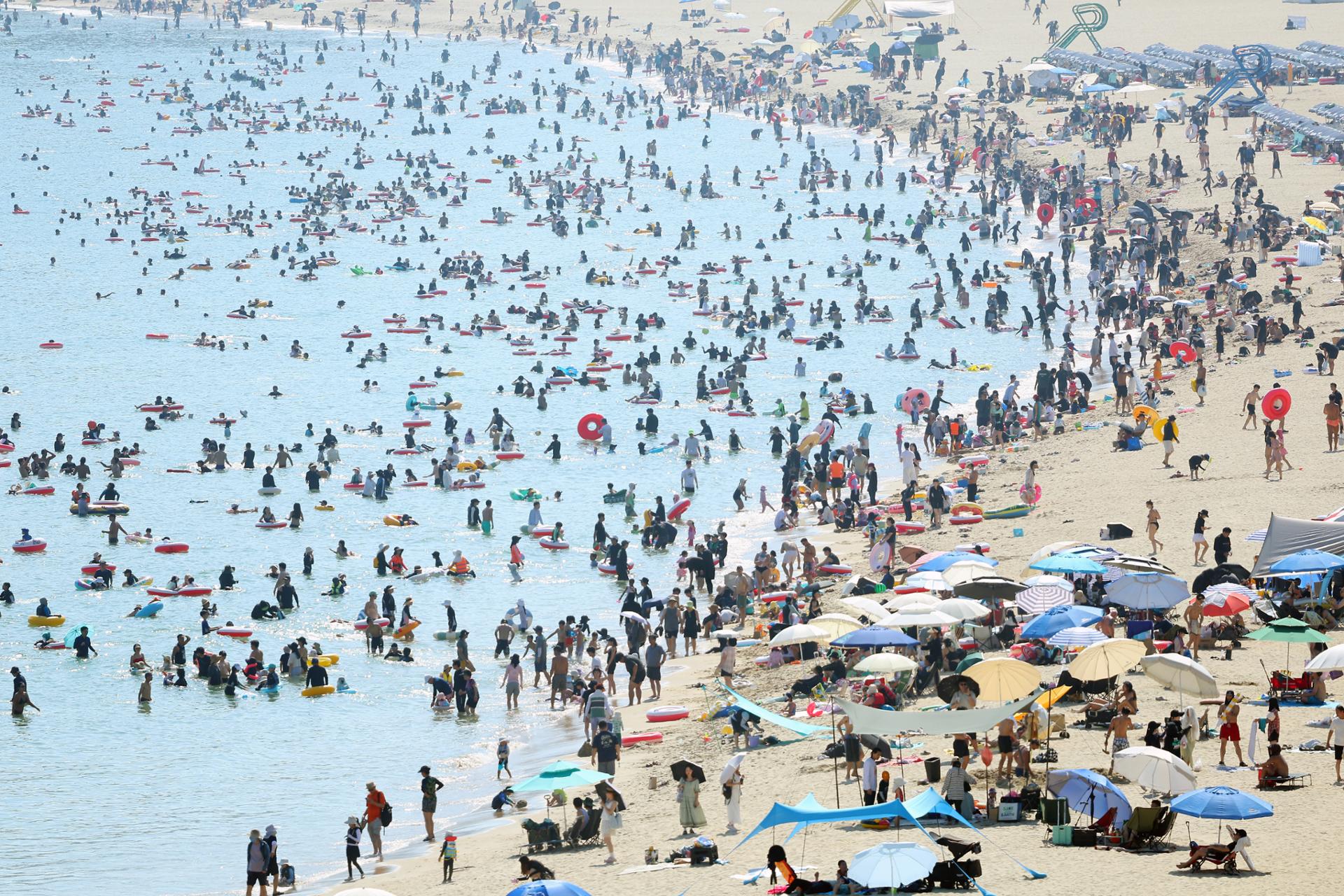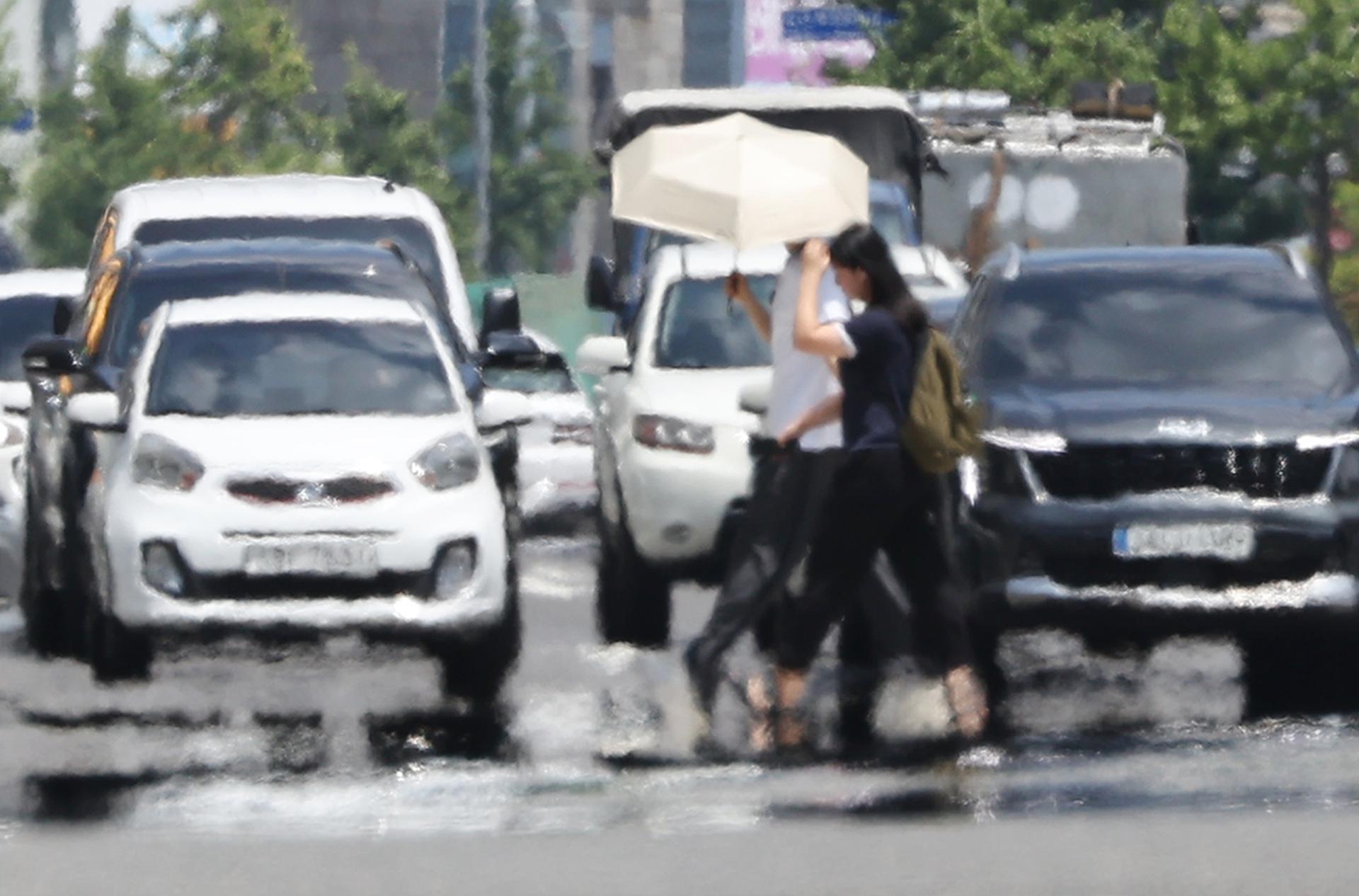
These two photos show the contrasting weather conditions on Monday in Busan, which saw torrential rain in the morning (above) and blazing heat in the afternoon. (Yonhap) Heat and humidity make summer in Korea a trying time for people living here. Monsoon showers may be effective in bringing temperatures down, but torrential rain brings a whole range of new issues like flooding and dampness.It is advisable for residents to keep an eye on weather forecasts, as conditions can change throughout the day. Here are tips on how to get the latest weather information.Online and mobile forecastsThe Korea Meteorological Administration provides weather outlooks for both the current moment and further into the future. The state-run agency also issues warnings for heat, rain and tropical nights, referring to nights that are difficult to sleep through due to high temperatures and humidity.The simplest way to access the weather forecast is on the KMA's website. It has information on rain probability, daily high and low temperatures, wind conditions and humidity.In the hourly forecast table in the short-range forecast section, there is a bar named "heatwave." This shows the level of the four-tier color-coded impact-based forecast for a specific time from lowest to highest risk, ranging from light blue (attention) to yellow (caution), orange (warning) and red (danger).The impact-based forecast shows how much of an impact the current weather has on six categories: health, industry, livestock, agriculture, aquaculture and other (traffic, fire, power outages).The image below shows that there was a minimal heat wave risk for much of the Seoul metropolitan area and Chungcheong provinces, but a substantial risk for the southeastern and eastern coastal regions, on July 16. This screen capture from the Korea Meteorological Administration's website shows a map of the heat wave risk for each region on July 16. (Korea Meteorological Administration) The KMA Weather mobile application is available for both Android and iPhone, and it allows you to receive notifications on urgent weather changes. Note that the application itself does not provide an option to change the language. But if you change the language setting of your phone to English, you can have access to the basic functions of the app in English since it is compatible with the English setting.Severe weather warningsOther sections on the KMA website, such as "current weather in Korea," are self-explanatory, but a notable section is the "current severe weather status." This refers to weather advisories and warnings ("teukbo" in Korean) that are related to heat waves, wind waves, strong winds and nighttime heat.This year, Korea expanded its previous two-tier heat wave advisory system to a three-tier one: advisory, warning and heat wave emergency warning. A heat advisory is issued when the daily high for the apparent temperature is forecast to reach 33 C or above for at least two days, and a heat warning is for two or more days with an apparent temperature of 35 C or above. People sit on the beach at sunset in Gangneung, Gangwon Province, on July 15. (Yonhap) The new emergency warning is issued when the apparent temperature is expected to reach at least 38 C, after remaining above 35 C for at least two consecutive days. It is also issued when the daily high reaches at least 39 C for at least one day.The highest warning level was implemented to notify the public of extreme heat that can result in heat-related illnesses in healthy people and is potentially life-threatening for the elderly, children and other people more vulnerable to health risks.The government advises the public to follow the three-phase process of stop-move-and check: Drop all outside activities, move to an air-conditioned area or shade for hydration and rest, and check the safety of your family, neighbors, the elderly or people around you who may be more susceptible to damage from heat.The KMA has an advisory and warning system for 11 types of weather-related situations, including the aforementioned heat wave and others such as strong wind, heavy rain, heavy snow, severely low humidity, cold snaps and typhoons.Heavy rain warnings are issued in a two-phase system. An advisory is issued when accumulated precipitation in a certain region is expected to be at or above 60 milliliters for three hours, or if the 12-hour accumulation is expected to be at 110 milliliters.A warning is issued for that region if precipitation is expected to be at least 90 milliliters for 3 hours, or if rainfall is expected to be 180 milliliters or more for 12 hours.Korea also issues fine dust advisories and yellow dust warnings, which can be particularly severe in the spring. The fine dust advisory is for when the hourly average particulate matter (PM-10) density of 300 μg/㎥ is expected to last for more than two hours, and a yellow dust warning is for when the hourly average particulate matter density of 800 μg/㎥ is expected to last for more than two hours.With Korean summers being hot and humid, it can be difficult to sleep at night. This is referred to as a tropical night, and an advisory is typically issued on days when the temperature between 6 p.m. and 9 a.m. the next day remains at or above 25 C, during a time when the daily high of 33 C or above is expected to persist for at least two days.The KMA website is available in Korean, English, Chinese and Japanese. The multi-language version of the site shows the current weather, the impact-base forecast for special circumstances like heat waves, satellite imagery and tracking for typhoons, and earthquake information.
Info, advisories and warnings about weather situations
Heat and humidity make summer in Korea a trying time for people living here. Monsoon showers may be effective in bringing temperatures down, but torrential rain
920 words~4 min read