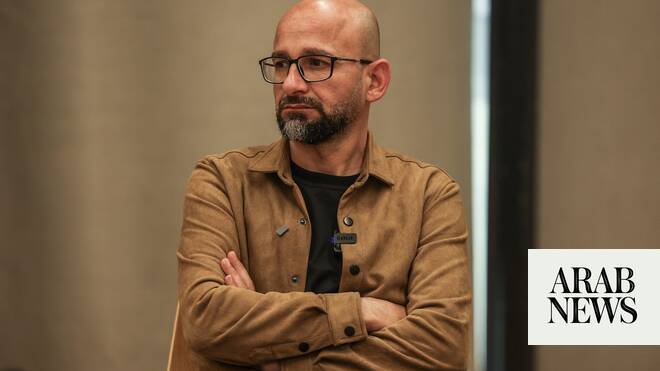
After backlash over claims of systematic sexual violence against Palestinians in Israeli custody, the paper’s opinion editor says the column met its standards; critics cite anonymous testimony, disputed sources and a disputed quote from ex-PM OlmertThe New York Times defended overnight Friday opinion columnist Nicholas Kristof’s column accusing Israel of systematic sexual abuse of Palestinian detainees, including claims that dogs were trained to rape Palestinians.Kristof and Opinion Editor Kathleen Kingsbury rejected criticism of the column, saying it underwent rigorous review before publication and that a review of the critiques has found no errors in the reporting. They acknowledged some subscriptions were canceled over the column but said some Jewish readers expressed gratitude that it was published.5 View gallery Nicholas Kristof (Photo: Julio Cortez/AP)The column, published last week, accused Israeli authorities and security forces, including the government, the military, the Shin Bet security agency and the prison service, of carrying out a systematic policy of rape against Palestinian detainees. Critics said the claims were based largely on anonymous testimonies and disputed sources that could not independently verify the allegations.Kristof wrote that he relied on accounts from 14 men and women who said they were sexually assaulted, as well as on human rights groups. Critics said some of those groups are engaged primarily in anti-Israel advocacy, and that one is linked to Hamas, according to Israel.The decision to publish the piece in the Times’ opinion section, rather than as a news article, was also cited by critics as evidence that the claims would not have met the fact-checking standards of the newspaper’s newsroom.5 View gallery Former prime minister Ehud Olmert (Photo: AP Photo/Ariel Schalit)The column also quoted former prime minister Ehud Olmert immediately after descriptions of the alleged abuse. Kristof wrote that Olmert told him he did not know much about sexual violence against Palestinians but was not surprised by the accounts, adding: “Do I believe it happens? Definitely. There are war crimes committed every day in the territories.”Olmert’s inclusion drew criticism because of his criminal record and because he has become a fierce critic of the government and the IDF since the Oct. 7 war began. Two days after the column was published, Olmert said Kristof had misrepresented their conversation.In a statement to The Free Press, Olmert wrote that Kristof’s column included “claims of extraordinary gravity,” including that Israeli authorities directed the rape of children, that dogs were used as tools of sexual assault and that sexual torture is a systemic state policy. “I did not validate these claims,” Olmert said. “I have no knowledge supporting these claims as I said to Mr. Kristof.”5 View gallery Protest outside New York Times offices in Manhattan (Photo: Liri Agami)Kristof said online that opinion columns are held to a different standard because they contain opinions, and that the column appeared in the opinion section because that is where he regularly writes. Responding to criticism of the claims involving dogs, he cited medical articles that he said supported the possibility, though critics said those articles described cases of humans sexually abusing dogs.The criticism reportedly extended into the Times newsroom. Despite the newspaper’s public backing of Kristof, Puck reported that some newsroom journalists believed the column would not have met their professional standards. A Times staff member told ynet: “We feel the opinion section is hurting the credibility of the entire brand and repeatedly lowering the professional standard for all of us.”Beyond Kristof’s posts online and brief statements from New York Times spokespeople expressing confidence in the column, the newspaper’s formal response came in another opinion piece, written as a joint question-and-answer article by Kristof and Kingsbury.At the start, they said they stood fully behind Kristof’s column despite the backlash. Kingsbury said Kristof had “built upon a growing body of evidence regarding the mistreatment of detainees in Israel,” linking to two reports she said supported the claims in respected news outlets: the BBC and Israel’s Haaretz. She also linked the allegations to what she called documented abuse by Israeli security forces and settlers.5 View gallery Kristof's column in the New York TimesKingsbury said Kristof’s reporting underwent a rigorous review by the Opinion section’s fact-checking department before publication “to ensure that every testimony and anecdote he personally reported was supported by independent sources.” After publication, she said, editors reviewed criticism from readers and others and “found no errors.”Kristof said that in addition to each person he quoted, he spoke with another witness to the alleged abuse, a family member, a lawyer or a social worker with whom the person had shared details. He also said he had written clearly that “There is no evidence that Israeli leaders order rapes.”On the decision to publish the article in the Times’ Opinion section, Kingsbury repeated Kristof’s argument that he is a Times opinion columnist. She said many opinion columns, editorials, interviews and guest essays include reporting to support an argument, and that all opinion pieces must meet high standards of accuracy and fairness. Kristof’s column met those standards, she said.5 View gallery Protest outside New York Times offices in Manhattan (Photo: Liri Agami)Kingsbury said the difference between news articles and opinion columns lies in form and purpose: An opinion column asks readers to consider an argument, while news articles and investigations uncover and verify new facts to share with readers, not to make an argument.They also addressed criticism of several witnesses cited in the column, including Sami al-Sai, who praised Hamas and the Oct. 7 massacre and was jailed for incitement, but was described in the column as an Palestinian journalist who recounted how “he was held down, stripped, blindfolded and handcuffed while a dog was brought in and, with encouragement from a handler, mounted and penetrated him.” Kingsbury said the Times Opinion section does not determine whether a person’s account of sexual assault is credible based on that person’s social media posts.Kristof said that the paper's Opinion fact-checkers corroborated the claims made by al-Sai and another witness, Issa Amro, “with other sources before determining their accounts to be credible.” “It serves no one to automatically discount people’s accounts because of their identity or beliefs,” he said.On links between Hamas and Euro-Med, one of the human rights groups mentioned in the column, Kristof said the organization chairman’s support for the Oct. 7 Hamas attack “can’t be taken lightly,” but that citing a source does not amount to endorsing the political views of its leader. He said Euro-Med was not involved in locating the victims whose testimonies he used.Addressing the column’s most prominent claim, rape by dogs, Kristof said he had carefully considered whether to include it, but ultimately did so because the witness told him he had shared the account with the Public Committee Against Torture in Israel, an Israeli human rights group. Kristof referred to a BBC report from December 2025 in which a Palestinian detainee said he was sexually assaulted by a dog with encouragement from guards in an Israeli prison. He also said dogs were used to rape political prisoners under Augusto Pinochet’s regime in Chile and again said peer-reviewed medical literature had documented rectal injuries caused by penetration by dogs.Finally, Kristof and Kingsbury responded to criticism they attributed to readers who said he had mentioned allegations of Hamas rapes on Oct. 7 despite, as they put it, a lack of concrete proof that they occurred. Kingsbury rejected that claim, saying the Times newsroom, along with independent human rights groups and other newspapers, had documented brutal sexual assaults carried out by Hamas-led attackers. She said the Times’ reporting was based on verified testimony and extensive field investigations.
New York Times defends column accusing Israel of sexually abusing Palestinian detainees
After backlash over claims of systematic sexual violence against Palestinians in Israeli custody, the paper’s opinion editor says the column met its standards; critics cite anonymous testimony, disputed sources and a disputed quote from ex-PM Olmert
1,260 words~6 min read