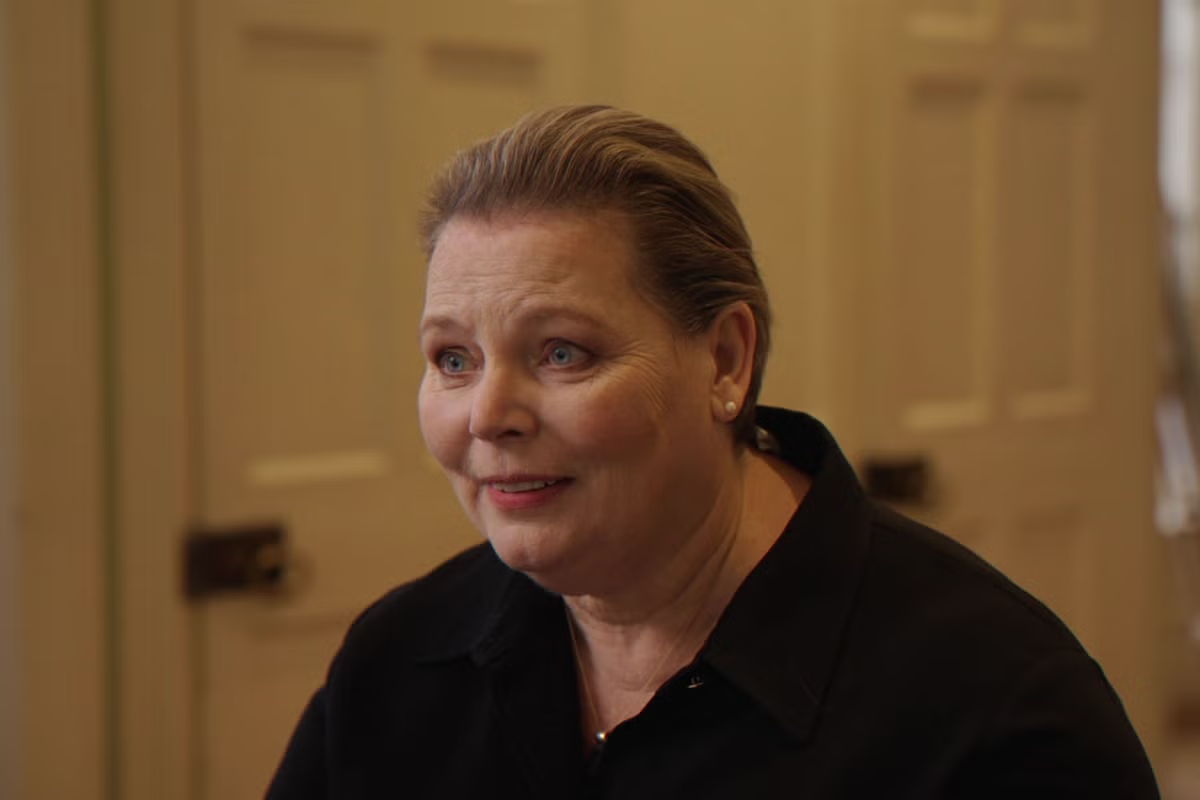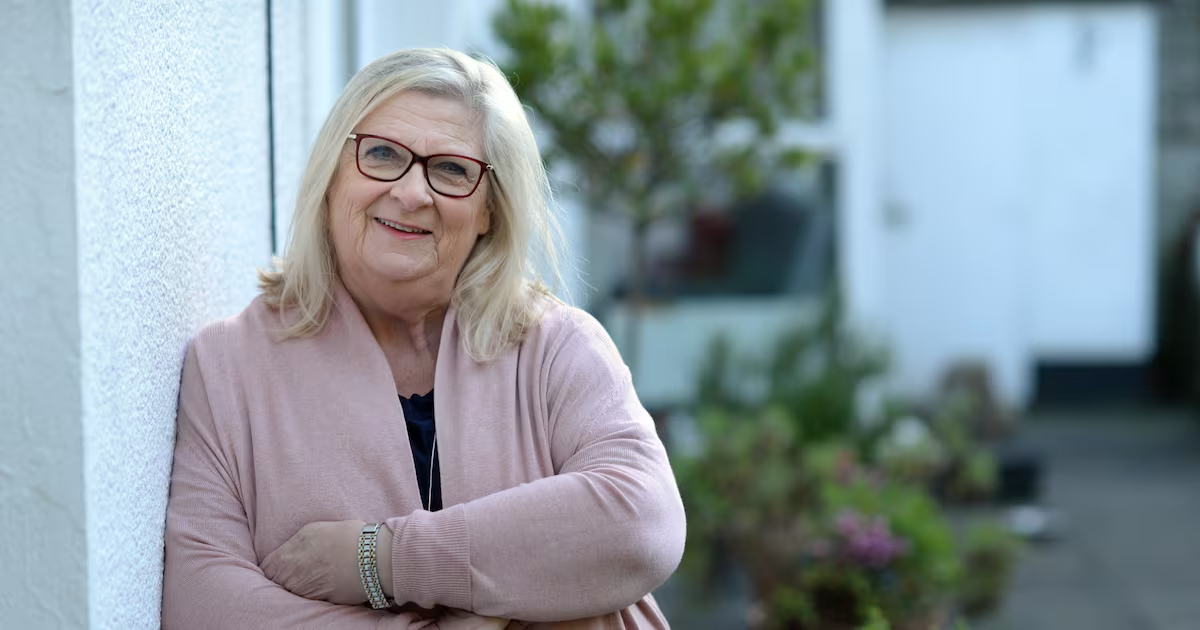
I remember hearing on the radio that three little skeletons were found under a hawthorn tree beside a school. I kept thinking about all those children running around on the grass, literally playing over where the children were buried. They had died during the famine. They weren’t in a coffin or a grave, even. They were just there. I went to bed that night, and I dreamt I could see three children. It was like they were pointing a finger at me, saying, “I want you to write my story.” I remember feeling, “Why would you choose me?” I had my own young children, and my little boy was only a baby. Why the hell would anybody want me to do it? But I wrote Under the Hawthorn Tree, and Michael O’Brien published it, and I was thrown into the world of writing. I remember being so nervous before the launch. We were worried that there was going to be a huge backlash because it was very strong. At the beginning of the book, a baby dies, and the children in the book see certain things and find a dead body. It was a gamble whether anyone would actually buy it.So I couldn’t believe the success of the book. You don’t expect it to happen. This one little lucky book changed my life. I’d always wanted to be a writer. I remember Seamus Heaney coming to my secondary school when I was about 13 to read some of his poetry. We became friendly later in life, and he told me that he had been so nervous. He had been pushed into doing the reading by his aunt, who worked in the school. But I remember it was like an electric shock seeing him. He was a real person and a writer. He wasn’t a lunatic, or James Joyce, or Samuel Beckett, or Oscar Wilde. He was a normal person, wearing a tweed jacket and a shirt. I’m very conscious now that when I speak in schools, maybe one or two of the children will go on to become writers, and I’m actually having an influence on them. I try to keep my writing as simple as possible and as punchy as possible. My main focus is for me to get into the story, but also for the reader to get into the story.Author Marita Conlon-McKenna I get ideas about different things all the time. I hear something, I see something, or I read something, and I think, “That would be interesting.” Then I decide which story I am going to write, and I clear all the others to the back of my mind. [ Marita Conlon-McKenna: from Under the Hawthorn Tree to The Hungry RoadOpens in new window ]Often, when I’m working on a book, I see the child, or the hero in the story, doing something. I get visual images and pictures, almost like I’m making a film. I write what I see and what I feel. I can sense things. I always have since I was a kid. When I visit historical places, if I touch a wall or touch a thing, I can imagine myself there at the time that something happened there. I use that now in my books, because it’s a really good guide. What are the characters hearing? What are they seeing? What are they sensing? Are they sensing danger ahead? Are they sensing fear? When I’m talking to kids and to adults who are trying to write, I always tell them to use their senses. A lot of people don’t think to use their senses, but their senses are leading a pathway to what is going on in the story. I’m very rooted in the earth and the soil, and in Ireland. When I’m in Ireland, I can see stories. I can sense stories around me. Once I go outside of Ireland, that magic seems to go away. I’ve tried writing in other countries, and I can’t write a word. I have to be here. I can write in my study, or in bed or even on a train, but I just have to be in this familiar space of Ireland to write.[ ‘I can’t live in Dublin. Unless you have a gig that pays a lot of money, or four jobs, you can’t’Opens in new window ]As a writer, you have to know yourself what suits you. You have to know what kind of writer you are, what works for you, and what doesn’t. I have strong instincts, and I’m very lucky. I have really good publishers and a very good agent, and we’ve been working together for years. I tell them the idea of the story I’m thinking of, and they say to me, “Go and write it.” They don’t see a word of that book until I’m ready.When the book is nearly finished, I put it all out on the livingroom floor and then ask myself, “Do I need a little page here? Is that flowing smoothly?” It’s almost like a patchwork quilt that I’m pulling together. It wouldn’t make sense to anybody else, but I know exactly how it’s working,People sometimes say I’m scatty or that I’m a bit dreamy, and probably I am. But in terms of my writing, I am quite focused. I’m often asked to write articles for the paper, or short stories, or review books, but I find that distracts me from my own writing and my own stories, and I have to protect that. I’ve slowed down as I’ve gotten older, and I don’t write as fast, but hopefully I can keep writing until I’m a very old lady.In conversation with Rosanna Cooney
Marita Conlon-McKenna: ‘I write what I see and what I feel. I can sense things. I always have’
Our senses lead a pathway to what’s going on in a story, says the bestselling author
949 words~4 min read