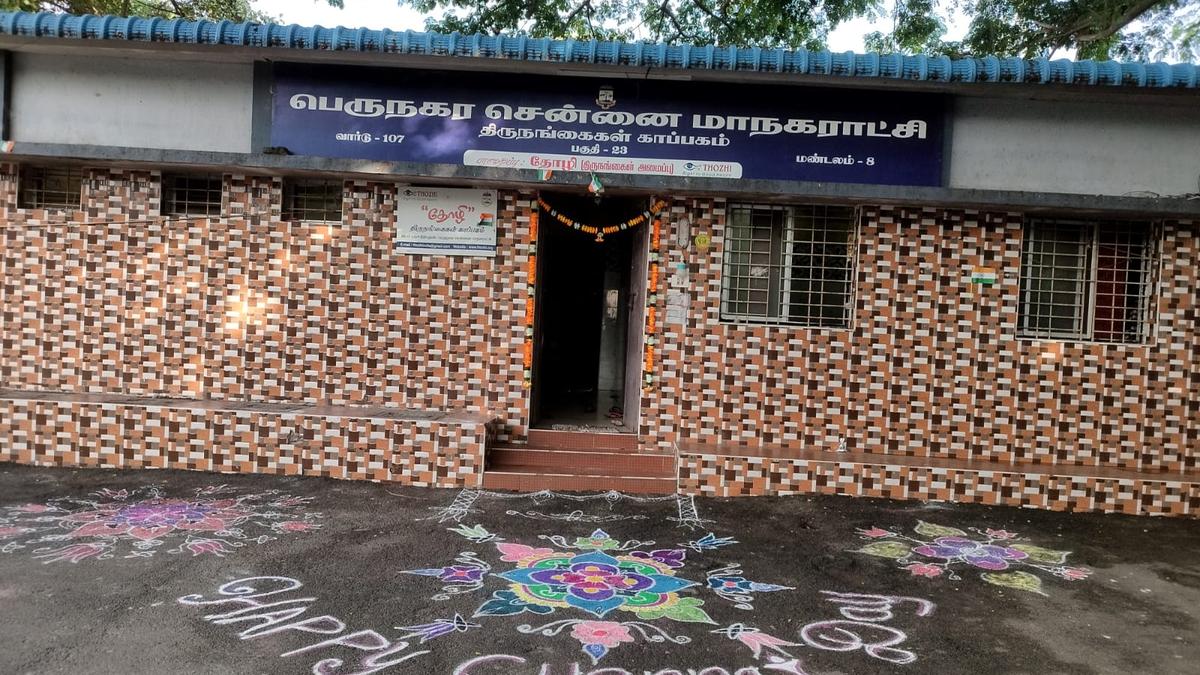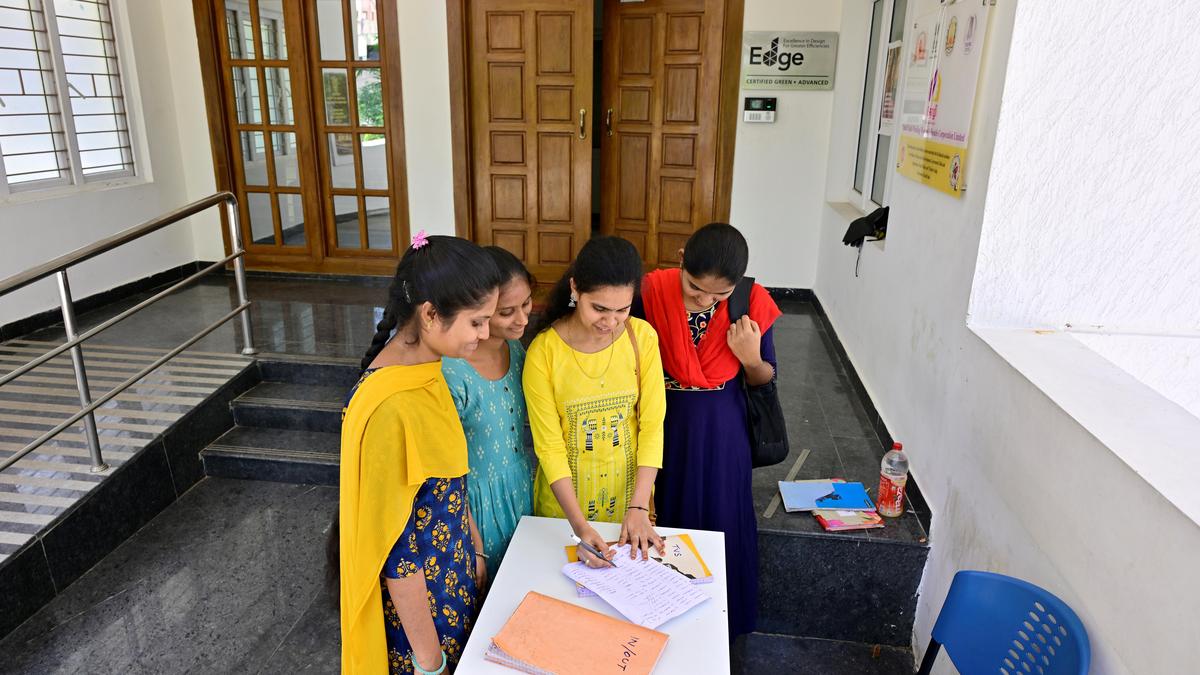
Governments change. Policies change with them. One Tamil Nadu policy, however, deserves to outlast political transitions - the construction of hostels for women migrants, built and run in partnership with the private sector.Why is that?Women in India migrate more than men. Nearly 48 per cent of women live away from their birthplace, compared with roughly 11 per cent of men. However, around 87 per cent of female migration is marriage-related, and less than 5 per cent is employment-related, according to the Ministry of Statistics and Programme Implementation’s Migration in India survey.One of the key reasons for low migration among women for paid work is that the lack of infrastructure that can help convert women’s aspirations into employment, specifically, somewhere safe to live, is simply not there sufficiently in urban India.Female enrolment in higher education now matches male enrolment. Yet this achievement sits awkwardly alongside a persistent reality: less than half of even ‘single’ women aged 24-29 are in paid work, based on periodic labour survey data.For single women, the usual barriers — care work, household responsibilities, family obligations — are not yet in play. What holds many of them back from moving to cities for work is a basic obstacle: the lack of safe, affordable housing in the cities where the jobs are.Urban jobs in sectors such as information technology, healthcare, finance, and education are concentrated in cities, but unlike manufacturing clusters, where employer-provided dormitories are common, these sectors do not offer on-site or off-site accommodation.A young woman moving to Chennai, Bengaluru, or Gurgaon from the interior parts for her first job must navigate an unfamiliar housing market independently, often without contacts, in an environment where her family’s approval of the move hinges on whether she can live by herself safely.When educated women cannot migrate independently for work, firms also face a reduced talent pool. India’s demographic dividend depends on converting human capital into productive employment. If safe urban residence remains unavailable to women migrants, the positive externality to the country from the returns to female education remains unrealised.TN shows the wayTamil Nadu is one of the States that has appeared to have recognised this. The state established the Tamil Nadu Working Women’s Hostels Corporation Limited in 2019, to build and operate hostels under the brand name Thozhi, meaning ‘friend’ in Tamil.The network now spans 19 locations, operates in a public-private partnership, has over 1800 beds, and maintains an overall occupancy rate of approximately 87 per cent as of October 2025, with all five Chennai hostels near full capacity, according to administrative data. The Chennai hostels alone house residents from Tamil Nadu and at least 12 other States and Union Territories.A study of the Thozhi hostel model, conducted by the authors of this article together with Niharika Gowthaman, Rammyaa M, and Swetha Shree R of Great Lakes Institute of Management, and published recently, sheds light on how the model operates and why it has become a success.We first conducted an online survey of over 100 residents across hostels in Tamil Nadu, covering their reasons for choosing the hostel, satisfaction with facilities, and changes in career and personal outcomes. We then conducted in-depth interviews with residents of all five Chennai hostels, including four hostel (resident) managers and over 50 women.Survey findingsTogether, these findings show that the hostels operate as labour-market infrastructure bridging the gap between a woman’s decision to work and her ability to stay in the city long enough for that decision to take hold. Residents consistently describe a pathway in which secure government-backed housing enables something far more fundamental than shelter: it provides the stability that allows routine formation, and routine that makes sustained employment possible.Women who would otherwise have been unable to migrate because their families were not satisfied with private hostels or because they could not afford private accommodation describe the hostel as the enabling condition. Several noted that without the assurance of a government stamp, their parents would not have permitted their move.Our interviews found that residents rated safety and security as their primary reason for choosing the hostel, with family approval a close second. The hostel managers we interviewed confirmed this pattern. The hostel operates as a socially recognised safe space.Room rents across Thozhi hostels range from under ₹2,000 per month in smaller towns to around ₹10,000 for single AC rooms in Chennai, broadly aligned with entry-level service sector salaries. Many residents report remitting part of their salary home, savings, and deferring expensive housing commitments until their careers stabilise.Women describe learning to travel alone, handle official processes independently, and assert themselves in professional settings as a gradual accumulation of confidence that directly feeds into career persistence.Of course, there is always room for operational improvement. Food quality and student occupancy (since any woman over age 18 can apply to stay), which could potentially crowd out working women, are issues that management can address. It would also be useful to start career or personal finance management guidance, but as a proof-of-concept, the Thozhi hostel model is compelling.This points to two immediate directions. First, other states should study and can replicate the model. The institutional design - government backing, which generates family trust, professional management, digitised administration, and affordable tiered pricing, is transferable. Several Indian states have urbanising economies and growing female graduate populations, but no equivalent institutional support for women migrants. Second, ensure appropriate revenue-sharing models with private operators working under a PPT framework that preserves credibility, safety standards and affordability norms.Young Indian women need a safe place to stay when they want to move for work. How seriously the country addresses this constraint will determine how many young women get to build the futures they are capable of. Tamil Nadu is showing a way.The writer is Professor of Economics, Great Lakes Institute of Management, ChennaiPublished on May 22, 2026
New TN govt must continue working women’s hostel scheme
Tamil Nadu has shown the way for providing safe housing for working women. Other States must emulate this model
963 words~4 min read