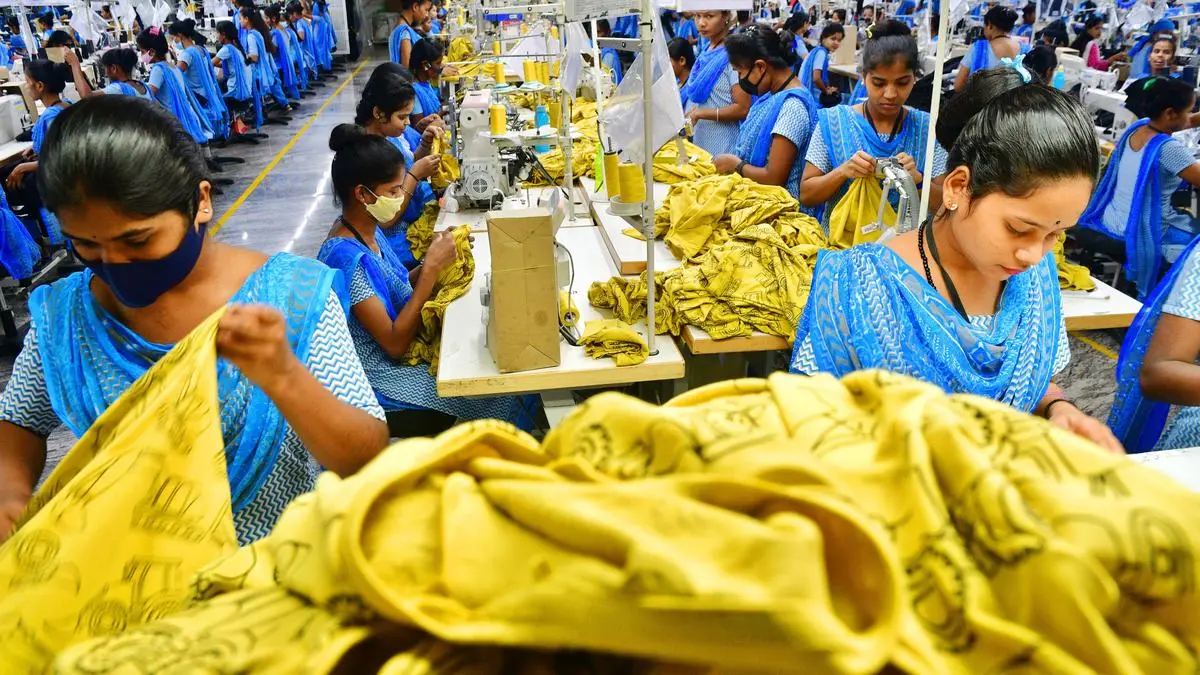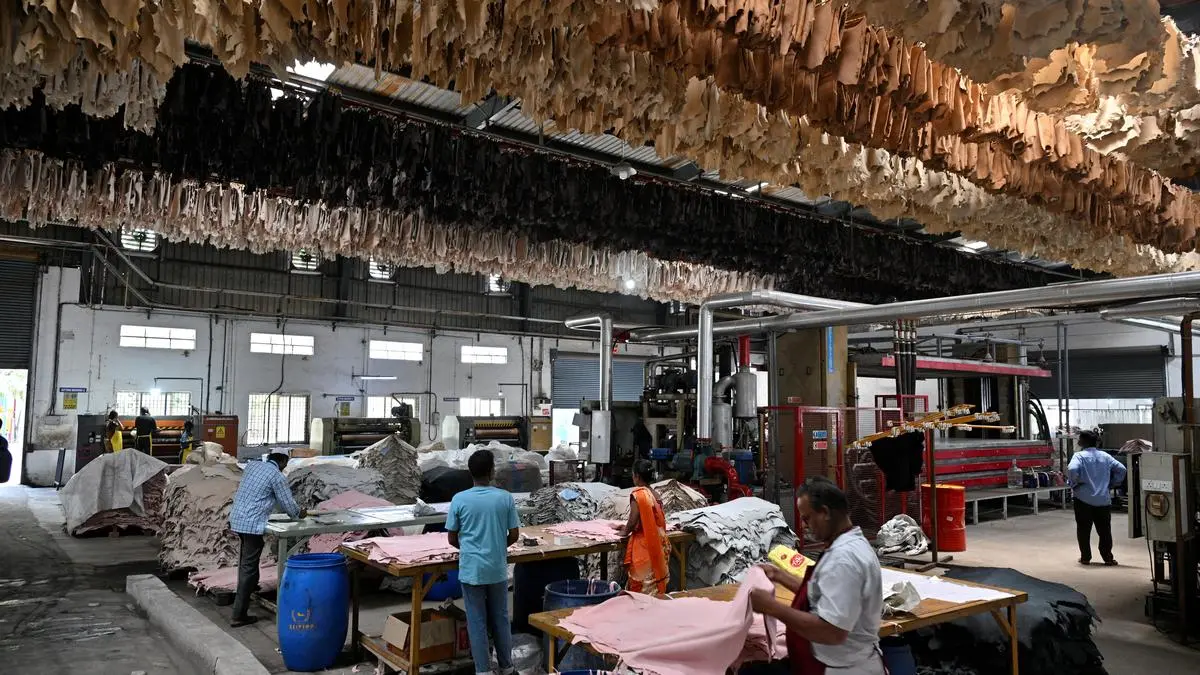
The leather industry said such measures would help strengthen major clusters like Ambur and Ranipet, improve productivity, attract investments and support the target of achieving ₹25,000 crore in exports by 2030.
| Photo Credit:
Tamil Nadu’s leather and footwear industry has sought from the State government dedicated hostel facilities for women workers, capital subsidies for modernisation, and the creation of a 1,000-acre integrated leather and footwear manufacturing park to help the sector achieve ₹25,000 crore in exports by 2030.Demand for worker housing facilitiesOn the lines of government building hostels for employees of mobile manufacturing units in and around Sriperumbudur, the textiles industry in Tiruppur wanted similar facilities for lakhs of employees, especially migrant workers. The leather industry wants similar facilities in the Ambur-Ranipet belt, which employs over 1 million.The demands from the leather industry were presented by M. Abdul Wahab, Managing Director of KH Exports India Pvt. Ltd. and Regional Chairman, Council for Leather Exports (Southern Region), during the Industry Leaders’ Connect 2026 organised by Guidance Tamil Nadu in association with the State Industries Department in Chennai last week.Sector’s contribution to Tamil Nadu economyWahab said the leather and footwear industry remains one of the key pillars of Tamil Nadu’s economy, with about 98 per cent of its units operating in the MSME segment.He said the sector provides employment to nearly 1.95 million people in the State, of whom around 85 per cent are women, largely drawn from rural and economically weaker sections.Tamil Nadu continues to be India’s largest processing hub for leather, leather products and footwear, with major manufacturing clusters at Ranipet, Ambur, Vaniyambadi, Pallavaram and Erode, he said.Non-leather footwear manufacturing gains momentumHighlighting the State’s emergence as a hub for non-leather footwear manufacturing, Wahab noted that several overseas companies, particularly from Taiwan, have signed investment agreements with the Tamil Nadu government. These include Hong Fu at Panapakkam, Pou Chen at Kallakurichi, Crocs through Kothari and Phoenix at Eraiyur, and Feng Tay at Cheyyar and Tindivanam.Industry seeks policy support and integrated parkTo sustain the industry’s growth, Wahab urged the government to establish hostel facilities for the expanding women workforce in Ambur and Ranipet, provide capital subsidies of 30 per cent for MSMEs and 20 per cent for large enterprises to modernise machinery and expand capacity.He also urged the State government to develop a 1,000-acre greenfield industrial park with integrated facilities covering tanneries, footwear and leather goods manufacturing, logistics and skill development.With continued government support, the leather and footwear industry aims to raise exports to ₹25,000 crore by 2030, generate employment for three million people, and increase Tamil Nadu’s share of India’s leather products exports to 60 per cent, he said.Hostels seen as boost for productivityBuilding hostels for employees is a very good initiative by the government; it will definitely help the leather & leather product industries in our area. Right now, the leather industry employs many migrant workers from the north, and individual companies provide them with accommodation or pay for it. A Ateequr Rahman, Managing Director of Habeeb Tanning Company in Gudiyattam between Ranipet and Ambur. It will definitely help the industry to achieve more productivity and growth, he added.Government plans women’s hostels in industrial clustersMeanwhile, TN Venkatesh, Principal Secretary, Department of Handlooms, Textiles, Khadi, and Handicrafts, Tamil Nadu, at a meeting in Tiruppur on Sunday, said that the State government has allocated ₹1,250 crore to construct “Thozhi hostels” (women’s hostels) in industrial clusters.Published on June 29, 2026