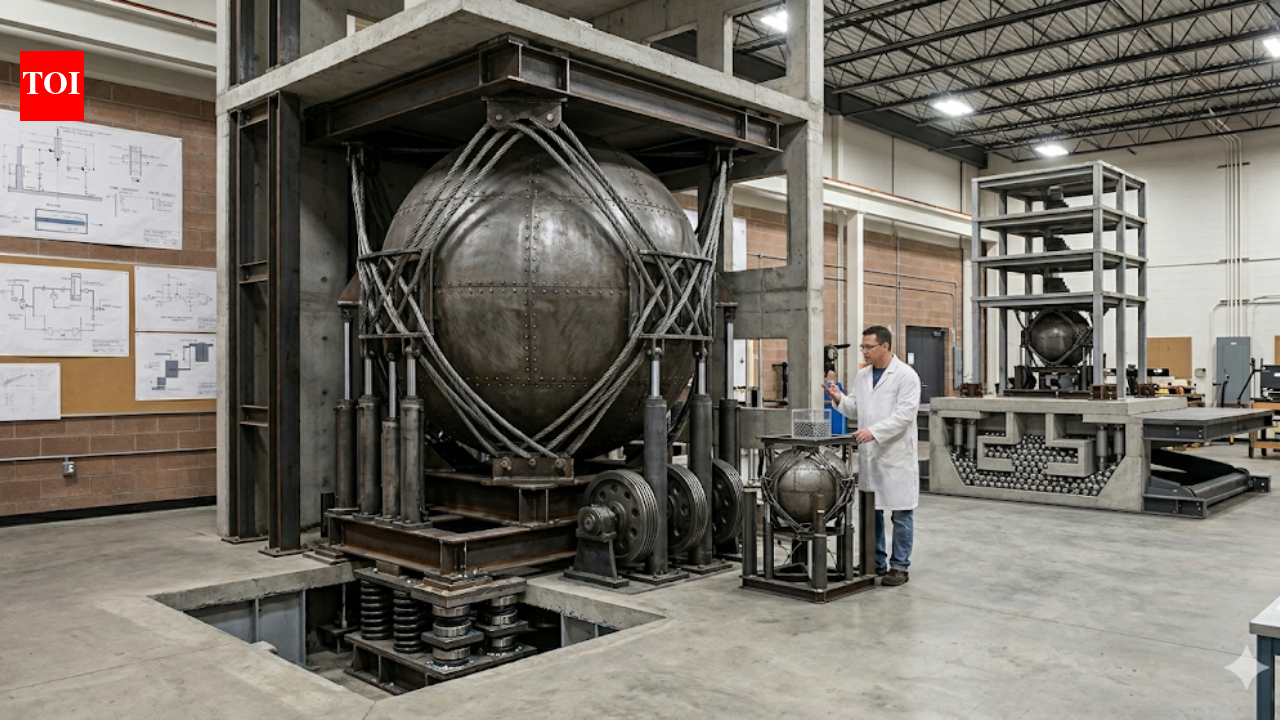
When a hardened steel ball rests on a flat plate, the entire load passes through a contact patch smaller than a pinhead. Intuitively you might expect the stress there to be enormous — and it is. A 100 N load, roughly the weight of a 10 kg mass, can generate more than 1 GPa of pressure inside that tiny spot. That is several times the yield strength of mild steel, yet well-designed parts survive millions of cycles. Understanding why is the entire point of Hertz contact theory.
This article walks through how to estimate contact pressure and contact size for curved bodies, works a full numerical example, and explains the subsurface stress that engineers most often forget.
Why this calculation matters
Contact stress decides the fate of a surprising range of machine elements: ball and roller bearings, gear teeth, cam-and-follower pairs, wheel-rail interfaces, and press fits. None of these fail because the average stress is high. They fail because a concentrated, repeated contact load drives fatigue cracks just below the surface.
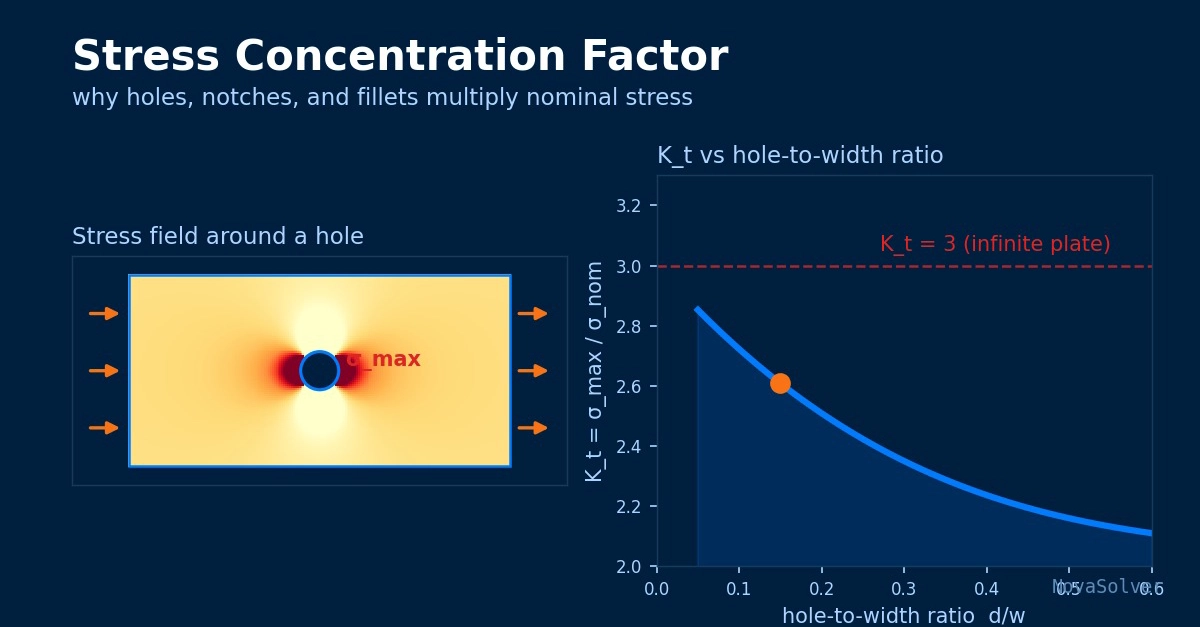
If you size these components using nominal stress — load divided by some projected area — you will be wildly optimistic. The real contact area is tiny and load-dependent: it grows only as the cube root of force. So the pressure does not scale the way bulk-stress intuition suggests. You need contact mechanics to get a number you can defend in a design review.