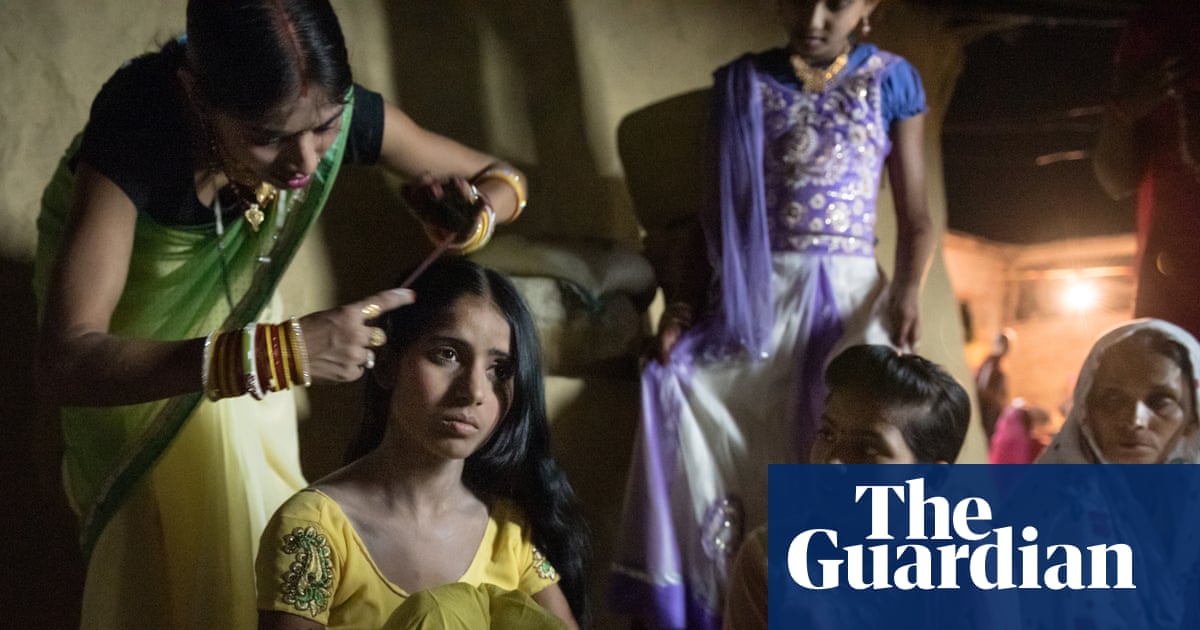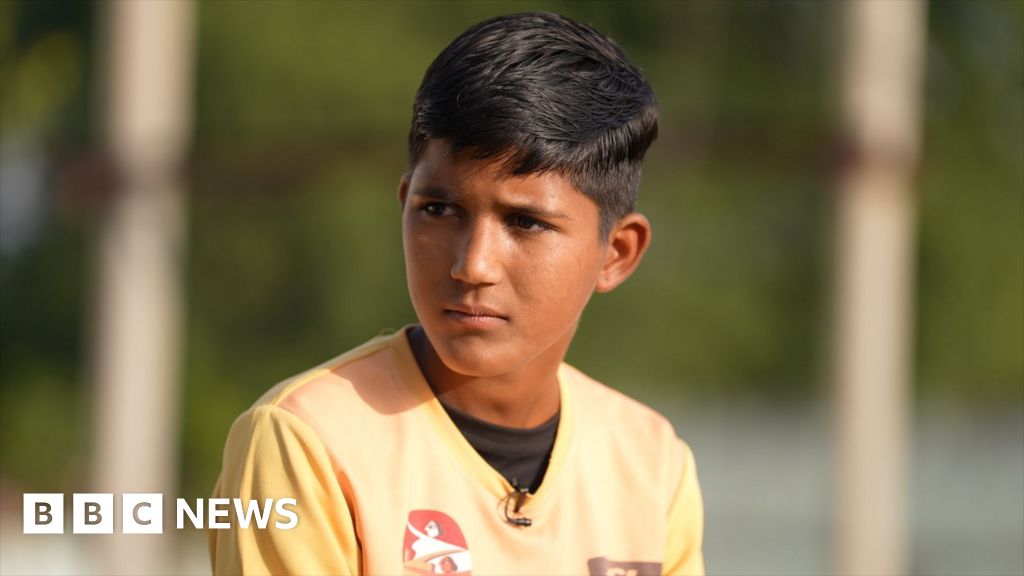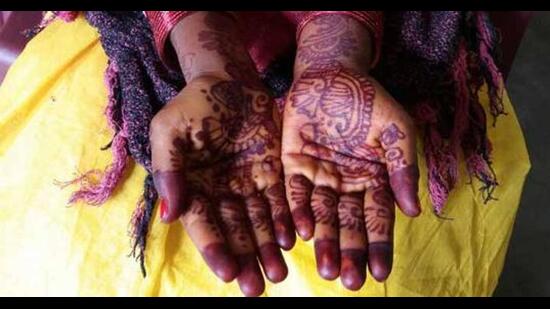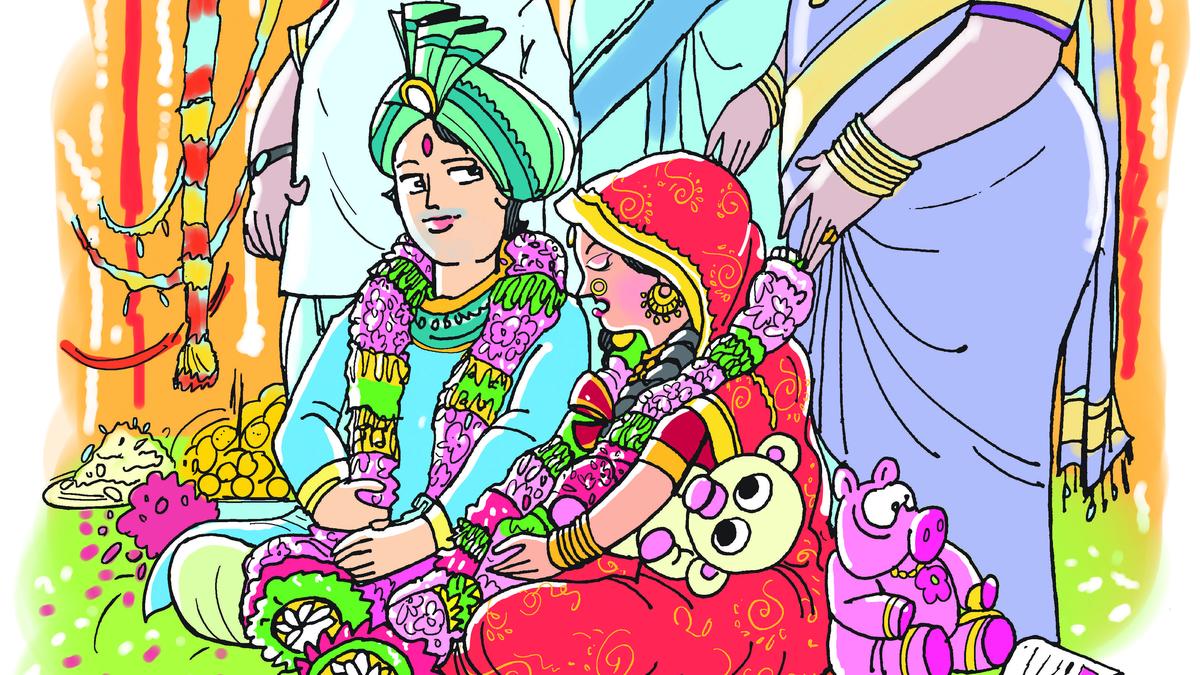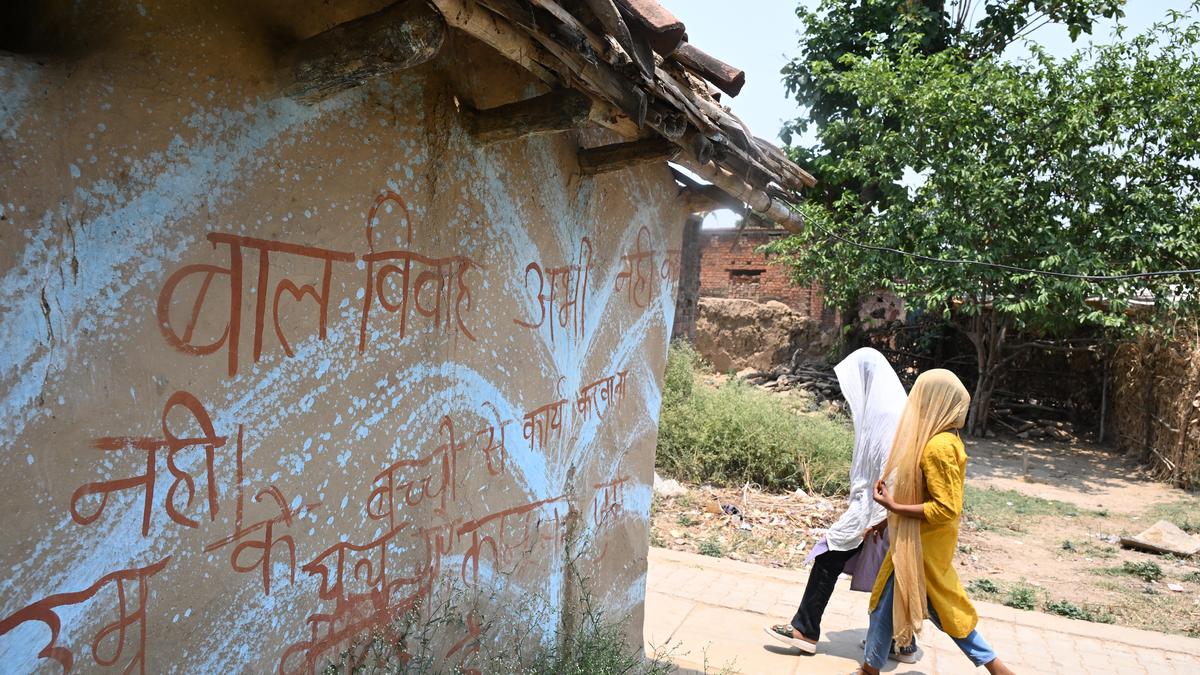
Sixteen-year-old Lakshmi’s voice travels through the streets of Mubarakpur. She sings in the Hindi-Bhojpuri strain of Chandauli, a district in Uttar Pradesh bordering Bihar. “Apne bojh bhale Papa, lihab utaare, hamra ke deb Papa, jite di ki maari. Kam hi umar mein Papa, kar na biyah ho,” (Papa, even if you get me married thinking I am your burden, you would have killed me while I am still alive. Papa, please don’t marry me off at such a young age).Lakshmi wrote the song for her father when she was in Class 5. At the time, her marriage had been fixed, and she had wanted to study further. When Lakshmi first sang the song, her was not convinced by its message. Eventually, with intervention from anganwadi workers and the village pradhan, he agreed to pause her marriage. Today, the streets are lined with mud houses that feature painted messages on them, announcing the need for change. Seated on a mat below a tree, in Mubarakpur village, with her friends from neighbourhood villages, Lakshmi holds forth. The group has gathered for a programme to fight child marriage. “I want to become a social worker and stop other child marriages in the village,” she says. Lakshmi and her friends, all girls, are finding ways to resist, and educate those around them that it is a violation of the law.
Lakshmi could have been a child bride
Teenage girls in Uttar Pradesh resist child marriage, empowered by frontline workers, aiming for education and social change.
2,227 words~10 min read