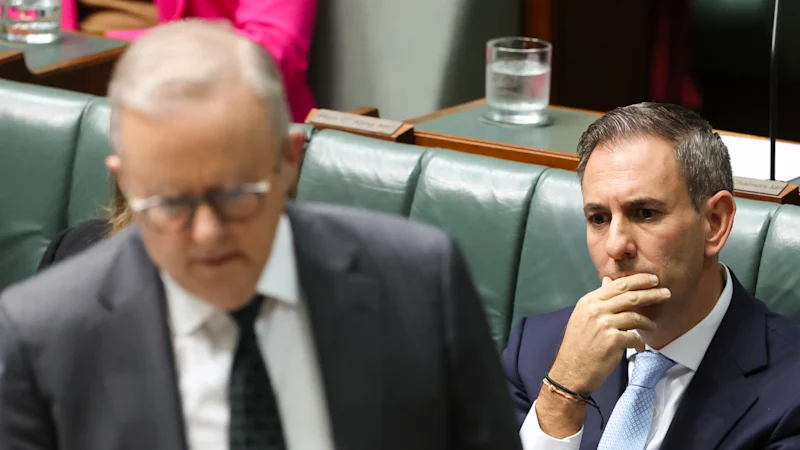
May 22, 2026 — 5:00amClaims the government’s new tax regime will see it take nearly half of all profits made by small businesses have been rubbished by tax experts, with the amounts paid likely to be far lower.Labor has been facing off against a small yet vocal group of business owners and startup founders, who have taken to social media with claims the changes announced in last week’s federal budget will see the government become their 47 per cent “business partner”.An example of the memes labelling Anthony Albanese as a 47 per cent ‘business partner’.Alex EllinghausenIn an interview with the ABC, one of the main proponents of the social media campaign, startup founder Frank Greeff, admitted that the campaign favoured attention over accuracy.“Not all businesses are going to be taxed at 47 per cent, that’s correct, but it said up to 47 per cent,” he told the ABC. “That’s just kind of what the truth of social media and attention is like, unfortunately, the more nuance you have, the quicker someone will scroll past and not really care about what you’re saying.”So what does the viral campaign get wrong about the changes to the capital gains tax (CGT)?The changesCurrently, investors benefit from one of the lowest capital gains tax rates in the OECD, a club of mostly rich countries, thanks to the 50 per cent CGT discount they can claim when selling an asset they’ve held for more than 12 months.From July 1 next year, Labor has proposed that all gains accrued beyond that date will be subject to a new taxation calculation based on your tax rate, your returns and the inflation rate over the period you held the asset.When you sell your asset, the tax office will determine how much the value grew in real terms by comparing it to the rate of inflation. You will then pay tax on the gain accrued on top of that amount, meaning investors will pay less when inflation is high, and more when it’s low.However, a baseline tax rate of 30 per cent has also been introduced, meaning even if your calculated tax is under that amount, it will be raised to at least 30 per cent.Tax changes under the new rulesTai makes $130,000 a year and buys an asset for $100,000. He sells that asset for $250,000 two years later, making a gain of $150,000.Under the current CGT rules, Tai’s capital gain would be cut by 50 per cent to $75,000. He would then pay tax on that gain at his marginal tax rate, costing him around $24,000, at an effective tax rate of 16 per cent.Under the new CGT rules, which impose a minimum 30 per cent tax rate and indexation, he will instead pay around $46,000, assuming average inflation of 2.5 per cent over that period, at an effective tax rate of 31 per cent.Source: SharesightThe claimIn the AI-generated memes, Prime Minister Anthony Albanese is depicted as a “business partner” or co-founder who takes a 47 per cent stake in the company, or claims 47 per cent of the earnings.This misrepresentation refers to the highest marginal tax rate – 45 per cent plus the 2 per cent Medicare levy – which theoretically could be charged for the sale of a business under the government’s new changes to the CGT discount.None of the government’s new taxation changes would see them take equity stakes in Australian businesses.Why it’s wrong (or exaggerated)Tamara Wilkinson, taxation expert and lecturer at Monash’s Faculty of Law, says while some capital gains may be taxed at the 47 per cent rate touted in the videos, there are a few reasons why the claims are overstated.Firstly, CGT is only incurred on the sale of an asset – be it a business, property or share – meaning there will be no immediate changes to business owners. That means entrepreneurs who pay themselves a dividend from their shares in a business, or employ themselves as a staff member via their company, will not face any tax increase on that income as a result of the new rules.“What some people are upset about is that when they do sell their business or business assets, they may have to pay more tax under the proposed changes than they would currently have to pay,” Wilkinson says.“For business owners whose businesses represent investment and perhaps even a retirement plan, this idea is upsetting. However, the situation is not as simple as ‘now I benefit from the 50 per cent CGT discount, but in future I will be taxed on the full capital gain at 47 per cent’.”‘A taxpayer earning $500,000 does not hand over 47 per cent of the full amount in tax. The effective overall rate is materially lower.’Mark ChapmanSimilarly, Mark Chapman, head of tax communications at H&R Block, says the online commentary appears to blend multiple concepts, including marginal tax rates, CGT discount changes and changes to trusts.CGT is already imposed at a taxpayer’s marginal tax rate, Wilkinson explains, so if a business owner earns enough (over $190,000 currently), they will already have to pay 47 per cent tax on their earnings over that amount.That means that today, after their capital gain is cut by 50 per cent, the business owner selling a portion of their company may still pay a 47 per cent tax on it. In future, the high-earning business owner selling the same tranche won’t have the capital gain cut in half for tax purposes, but will only be taxed on ‘real’ gain, after inflation.Business owners also often use trust structures, which can distribute the earnings from their business between their family members, allowing them to pay a lower average tax rate on their earnings.The government’s changes, which would impose a minimum 30 per cent tax on trusts, would increase the amount business owners who use trust structures pay in tax. But still, there will be few circumstances where a business owner will be on the hook for the full 47 per cent, Chapman says.“For higher-income business owners, the likely result is not necessarily a dramatic jump to a flat 47 per cent effective tax rate, but rather a gradual reduction in tax arbitrage opportunities,” he says.Labor’s crackdown on trusts will mean more income will be assessed to the business owner personally, Chapman says, which will likely increase their marginal tax rate, but not to the extent suggested online.“For example, a business owner earning $500,000 may previously have achieved a materially lower blended family tax outcome through distributions,” he says.“Under the proposed rules, that blended rate may rise. However, their overall effective tax rate would still generally remain below the headline top marginal rate.”Marginal vs effective tax ratesAnother major point these memes get wrong is confusing marginal tax rates with effective tax rates. Only the top slice of someone’s income – the actual amount above $190,000 – is taxed at 47 cents on the dollar. The amount between $135,000 to $190,000 is taxed at 37 per cent, and so on down through the brackets.This means the effective tax rate for someone earning over $190,000 is less than the touted 47 per cent.“A taxpayer earning $500,000 does not hand over 47 per cent of the full amount in tax. The effective overall rate is materially lower. Similarly, if CGT concessions are reduced, it does not mean the entire sale proceeds of a business or investment asset are taxed at 47 per cent,” Chapman says.Businesses themselves are also subject to a tax rate of just 25 per cent if they have under $50 million in revenue.Wilkinson says while the new system is more complex and could lead to people paying more CGT in some cases, she believes it is a reasonable adjustment to the tax system.“It creates a fairer system, where capital gains will be taxed according to how much of a gain has really been made, rather than according to an arbitrary percentage,” she says.Expert tips on how to save, invest and make the most of your money delivered to your inbox every Sunday. Sign up for our Real Money newsletter.From our partners
‘Our 47% business partner’ Albanese: What the viral CGT memes get wrong about tax
Claims the government’s new tax regime will see it take nearly half of all profits made by small businesses have been rubbished by tax experts.
1,344 words~6 min read