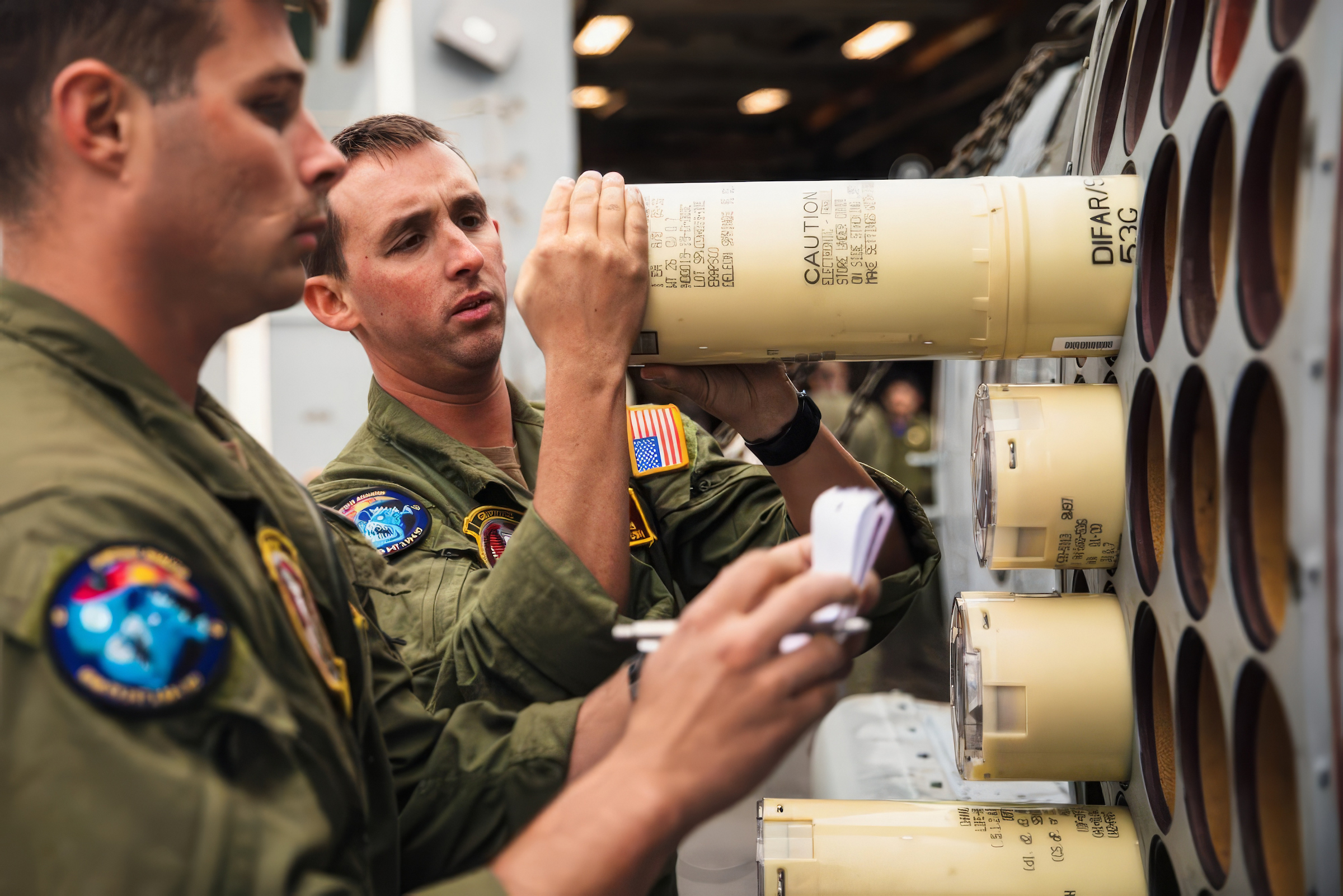
The demand for improved sensing for anti-submarine warfare (ASW) is expanding across the Indo-Pacific and other contested maritime environments. Breaking Defense talked about how sonobuoys are pacing the threat with Donnelly Bohan, president and CEO of Sparton and senior vice president of Maritime Systems at Elbit America.
Breaking Defense: What’s the threat environment driving the need for sonobuoys today?
Donnelly Bohan, president and CEO of Sparton and senior vice president of Maritime Systems at Elbit America.
Bohan: When the Navy believes there may be a submarine nearby, they deploy sonobuoys. A sonobuoy may look like a simple tube when it’s released from a P-8 aircraft, but it represents about 30 pounds of innovation – delivering precision sensing.
We’re proud to be part of the submarine-hunter community. The big focus over the last 20 years is how much quieter China and Russia’s submarines have gotten. For decades, the US Navy held a clear undersea advantage, but as adversaries’ submarines become quieter, they’re harder to detect. This is changing the character of maritime competition around the globe, especially across the Indo-Pacific. As a result, we’ve seen a recommitment to maritime dominance as the services realize the future fight will likely be decided on, above, or below the water. Our job at Sparton is to make sure we’re prepared to deliver the sonobuoys and advanced maritime sensors to ensure maritime dominance now and for that future fight.