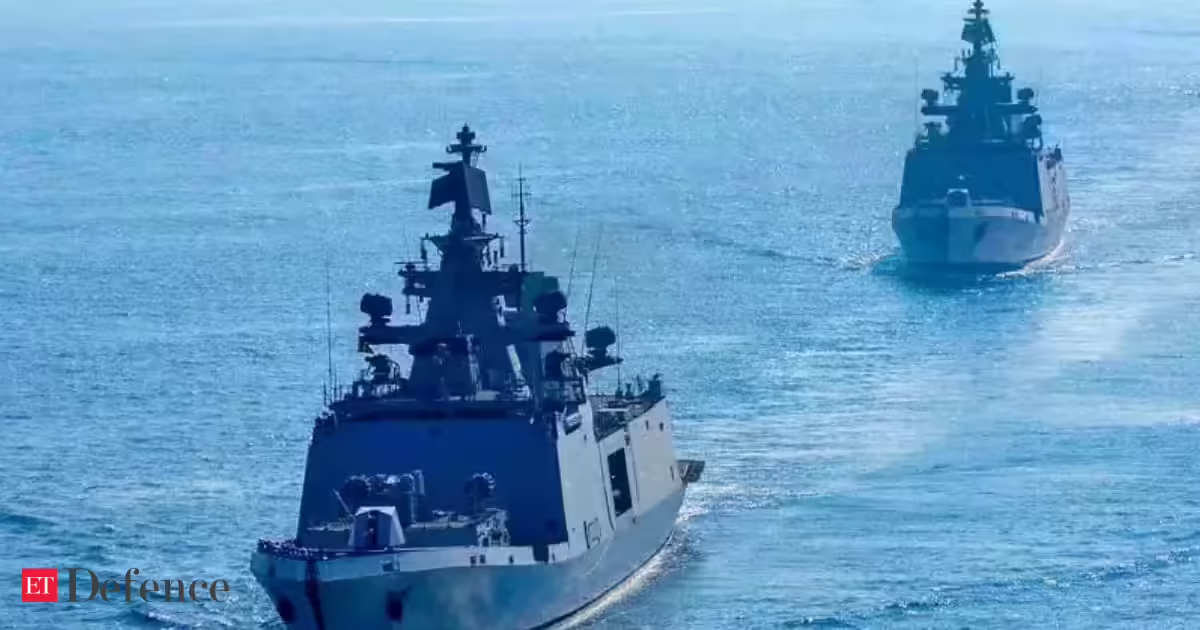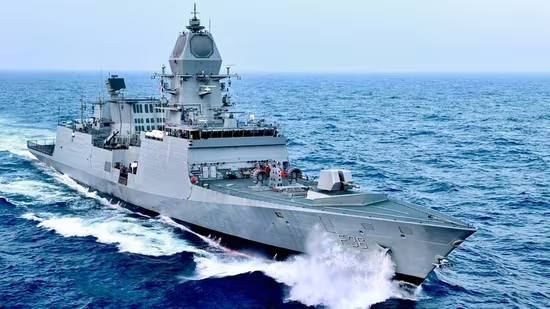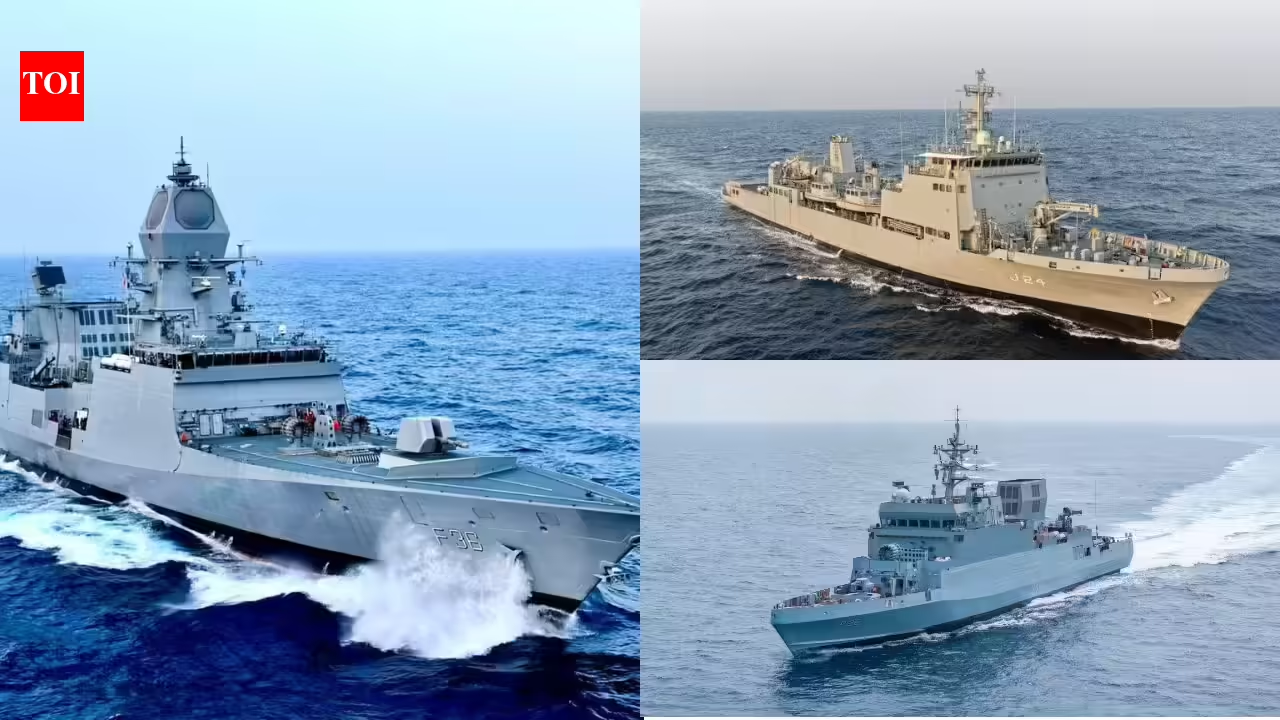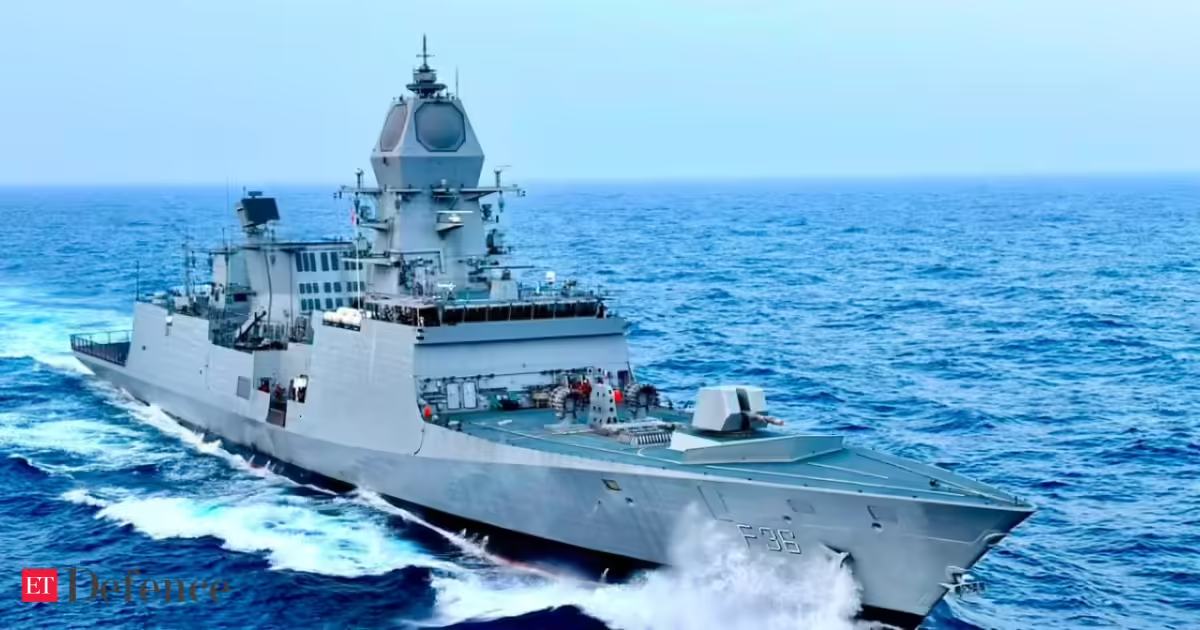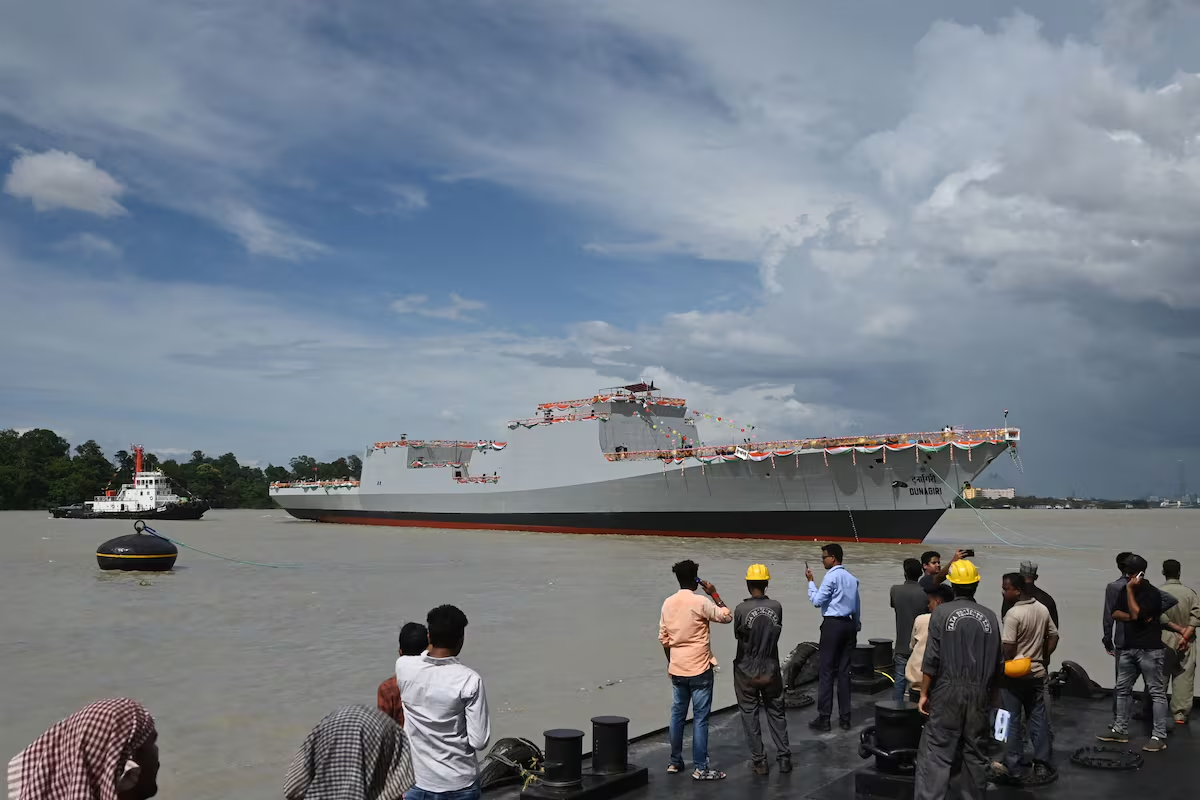
The Indian Navy is set to commission three indigenous vessels –– a stealth frigate, an anti-submarine warfare craft and a survey ship –- in a fresh push to strengthen its operational edge in the Indian Ocean Region, where China has steadily expanded its maritime presence, officials familiar with the matter said on Sunday.Dunagiri, the fifth stealth frigate under the ₹45,000-crore Project 17A programme, is expected to be commissioned within a month. (X/@indiannavy)The vessels –– Dunagiri, Agray and Sanshodhak –– were built by Kolkata-based Garden Reach Shipbuilders & Engineers (GRSE) and were recently delivered to the navy.DunagiriDunagiri, the fifth stealth frigate under the ₹45,000-crore Project 17A programme, is expected to be commissioned within a month, the officials said, requesting anonymity. Agray, an anti-submarine warfare shallow water craft (ASW-SWC), and Sanshodhak, a large survey vessel, are also set to be inducted simultaneously.ALSO READ | Theaterisation in focus as Lt Gen NS Raja Subramani named next CDS, Vice Adm Krishna Swaminathan new navy chiefThe remaining two frigates under Project 17A are expected to join the fleet within six months. While Nilgiri, Udaygiri, Himgiri and Taragiri are already in service, Mahendragiri and Vindhyagiri are expected to follow Dunagiri into commission later this year.The P-17A (or Nilgiri-class) platforms represent a major step in India’s indigenous warship-building programme, with around 75% indigenous content and advanced weapons, sensors and surveillance systems. P-17A is a successor to the Shivalik-class stealth frigates (P-17), and marks a significant leap forward in warship design and capability. Nilgiri, Udaygiri and Taragiri were built at Mazagon Dock Shipbuilders Ltd (MDL), which is also constructing Mahendragiri. Himgiri was built at GRSE, which is also building Vindhyagiri.The frigates are equipped with BrahMos supersonic cruise missiles, the Barak-8 surface-to-air missile system, MF-STAR surveillance radar and anti-submarine warfare capabilities. The 149-metre warships have a displacement of 6,670 tonnes, can achieve speeds of up to 28 knots and carry a crew of 225 personnel.ALSO READ | DRDO & Indian Navy conduct maiden successful Salvo launch of NASM-SR missilesAgrayAgray is the fourth of eight ASW-SWCs being built by GRSE and is designed for operations in coastal waters and littoral zones. The 77-metre vessel is capable of sub-surface surveillance, search and attack missions, and coordinated operations with aircraft.The shallow-water craft are equipped with lightweight torpedoes, indigenous rocket launchers and shallow-water sonar systems for detecting and engaging underwater threats.SanshodhakSanshodhak, the last of four large survey vessels being built by GRSE, is expected to strengthen India’s hydrographic and survey capabilities. The 110-metre vessel is designed for coastal and deep-water hydrographic surveys, including port approaches and navigation channels. It is also capable of supporting helicopter operations, low-intensity combat roles, hospital ship functions and humanitarian assistance and disaster relief missions.ALSO READ | Indian Navy gets two big additions: Nuclear-ready submarine Aridhaman, warship Taragiri | All about themThe navy is working towards full self-reliance by 2047, when India marks 100 years of independence. Around 60 warships are currently under construction at Indian shipyards. Officials said the navy inducted 12 warships last year and is expected to surpass that number in 2026.The inductions coincide with a change in naval leadership, with Vice Admiral Krishna Swaminathan set to take over as navy chief on May 31 from Admiral Dinesh K. Tripathi. He takes charge at a time when India is close to finalising a ₹70,000-crore deal under Project 75I to build six next-generation conventional submarines domestically. MDL and German shipbuilder thyssenkrupp Marine Systems are expected to jointly build the submarines.India’s fourth nuclear-powered ballistic missile submarine, codenamed S-4*, is also expected to enter service in 2027, further strengthening the sea-based leg of India’s nuclear triad — the ability to launch strategic weapons from land, air and sea.
Dunagiri, Agray and Sanshodhak: Indian Navy to induct three indigenous vessels to boost maritime edge
The three vessels – a stealth frigate, an anti-submarine warfare craft and a survey ship – were built by Kolkata-based Garden Reach Shipbuilders & Engineers. | India News
609 words~3 min read