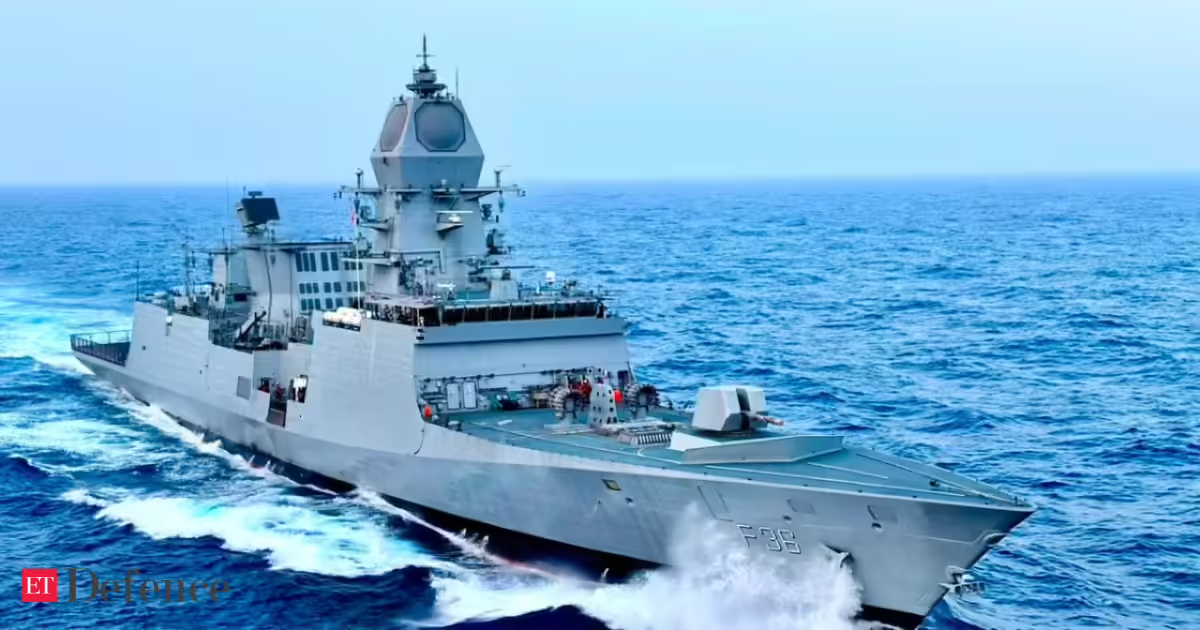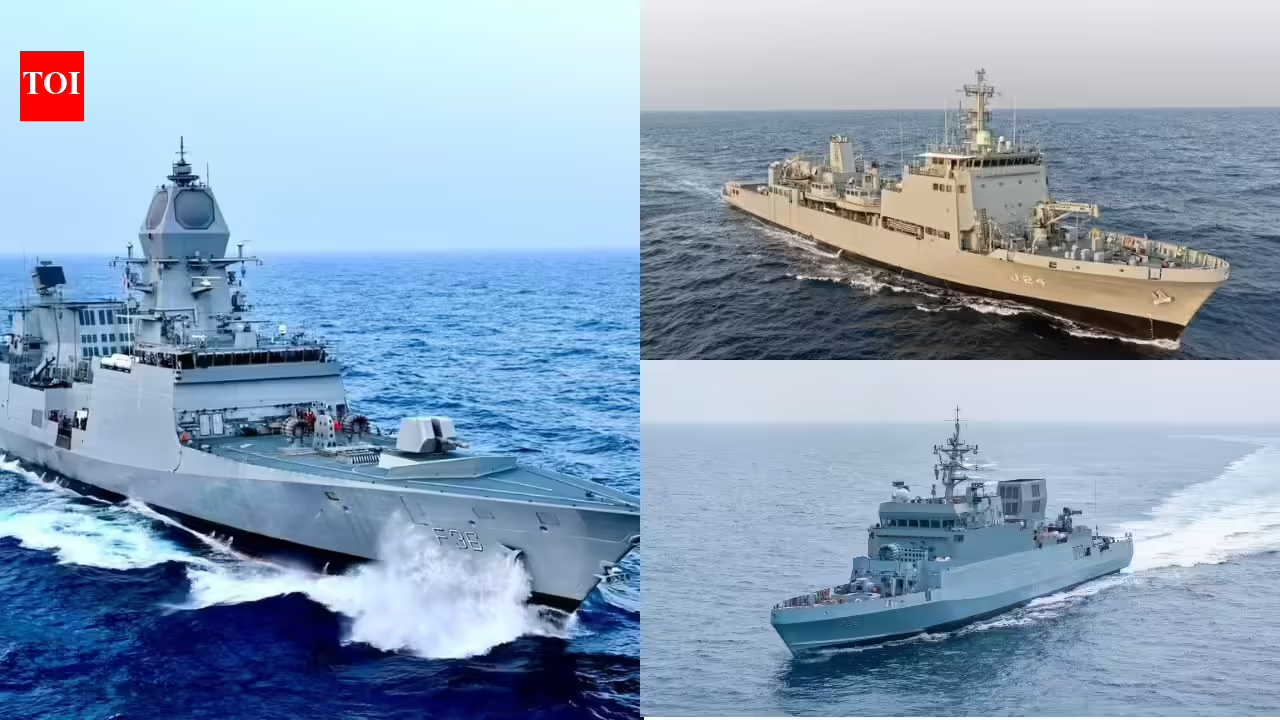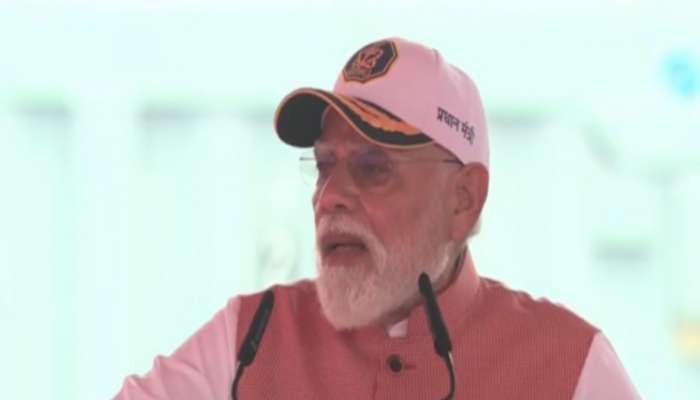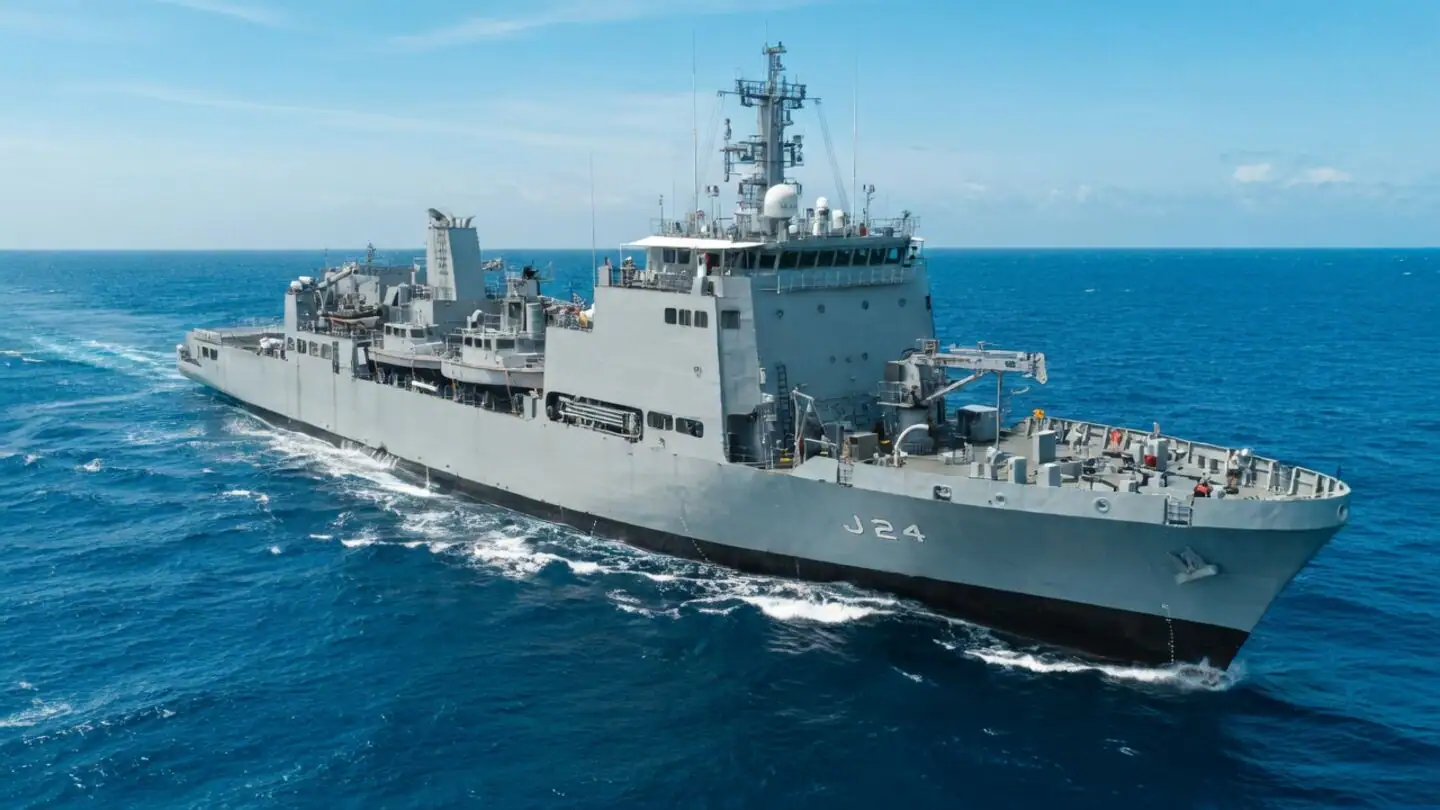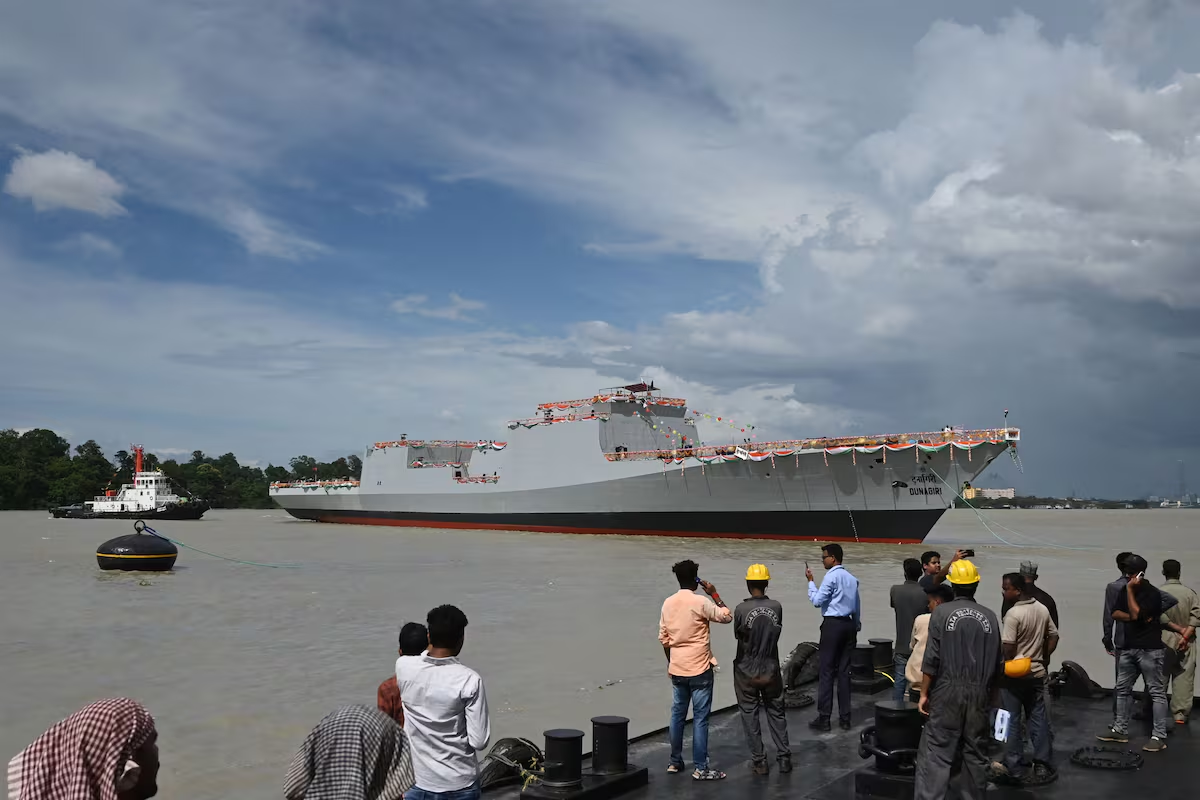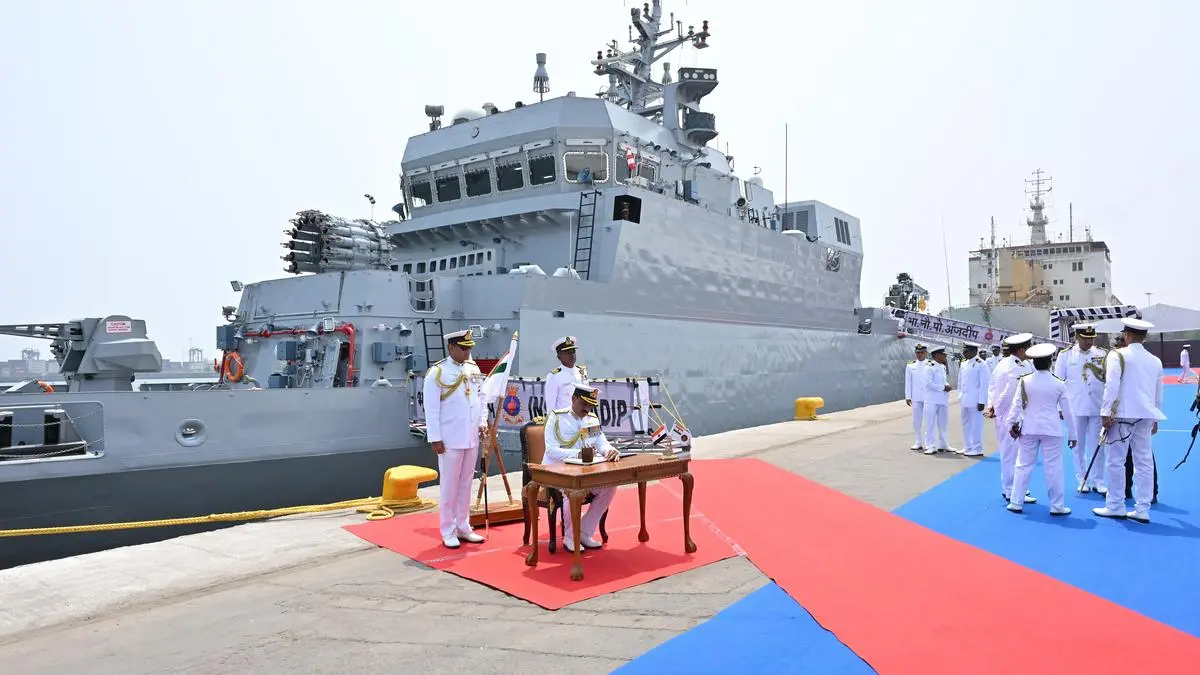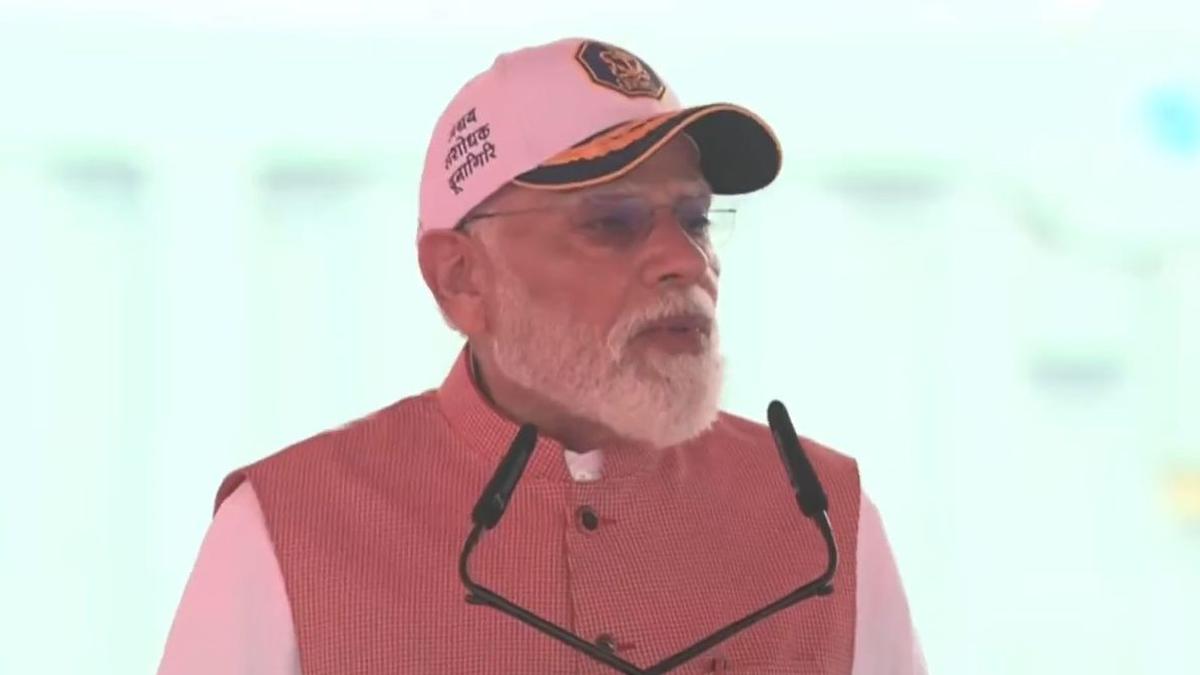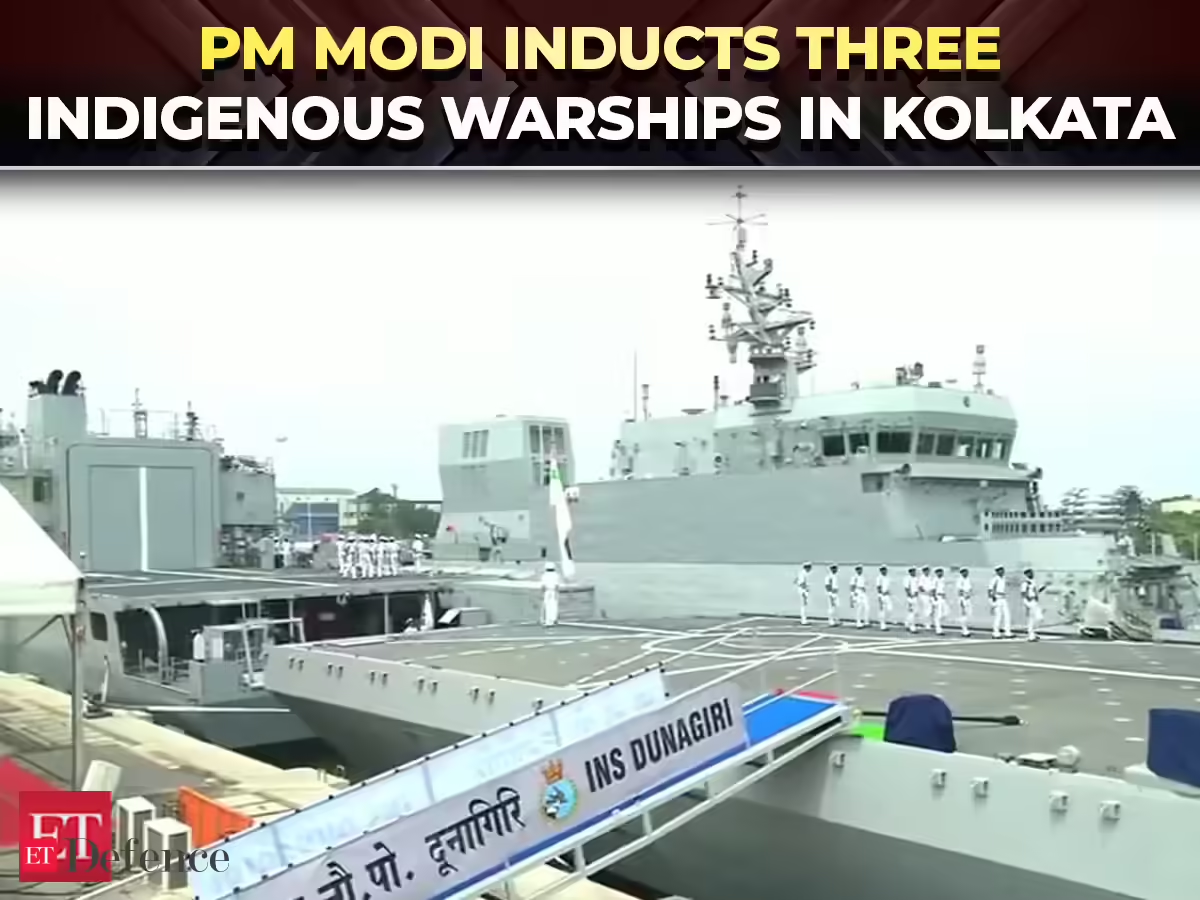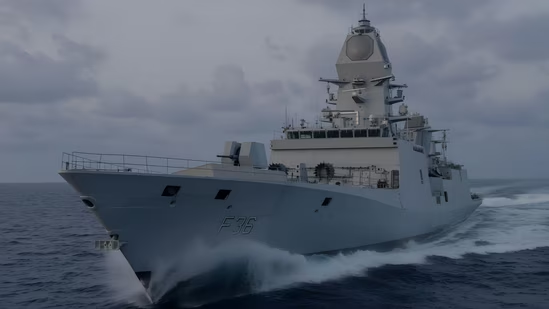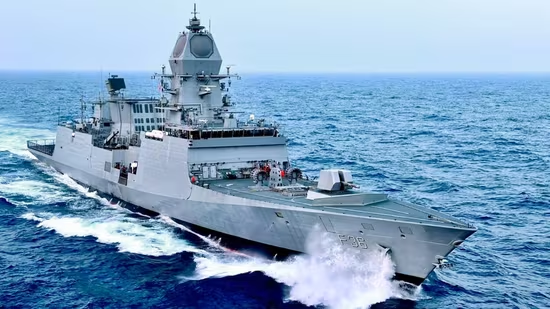
The three vessels were designed by the Indian Navy's Warship Design Bureau and built by govt-owned Garden Reach Shipbuilders and Engineers (GRSE) in Kolkata. In a single ceremony at the Syama Prasad Mookerjee Port in Kolkata on Sunday, Prime Minister Narendra Modi commissioned three indigenously built warships into the Indian Navy — a stealth guided-missile frigate, a hydrographic survey vessel and an anti-submarine warfare craft — marking what the government described as a milestone in the country's push for self-reliance in defence manufacturing.INS Dunagiri, newly commissioned by Prime Minister Narendra Modi at Syama Prasad Mookerjee Port in Kolkata on Sunday, June 21. (Photo: X/@SpokespersonMoD)The three vessels, named INS Dunagiri, INS Sanshodhak and INS Agray, were designed by the Navy's Warship Design Bureau and built by Garden Reach Shipbuilders and Engineers (GRSE) in Kolkata. West Bengal Governor RN Ravi, Chief Minister Suvendu Adhikari and Chief of the Naval Staff Admiral Krishna Swaminathan were among those present.“[The three ships] reflect India's growing maritime capabilities, our commitment to safeguarding national interests across the seas and the remarkable strides being made towards self-reliance in defence manufacturing guided by the vision of Aatmanirbhar Bharat,” Modi said in a post on X.“No nation can emerge as a major power without strong maritime capabilities. Development, security and prosperity are closely linked to the oceans. Most of the world's trade moves through sea routes, while vast global data networks operate beneath the oceans,” he said at the ceremony, news agency ANI reported.Modi, who was in the state for Paschimbanga Divas celebrations the previous day, used the occasion to signal a broader ambition, just weeks after the BJP finally won the state from Mamata Banerjee’s TMC. “West Bengal is poised to become a major hub for India's Blue Economy, maritime manufacturing, logistics and coastal development,” he said.Admiral Swaminathan said the tri-commissioning, coming just 17 months after India's first-ever simultaneous commissioning of three warships in Mumbai in January 2025, showed that "India's warship-building capability is gaining new speed in modern technology, self-reliance, and self-confidence”.Dunagiri: The combat platformThe most powerful of the three, INS Dunagiri is the fifth ship of the Nilgiri class under Project 17A, the Indian Navy's programme to build a new generation of stealth guided-missile frigates. These are surface warships designed to evade radar detection while carrying advanced strike and air-defence weapons. It is the second of the class built at GRSE, according to news agency PTI.Prime Minister Narendra Modi, West Bengal CM Suvendu Adhikari, Governor RN Ravi and Chief of the Naval Staff Admiral Krishna Swaminathan during the tri-commissioning ceremony of INS Dunagiri, INS Sanshodhak and INS Agray at Syama Prasad Mookerjee Port in Kolkata. (PTI Photo)Dunagiri is equipped with advanced weapons and sensors, including BrahMos surface-to-surface missiles and the Medium Range Surface-to-Air Missile system, significantly enhancing the Navy's combat capability, according to aMinistry of Defence press release. The ship is propelled by a Combined Diesel or Gas (CODOG) system, a propulsion arrangement that uses diesel engines for fuel-efficient cruising and switches to a gas turbine for high-speed operations.With a displacement of approximately 6,670 tonnes and a length of 149 metres, the ship carries forward the name of a predecessor — a Leander-class frigate, a type of British-designed steam-powered warship widely used by several navies in the Cold War era — which served in the Navy from 1977 to 2010.The new vessel's motto in Sanskrit says ‘Victory is My Profession’.Dunagiri was delivered to the Navy in 80 months, compared to the 93 months taken for INS Nilgiri, the first-of-class, reflecting a compression in build time as GRSE gained experience across the programme, according to the ministry. The project involved over 200 small enterprises and generated employment for approximately 4,000 personnel directly and more than 10,000 indirectly. “Designed and built in India, the vessels showcase the talent of Indian industries, the expertise of Indian engineers and the hard work of Indian workers," Modi said.Two more Project 17A frigates — INS Mahendragiri and INS Vindhyagiri — are yet to be commissioned to complete the seven-ship series.Sanshodhak: Eyes beneath the oceanINS Sanshodhak is the fourth and final vessel in a class of Survey Vessels (Large), purpose-built ships equipped to map the seabed, chart navigational channels and collect oceanographic data critical for naval planning and safe maritime passage.The vessel carries Autonomous Underwater Vehicles (AUVs) and Remotely Operated Vehicles (ROVs), technical names for unmanned underwater machines used for survey and inspection at depths beyond a diver's reach. It also has multi-beam echo sounders and digital side-scan sonar systems, which help with detection of objects. Its indigenous content exceeds 80%, officials have said. The three preceding ships in the class, INS Sandhayak, Nirdeshak and Ikshak, have already been inducted.INS Sanshodhak, one of the three indigenously built frontline platforms commissioned by the Indian Navy in Kolkata on June 21, 2026. (Ministry of Defence/ANI Photo)The commissioning fell on World Hydrography Day, a detail Modi noted.“It is a remarkable coincidence that India's most advanced hydrographic survey vessel, INS Sanshodhak, is commissioned on the same day,” he said.Beyond its survey role, Sanshodhak can also be deployed for humanitarian assistance and disaster relief operations, according to the ministry. The ship's motto in Sanskrit translated to: ‘Leading the Way, Mastering the Oceans’.INS Agray is equipped with lightweight torpedoes, indigenous rocket launchers, and shallow-water sonar systems to detect and engage underwater threats. (ANI Photo)Agray for anti-submarine opsINS Agray is one of the ships of the Arnala class of Anti-Submarine Warfare Shallow Water Craft. These are compact, fast vessels built specifically to detect and destroy enemy submarines operating close to India's coastline, where shallow depths complicate detection. The 16-ship programme was approved in 2013 to replace the ageing Abhay-class corvettes, news agency PTI noted.Agray is equipped with lightweight torpedoes, indigenous rocket launchers, and shallow-water sonar systems to detect and engage underwater threats, PTI reported citing the defence ministry.At just over 77 metres in length and 900 tonnes in displacement, the vessel uses waterjet propulsion, a system that draws in water and expels it at high pressure, reducing underwater noise and improving manoeuvrability compared to conventional propellers. This means it is suited to the quiet, precise demands of anti-submarine operations.Its crest is inspired by Arjuna's bow Gandiva, the legendary weapon associated with precision in Hindu mythology. The motto is: ‘Ever Foremost, Victorious in Battle’.‘Ability to become self-reliant’"The strength of the nation's military cannot be measured by its dependence on global markets but by its ability to become self-reliant," Modi said. He added that while India's total defence production stood at around ₹40,000 crore in 2014 (the year he became PM), it has now risen to nearly ₹1.8 lakh crore.“India seeks to become a producer and a manufacturer, because nations that manufacture become decisive players on the global stage,” he said. More than 40 indigenously built warships have been inducted into the Navy in recent years, with 45 more platforms currently under construction, the PM noted.Follow the latest breaking news and developments from India and around the world with Hindustan Times' newsdesk. From politics and policies to the economy and the environment, from local issues to national events and global affairs, we've got you covered.Read More
INS Dunagiri, Sanshodhak, Agray: How Indian Navy's 3 new indigenous ships add varied capabilities
The three vessels were designed by the Indian Navy's Warship Design Bureau and built by govt-owned Garden Reach Shipbuilders and Engineers (GRSE) in Kolkata. | India News
1,183 words~5 min read