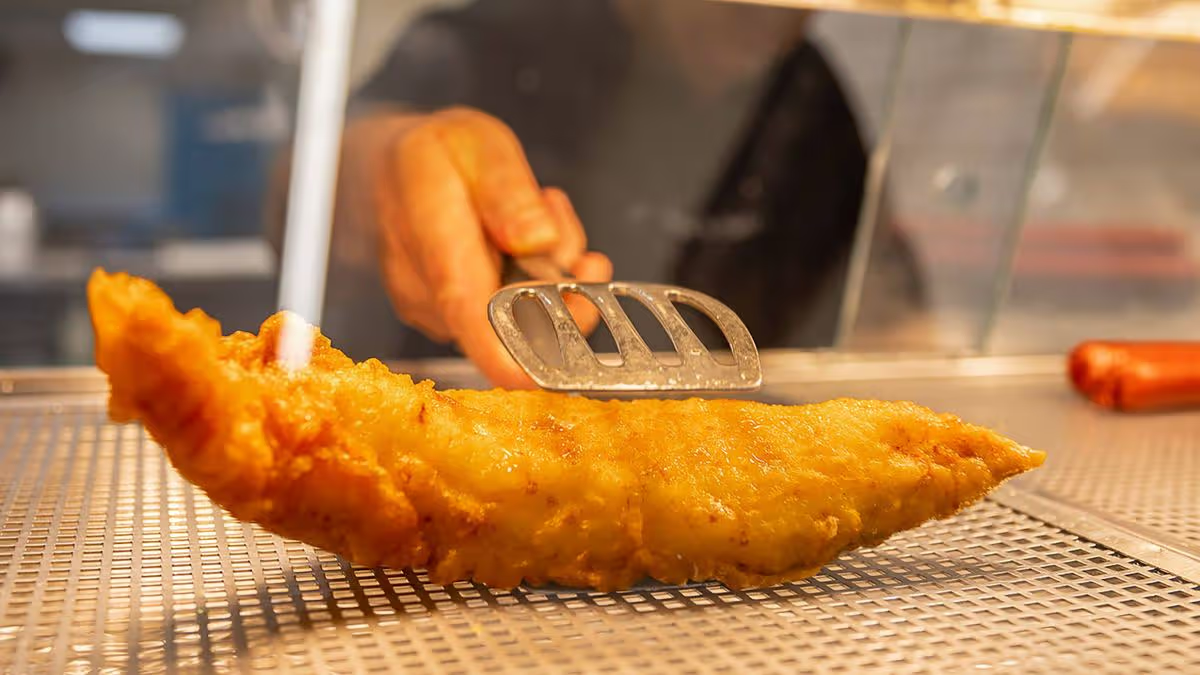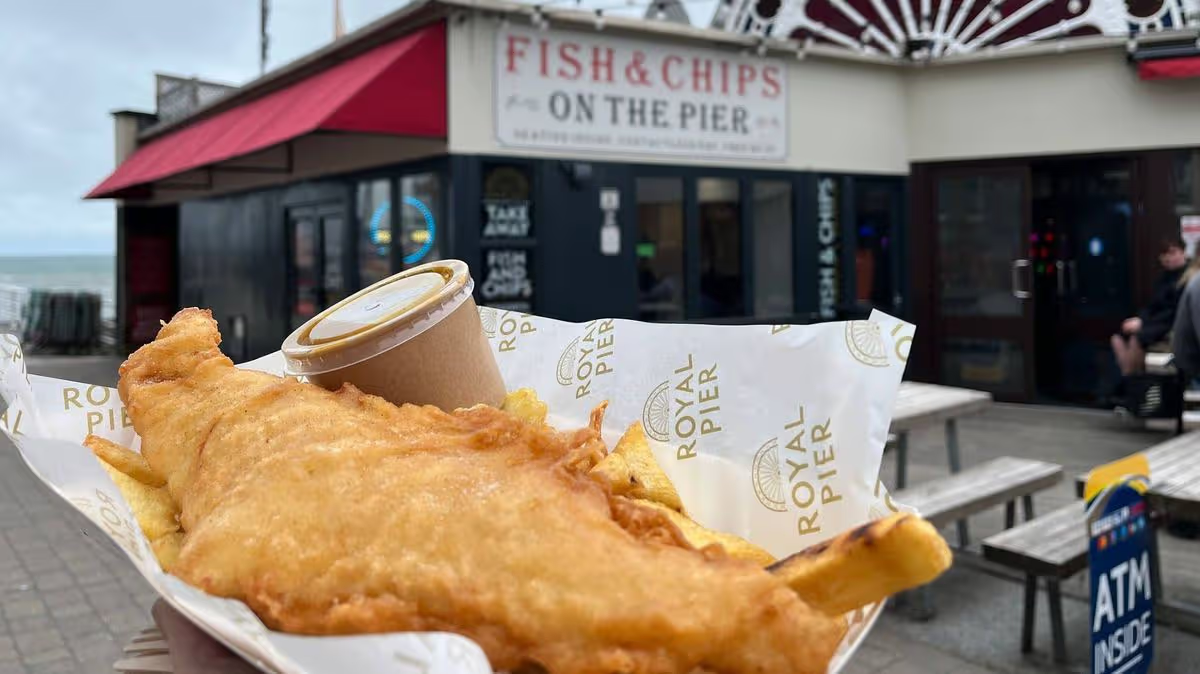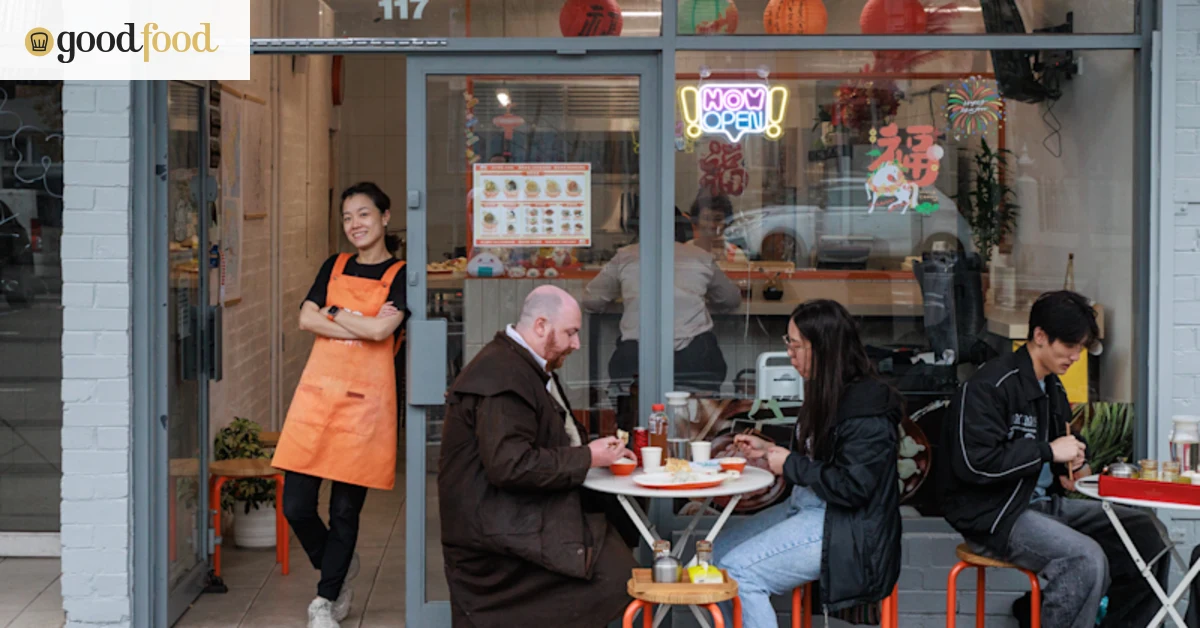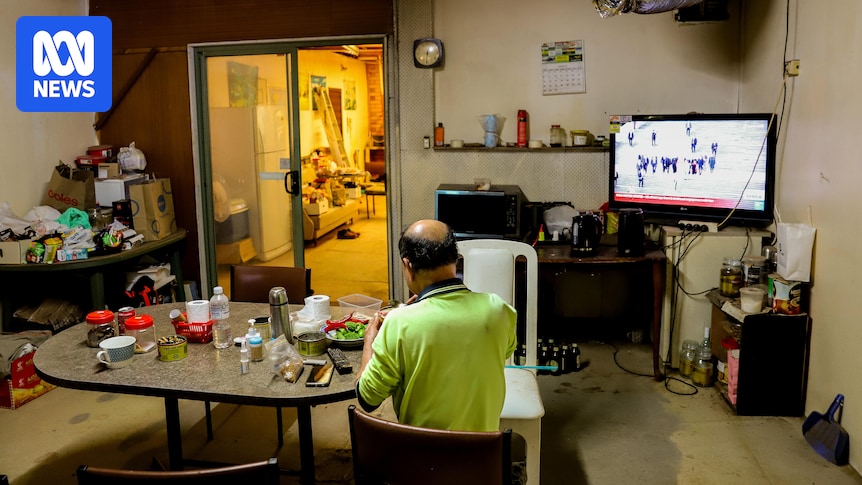
In a community like no other, what happens when people aren't counted? On one side of a stainless-steel bench, chips and fish swim against a tide of spluttering hot oil in full fluorescent visibility of a seemingly unremarkable takeaway shop. On the other, obscured slightly from view, a chef assembles a laksa so deeply flavoured and bracingly spicy it would likely prompt a line out the door if it were in Melbourne.Welcome to Robinvale, where things aren't always as they appear."There's more to Robinvale than meets the eye," says local business owner Julieanne Loy. Laksa perpared in the kitchen at Jojo's cafe in Robinvale where Asian dishes are served alongside fish and chips. (ABC News: Jeremy Story Carter) Chicken laksa with a chilli lemongrass side in Robinvale.(ABC News: Jeremy Story Carter)To understand the Victorian town, nestled in a north-western nook of the Murray River, is to understand its people. That is easier said than done.Robinvale, according to the most recent Census, is home to 3,740 people. Only, that's not close to being true."Everyone knows in this town we have a lot more population than that number," says Lane Li, who runs the fish 'n' chipper/laksa takeaway spot. Robinvale businessman Lane Li.(ABC News: Jeremy Story Carter) One of several Asian supermarkets on the main street of Robinvale, stocking a wide variety of food products.(ABC News: Jeremy Story Carter)There are clues to be found almost everywhere you look. Start in the supermarket aisles, where tinned quail eggs jostle for shelf space with country-palate-defying chilli products, durian and packs of frozen snails. How many regional towns, let alone those with fewer than 4,000 people, have five Asian supermarkets on the main street? Cans of salted green peas for sale in Robinvale.(ABC News: Jeremy Story Carter) There is no shortage of spicy ingredients for sale in Robinvale. (ABC News: Jeremy Story Carter) Luncheon meat for sale in a Robinvale Asian grocer. (ABC News: Jeremy Story Carter) Dang Markl in her Asian grocer supermarket in Robinvale.(ABC News: Jeremy Story Carter) Cans of chilli tuna for sale in Robinvale.(ABC News: Jeremy Story Carter) Cans of quail eggs in water for sale in Robinvale.(ABC News: Jeremy Story Carter) Cans of tinned mackerel for sale in Robinvale.(ABC News: Jeremy Story Carter)There are no traffic lights, but there are churches of differing denominations on almost a dozen street corners.Across the road from the Greek Orthodox Church, the local Uniting Church parish advertises alternating Sunday services for Tongan and Fijian worshippers."It honestly is the only place that's like this," local Jacky Rowe says."I have been around Australia and I can't find another place like it." A chef at work in the kitchen of a Robinvale restaurant, one of the town's many multicultural eateries.(ABC News: Jeremy Story Carter) A mechanic at work in a Robinvale garage. (ABC News: Jeremy Story Carter) A local in Robinvale.(ABC News: Jeremy Story Carter) Streetscape in Robinvale, in Victoria's north-west. (ABC News: Jeremy Story Carter) Lane Li's wife Jojo at the takeway shop. (ABC NEWS: Jeremy Story Carter) A worker at Robinvale's Italian cafe, which stocks a range of fresh and packaged Italian food.(ABC News: Jeremy Story Carter) A poster in a shop window in Robinvale advertises Vietnamese pho.(ABC News: Jeremy Story Carter) Inside one of the Chinese restaurants in Robinvale.(ABC News: Jeremy Story Carter) Passenger trains haven't stopped at Robinvale station for decades and locals say there are not enough regular bus services. (ABC News: Jeremy Story Carter) Locals in Robinvale at the end of a work day.(ABC News: Jeremy Story Carter)For any of it to be possible — the food, the churches, the abundant sense of community life — there would have to be at least twice as many people living in the area. The answer is hidden in high-vis camouflage. A worker down the main street of Robinvale.(ABC News: Jeremy Story Carter)As evening descends on Robinvale, workers from a constellation of cultural backgrounds can be seen moving throughout the town. Some might stay for just a few months, but that is only part of the picture. These workers and their families, at least as far as the Census is concerned, do not exist. Workers queuing for food at a Malaysian restaurant in Robinvale.(ABC News: Jeremy Story Carter)"The data that we see doesn't match to reality," said Alisi Fangaloka, who runs a local labour hire company."Here on the ground, you see something different."Odd numbersRobinvale and the neighbouring NSW town of Euston are enveloped by a fertile patchwork of farms. If you have eaten a table grape, almond or carrot, there is a healthy chance it was grown in the region, which lies a 5-hour drive north of Melbourne and 10 hours west of Sydney."It's the lifeblood of the town," says local table grape grower Fred Tassone."People wouldn't understand the value to the nation that towns like Robinvale actually give." Robinvale businessman Fred Tassone among rows of vines on his family's property, which grows table grapes.(ABC News: Jeremy Story Carter)The engine powering that agricultural productivity is a largely migrant workforce.Those workers are counted on to feed Australians, but they are not always counted on paper.In 2019, supermarket and bank transactions as well as water usage in Robinvale were analysed by consultancy firm Geografia.What it found wasn't consistent with a population below 4,000. The results instead suggested there were between 7,000 and 8,800 people living in town, depending on the time of year. The several Asian supermarkets in Robinvale do a busy trade, catering to workers. (ABC News: Jeremy Story Carter)To some, that discrepancy might seem like merely an accounting error, but the consequences are significant and far-reaching. "If you're basing all of your service assumptions on a smaller population than what's actually there, then you're not getting enough resources to provide those services," says Bruce Myers, chairperson of the Robinvale Euston workforce network."That would affect education, health services, emergency services, local government, you name it." There are five Asian grocers in Robinvale.(ABC News: Jeremy Story Carter)Home truthsA report recently commissioned by the local Swan Hill Rural City Council found the "enduring inaccuracy in population measurement is, potentially, perpetuating inequalities and disadvantage".There is no better, or perhaps worse, way to view that disadvantage than through the town's desperate housing shortage. Every second post on the local community Facebook page is from a worker seeking out somewhere to live. Availability of appropriate housing has been highlighted as an ongoing issue in the town of Robinvale. (ABC News: Jeremy Story Carter)There were 1,370 dwellings recorded in the 2021 Census. If the estimated population of about 8,000 is to be believed, that suggests a ratio of almost six people per dwelling, more than double the Australian average.It only takes a short drive around town at night to see signs of overcrowding.Caravans jammed out the back of homes; eight or more cars parked out the front of others. "There are three-bedroom homes where you probably find 10 to 15 people cramped up in," says local business owner Mario Masasso.Some properties have ramshackle structures tacked on in the backyard.The ABC gained access to such a house, on the agreement no-one inside would be identified. A house inhabited by workers in Robinvale.(ABC News: Jeremy Story Carter)An overbearing smell of stale cigarettes and cleaning chemicals hung in the air amid a yellowish gloom.Shafts of light knifed through gaps in the grimy mishmash of materials representing doors, walls and windows. The kitchen of a house for agricultural workers.(ABC News: Jeremy Story Carter) A room inside a house for agricultural workers.(ABC News: Jeremy Story Carter) The kitchen of a house for agricultural workers.(ABC News: Jeremy Story Carter)Two separate but equally cluttered kitchen spaces sat only 5 or so metres apart. Both had gas bottles hooked into rudimentary stoves.Smoke from a worker's lit cigarette curled up to a ventilation duct hanging limply through the ceiling.If a fire ever broke out inside, it could rip through the whole place in moments. It is an open secret that many workers live in overcrowded houses.(ABC News: Jeremy Story Carter) The kitchen of a house for agricultural workers.(ABC News: Jeremy Story Carter)Earlier this year, the council conducted "compliance inspections" in some of the residential properties doubling as rooming houses in the region, but locals say it's an issue that has plagued Robinvale for years. "It's not a secret in this town," Lane Li says. "It's not very safe housing, which is sad. "But on the other side, well, people do need somewhere to live." Twenty people survived this house fire in Robinvale in 2017, but it was a dangerous example of overcrowding.(ABC Rural: Sarina Locke)In 2017, the ABC reported on a burnt-out property in Robinvale where 20 workers had escaped a house fire.The same year, Robinvale was referenced by Australian Federal Police during a parliamentary inquiry into modern slavery. The AFP gave evidence that the Mildura/Robinvale region was "the main source of AFP referrals outside of metropolitan Melbourne" for suspected human trafficking and slavery activity, specifically referencing agricultural workers. Table grapes growing on vines near Robinvale.(ABC News: Jeremy Story Carter)Almost 10 years on and locals say raids by immigration officials are not uncommon.ABF Commander John Taylor confirmed there were "ongoing immigration compliance activities" in the Sunraysia region, which includes Robinvale.These, he told the ABC in a statement, were aimed at protecting "migrant workers from exploitation and [to] uphold the integrity of the visa system".Mr Masasso, a longtime Robinvale resident, feels there is an unfair contradiction at play. Workers from Pacific Islands and Timor Leste are employed in the Robinvale region through the Pacific Australia Labour Mobility Scheme.(ABC News: Jeremy Story Carter)"I think the government brings a lot of seasonal workers here without considering that they have to be accommodated," he says. A house for sale in Robinvale. (ABC News: Jeremy Story Carter)"How are you supposed to come and work here and live here at the same time when there's no accommodation? The Robinvale region produces much of the country's table grapes. (ABC News: Jeremy Story Carter)"Then we've got immigration coming in during harvest time. Fried chicken on the menu for hungry workers at a Robinvale food outlet.(ABC News: Jeremy Story Carter)"It's a bit hypocritical."A 'bottleneck', a tragedyAs you head south over the Murray River, a blue and yellow monument welcomes you to Robinvale with the slogan "Where the River's Fun".Behind it, a far smaller, almost unofficial-looking blink-and-you'll-miss-it sign reads: "POPULATION 8000." Robinvale is on the Murray River in Victoria's north-west and part of the Swan Hill Rural City Council. (ABC News: Jeremy Story Carter) The local council claims a population of 8,000 for the town of Robinvale, despite ABS figures putting it at less than half that. (ABC News: Jeremy Story Carter)It was erected by the council in 2021 based on "broader estimates for Robinvale," but it is not an official number.For as long as the official count is roughly half the actual population, locals say they will continue to struggle to attract investment in crucial services. "Although the census is regarded as a blunt instrument, it is what the government uses to apportion funding, and it's what investors will use as the basis of population," Mr Myers says. A multitude of churches in Robinvale cater to a wide range of faith groups. (ABC News: Jeremy Story Carter)That lack of investment is keenly felt day to day by locals. "If you're a teacher, if you're a police officer, if you're a healthcare professional, you are unable to set down your roots properly in Robinvale because there is just not enough housing and there's not enough child care," says Ms Rowe, who works as a community facilitator.There is just one licensed childcare place for every 10 children in Robinvale below the age of five, according to recent council research. The town of Robinvale sits on the banks of the Murray River. (ABC News: Jeremy Story Carter)"With the current economic crisis, you kind of need to be a two-income family," says Ms Loy, who volunteers for the local business association."If you don't have the childcare services for mum and dad to be able to provide for their families, you struggle." Julieanne Loy is a Robinvale business owner, operating a local freight company.(ABC News: Jeremy Story Carter)The council says the childcare shortage is "severe" and that a lack of qualified educators is creating a "major bottleneck".In the absence of proper services, just as with housing, unregulated alternatives have emerged in the shadows.In 2022, a 15-week-old baby died while in an illegal daycare centre run out of a home in Robinvale.The baby, Nanicha, was left to sleep in a rocker, where she died. Kittitach Singchart and Patcharawan Sophui's daughter Nanicha died in a Robinvale childcare centre that was operating illegally.(ABC News: Tyrone Dalton)Her parents, who last year spoke to the ABC, had struggled to find child care anywhere in the region. They believed the operator was licensed."Everywhere is just, like, full," Nanicha's mother Patcharawan Sophui told the ABC.The tragedy reverberated around town. Robinvale has a significant number of churches for a small town.(ABC News: Jeremy Story Carter)"That situation caused a lot of concern in our communities, in our churches, in our schools," Ms Rowe says. Jacky Rowe grew up in Robinvale and now supports local families in her role as a community facilitator.(ABC News: Jeremy Story Carter)"There's been a large effort since to ensure that never happens again in Robinvale. The sun sets behind a grain silo in the town of Robinvale, north-west Victoria.(ABC News: Jeremy Story Carter)"We're not doing that again. It's not happening again."'It's hectic'Down the road from the local Malaysian restaurant, past the Italian cafe and opposite the banh mi and pho spot on the main street, an unlikely hub of commerce hums behind an unassuming shopfront.What presents as an odds-and-sods computer repair shop is also a highly active Western Union money transfer centre.Conversion rates for countries like Samoa and the Solomon Islands, New Zealand and Timor are hand-scrawled next to a Bible passage from Jeremiah 29:11. International conversion rates at Laura and Mario Masasso's money transfer service in Robinvale.(ABC News: Jeremy Story Carter) Laura and Mario Masasso run a business offering money transfers, phone sales and repairs and technology support, to help meet the needs of seasonal workers in Robinvale. (ABC News: Jeremy Story Carter)Every day, workers approach owners Laura and Mario Masasso to send money back to their families."We are at the status of probably being the highest in Australia for the Vietnamese community of sending money [to Vietnam]," Ms Masasso says. Vietnamese takeaway on the main street in Robinvale. (ABC News: Jeremy Story Carter)Even if Google Translate is regularly called upon as an unofficial staff member, the Masassos say the relationships formed in the shop have helped build a level of trust."A lot of them do live in fear," Ms Masasso says."It's a hard thing to be able to live in a country where English is not your first language and come and do the work here." The Robinvale Uniting Church holds regular services for the town's Fijian and Tongan communities. (ABC News: Jeremy Story Carter) The diverse Robinvale community can be seen in the number of churches catering to a wide range of faith groups.(ABC News: Jeremy Story Carter) Robinvale's Masonic Centre bathed in golden light on sunset. (ABC News: Jeremy Story Carter) Robinvale is home to a multitude of churches catering to a wide range of faith groups.(ABC News: Jeremy Story Carter)She says many workers hold off going to the doctor, even when carrying physical injuries acquired on farms. When they do seek help, they encounter an under-resourced system groaning under a weight of numbers."It's hectic," says Alesha Rowe, from her office in the health clinic at the Murray Valley Aboriginal Co-operative. "We're run like we're a town of 400." The Murray Valley Aboriginal Co-operative's health service in Robinvale provides health care to the broader community. (ABC News: Jeremy Story Carter) Robinvale has a local health service, but has trouble attracting medical professionals. (ABC News: Jeremy Story Carter) The Murray Valley Aboriginal Co-operative's medical clinic provides health services in Robinvale, but cannot take on new patients. (ABC News: Jeremy Story Carter)The centre is funded to provide services specifically to the Aboriginal and Torres Strait Islander community.Such is the local need that the health service has given additional appointments to over 1,500 non-First Nations patients in the past year.Robinvale has a hospital with no permanent GP on site, and a local clinic where the principal doctor works alternate weeks. "I try to avoid doing the doctor services at all costs because it's really hard to get in," Ms Loy says. Julieanne Loy leads a busy life in Robinvale, juggling family commitments with operating a business.(ABC News: Jeremy Story Carter)The local GP, Elvis Igbinovia, says in his three and half years in Robinvale, he has watched healthcare professionals come and go."I've worked in most parts of Australia and I'll say that this has been one of the most challenging places," Dr Igbinovia says."The population has been underestimated, making it difficult for the decision-makers to appreciate the scale of the challenge. "Burn-out is real in Robinvale. At this time, I'm not sure of the future."There was an eye-opening moment during the pandemic. As the rush to roll out vaccines gathered pace, the Murray Valley Aboriginal Co-operative was one of three sites in Robinvale to offer vaccinations. The Murray Valley Aboriginal Co-operative received funding in the federal budget to redevelop and expand its early learning centre.(ABC News: Jeremy Story Carter)No questions were asked about people's living situations.Only a passport was required for identification."We opened up the community hall here for anyone to receive vaccines," Ms Rowe says."A lot of the farms [turned up] with itinerant workers and non-documented peoples coming through our door. "We did 3,500 COVID-19 vaccines. In a town [supposedly] of just over 3,000. And we're just one spot."Stepping out of the shadows Robinvale is a multicultural community in an agricultural region of rural Australia.(ABC News: Jeremy Story Carter)This is the year locals hope their luck, and numbers, will change. On the night of August 11, Australians around the country will be asked to complete the census in order to provide "the most comprehensive picture of Australia's population and housing".In church groups, community meetings and casual chats around town, work is underway to ensure Robinvale locals come forward to be counted. A midweek mass at St Mary's Robinvale,(ABC News: Jeremy Story Carter)For that to happen, a lifetime of mistrust and, in some cases fear, of government, of how information might be used, has to be overcome."I see a lack of engagement [and] being afraid to participate," says Ms Fangaloka from the office of her labour hire business."[Workers] don't feel like they trust giving their details given their situations, because of the way they live and the way they were brought up back at home."There are concerns the local First Nations community has also been under-counted, particularly those from the Stolen Generations."They just won't do [the census], because of that intergenerational trauma," says Ms Rowe from the Murray Valley Aboriginal Co-operative. A bubble tea shop on Robinvale's main street.(ABC News: Jeremy Story Carter)The Australian Bureau of Statistics told the ABC it was aware of the situation in Robinvale and that similar under-counts are likely to have occurred in other regional communities."When it comes to those seasonal population fluxes, we haven't yet found a data source that's accurate and reliable and repeatable," ABS Census national spokesperson Emily Walter says."Any way that we can help and support people in completing the Census is our focus, and that is for remote communities, it's for culturally and linguistically diverse communities."Staff who can translate Census information into the many languages of Robinvale are being deployed into the town.Community leaders have also been making the case that a proper count will see more money flow into the town for housing, health and child care, not to mention investments in commercial businesses. The Robinvale pub was gutted by fire in 2015 and has been sitting derelict ever since. (ABC News: Jeremy Story Carter)A new pitch being shared among locals emerged in one recent survey: "do the Census and you might get a Maccas."There are those who believe an accurate count will remain impossible so long as there are people living on the margins in overcrowded housing."A lot of families don't fill it in correctly because if they've got a three-bedroom home that's only supposed to have 10 people in it and they've got like 25, they're not going to put that on the census," Ms Masasso says."They don't know that the census is not something anybody checks up on [or] knows which house it's come from. "They don't understand." Alisi Fangaloka works in her family business supporting the almond industry in the Robinvale region. (ABC News: Jeremy Story Carter)For Ms Fangaloka, the moment has prompted a profound question: will the town's workers ever be seen as part of the broader Australian community?"They work very quietly in their own corners and also try to contribute to bringing in money to financially support their families and their church communities," she says."But if they are not visible in our data, they won't be visible in the decisions that shape the future in the place they live in." Kayaking on the Murray River at Robinvale as the sun goes down.(ABC News: Jeremy Story Carter)As a toddler, Jacky Rowe grew up between the vines on the dusty outskirts of town, entertaining herself while her parents picked grapes for a living. They escaped the Khmer Rouge, leaving Cambodia for a better life. Eventually, they found their way to Robinvale in the late 1990s, where their now 27-year-old daughter has lived her whole life.It is the only place she has ever called home. Jacky Rowe grew up in Robinvale and now supports local families in her role as a community facilitator.(ABC News: Jeremy Story Carter)For whatever its problems, she doesn't want to be anywhere else."I think the strength that each culture and person has and what they bring to this town has added to the makeup," Ms Rowe says."All the experiences and cultures and traditions that are now brought into this one town have just really given it a whole new life."There's so much life to Robinvale." CreditsReporting and digital production: Jeremy Story Carter and Cath McAloonPhotography: Jeremy Story CarterAdditional reporting: Lucy CooperPosted Fri 22 May 2026 at 4:39amFri 22 May 2026 at 4:39am
'It's not a secret': Inside the town where people don't exist
In a community like no other, what happens when people aren't counted?
3,721 words~17 min read