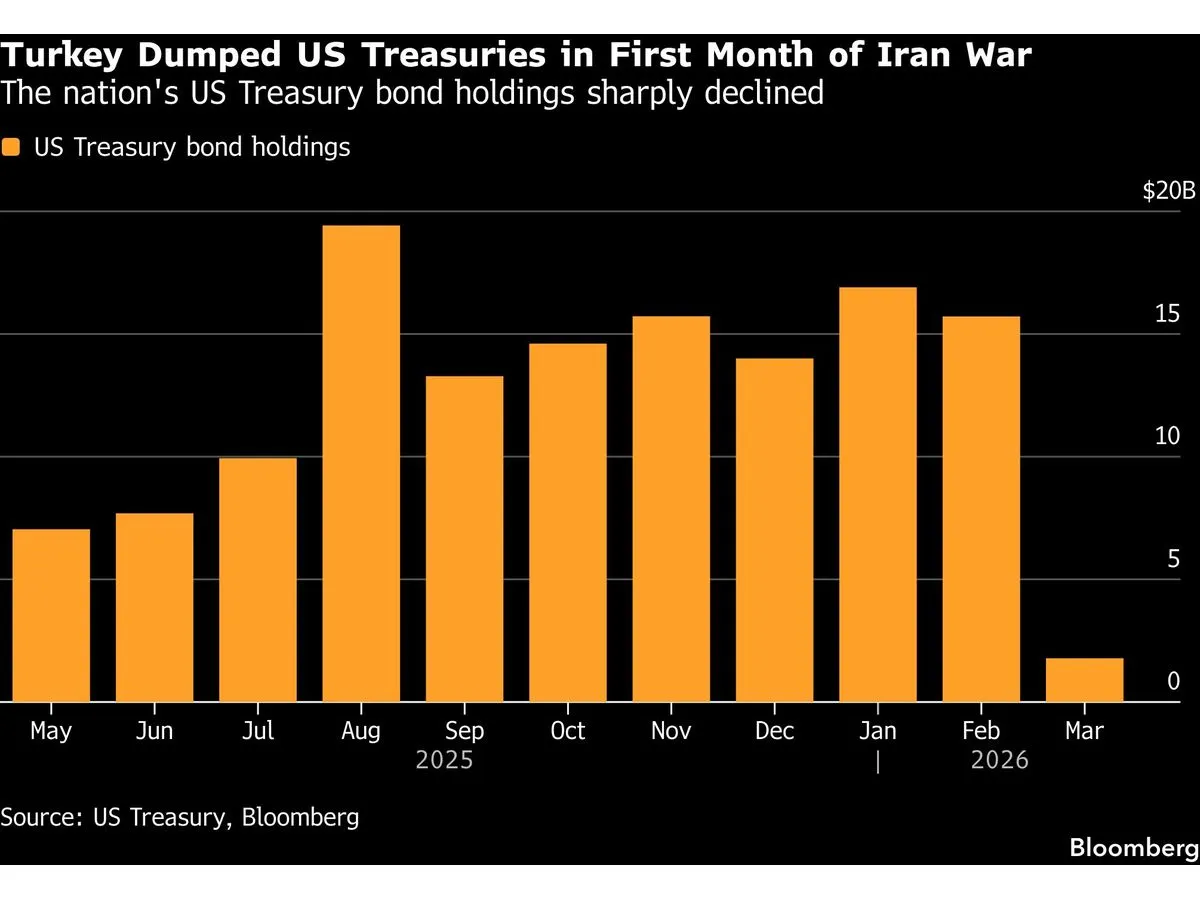
GFN – ISTANBUL: Turkey liquidated nearly all of its holdings of United States Treasuries in March as Ankara moved aggressively to defend the lira during the opening phase of the Iran war, according to Bloomberg calculations based on U.S. Treasury data.The data, first reported by Bloomberg, showed Turkey’s Treasury holdings collapsed to roughly $1.8 billion by the end of March from approximately $16 billion in February. The figures include securities held by Turkey’s central bank alongside other domestic entities and corporations.“The decline coincided with a selloff in Turkish markets after the Middle East conflict erupted, sending oil prices sharply higher.”The liquidation came during a period of intense pressure across Turkish financial markets as higher oil prices and regional instability triggered renewed weakness in the lira. According to Bloomberg, the central bank responded by tightening domestic funding conditions while simultaneously selling foreign exchange reserves, gold assets, and U.S. Treasuries to stabilize the currency.Turkey’s Treasury holdings had recovered to nearly $21 billion in early 2025 after authorities spent much of the prior year rebuilding reserves. A decade ago, the country held nearly $80 billion in U.S. government debt before geopolitical tensions and deteriorating relations with Washington contributed to a prolonged reduction in holdings.“Its interventions also included swapping gold from reserves.”What stands out in the March intervention is that Turkish authorities reportedly sold both gold and U.S. Treasuries simultaneously. Traditionally, Treasuries are viewed as reserve assets specifically because they can be repo-financed or used as highly liquid collateral without requiring outright liquidation for currency support operations. The fact that Ankara appeared willing to reduce both gold reserves and Treasury holdings at the same time suggests the intensity of the pressure facing Turkish markets during the opening phase of the conflict.Free Posts To Your MailboxContributor posts published on Zero Hedge do not necessarily represent the views and opinions of Zero Hedge, and are not selected, edited or screened by Zero Hedge editors.Loading...
Turkey Sold Nearly All Its US Treasuries
Turkey liquidated nearly all of its holdings of United States Treasuries in March as Ankara moved aggressively to defend the lira
318 words~1 min read