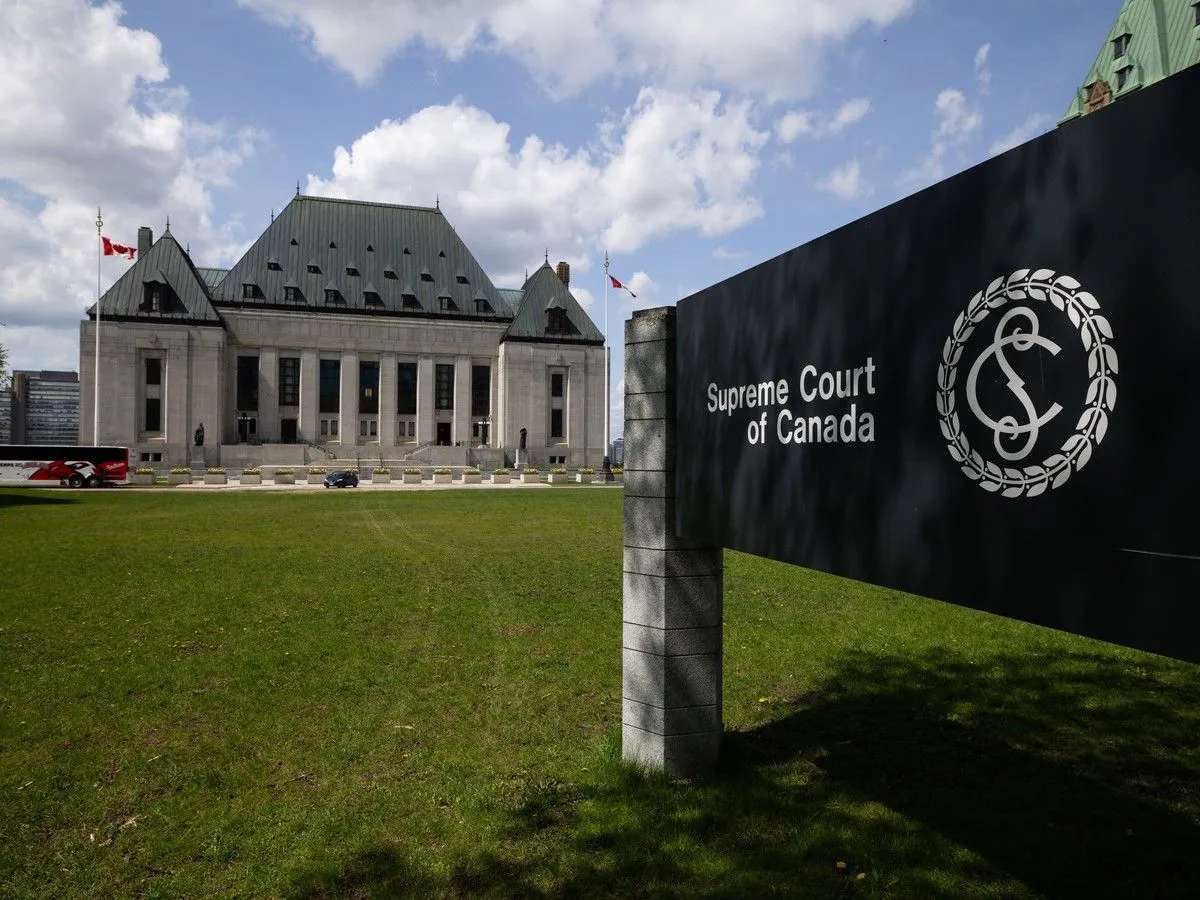
Skip to Content News Archives Economy Energy Oil & Gas Renewables Electric Vehicles Mining Commodities Agriculture Real Estate Mortgages Mortgage Rates Finance Banking Insurance Fintech Cryptocurrency Work Wealth Smart Money Wealth Management Investor Personal Finance Family Finance Retirement Taxes High Net Worth FP Comment Executive Women Puzzmo Newsletters Financial Times Business Essentials More Innovation Information Technology FP500 Podcasts Small Business Lives Told Tails Told Shopping Financial Post Store Obituaries Place a Notice Advertising Advertising With Us Advertising Solutions Postmedia Ad Manager Sponsorship Requests Classifieds Place a Classifieds ad Working Profile Settings My Subscriptions Saved Articles My Offers Newsletters Customer Service FAQ News Economy Energy Mining Real Estate Finance Work Wealth Investor FP Comment Executive Women Puzzmo Newsletters Financial Times Business Essentials HomeCommoditiesNewsSupreme Court of Canada to hear B.C.'s appeal of decision it argues brought DRIPA into lawThe December ruling by the B.C. Court of Appeals found the province's Mineral Tenure Act is 'inconsistent' with DRIPALast updated 2 days ago You can save this article by registering for free here. Or sign-in if you have an account.No hearing date has been set by the Supreme Court of Canada and no reason was given for the decision. Photo by HYUNGCHEOL PARK /PostmediaThe Supreme Court of Canada has decided it will hear B.C.’s appeal of a lower-court ruling that upended the Mineral Tenure Act and potentially gives the Declaration on the Rights of Indigenous Peoples Act the force of law.Subscribe now to read the latest news in your city and across Canada.Exclusive articles from Barbara Shecter, Joe O'Connor, Gabriel Friedman, and others.Daily content from Financial Times, the world's leading global business publication.Unlimited online access to read articles from Financial Post, National Post and 15 news sites across Canada with one account.National Post ePaper, an electronic replica of the print edition to view on any device, share and comment on.Daily puzzles, including the New York Times Crossword.Subscribe now to read the latest news in your city and across Canada.Exclusive articles from Barbara Shecter, Joe O'Connor, Gabriel Friedman and others.Daily content from Financial Times, the world's leading global business publication.Unlimited online access to read articles from Financial Post, National Post and 15 news sites across Canada with one account.National Post ePaper, an electronic replica of the print edition to view on any device, share and comment on.Daily puzzles, including the New York Times Crossword.Create an account or sign in to continue with your reading experience.Access articles from across Canada with one account.Share your thoughts and join the conversation in the comments.Enjoy additional articles per month.Get email updates from your favourite authors.Create an account or sign in to continue with your reading experience.Access articles from across Canada with one accountShare your thoughts and join the conversation in the commentsEnjoy additional articles per monthGet email updates from your favourite authorsSign In or Create an AccountorNo hearing date has been set by the Supreme Court of Canada.B.C. Premier David Eby has said the B.C. Court of Appeal’s 2-1 ruling in December, which found the Mineral Tenure Act “inconsistent” with DRIPA, could put too much power in the hands of judges regarding how reconciliation with First Nations should take place.The Act was intended to gradually bring provincial laws into alignment with the UN Declaration on the Rights of Indigenous Peoples. But Eby has warned the decision brings it into place all at once.Breaking business news, incisive views, must-reads and market signals. Weekdays by 9 a.m.By signing up you consent to receive the above newsletter from Postmedia Network Inc.A welcome email is on its way. If you don't see it, please check your junk folder.The next issue of Posthaste will soon be in your inbox.We encountered an issue signing you up. Please try again“To be frank, it is absolutely crucial that it is British Columbians, through their elected representatives, that remain in control of this process, not the courts,” Eby said at the time of the decision. “Too much rides on it in terms of our province’s prosperity and certainty going forward.”Eby has since said that at least 20 court cases have been amended to include the decision, potentially putting other laws at risk of being shot down because of DRIPA.Linda Innes, chief councillor of the Gitxaala Nation, which was a party to the legal challenge of the Mineral Tenure Act, disagreed, saying the decision simply says the Act is out of date and needs to be updated to include free, prior and informed consent.She said that Eby needs to focus on figuring out a way to make DRIPA work instead of challenging the decision or seeking to change the law.“We see that there are projects that are succeeding when nations are involved early under DRIPA principles, and DRIPA can definitely strengthen collaborative land use and resource planning, and it fails when government and industry refuse to implement it fully,” Innes said after the launch of the province’s appeal.After initially seeking to proceed with amendments to DRIPA that would clarify the court’s role, Eby switched to seeking DRIPA’s suspension after opposition from Indigenous leaders.In April, he then backed down from this plan too, after Vancouver-Strathcona MLA Joan Phillip informed him that she wouldn’t vote for a suspension of DRIPA.A number of other MLAs raised concerns privately, according to sources, and Eby has said that Attorney General Niki Sharma and Indigenous Relations Minister Spencer Chandra Herbert will spend the summer trying to find a path forward with First Nations.B.C. Conservative interim Leader Trevor Halford said Wednesday his party’s position hasn’t changed and that DRIPA should be fully repealed. He said the lack of action from the NDP on the file represents a crisis in leadership.“When it comes to flip-flopping, nobody has done that more, better, than this premier, than this NDP government,” said Halford during question period. “On a file as important as DRIPA, the premier has changed his position not once, not twice, not three times, not four times, not five times — six times in under four months.” Join the Conversation This website uses cookies to personalize your content (including ads), and allows us to analyze our traffic. Read more about cookies here. By continuing to use our site, you agree to our Terms of Use and Privacy Policy.
Supreme Court of Canada to hear B.C.'s appeal of decision it argues brought DRIPA into law
The December ruling by the B.C. Court of Appeals found the province's Mineral Tenure Act is "inconsistent" with DRIPA. Find out more.
1,030 words~5 min read