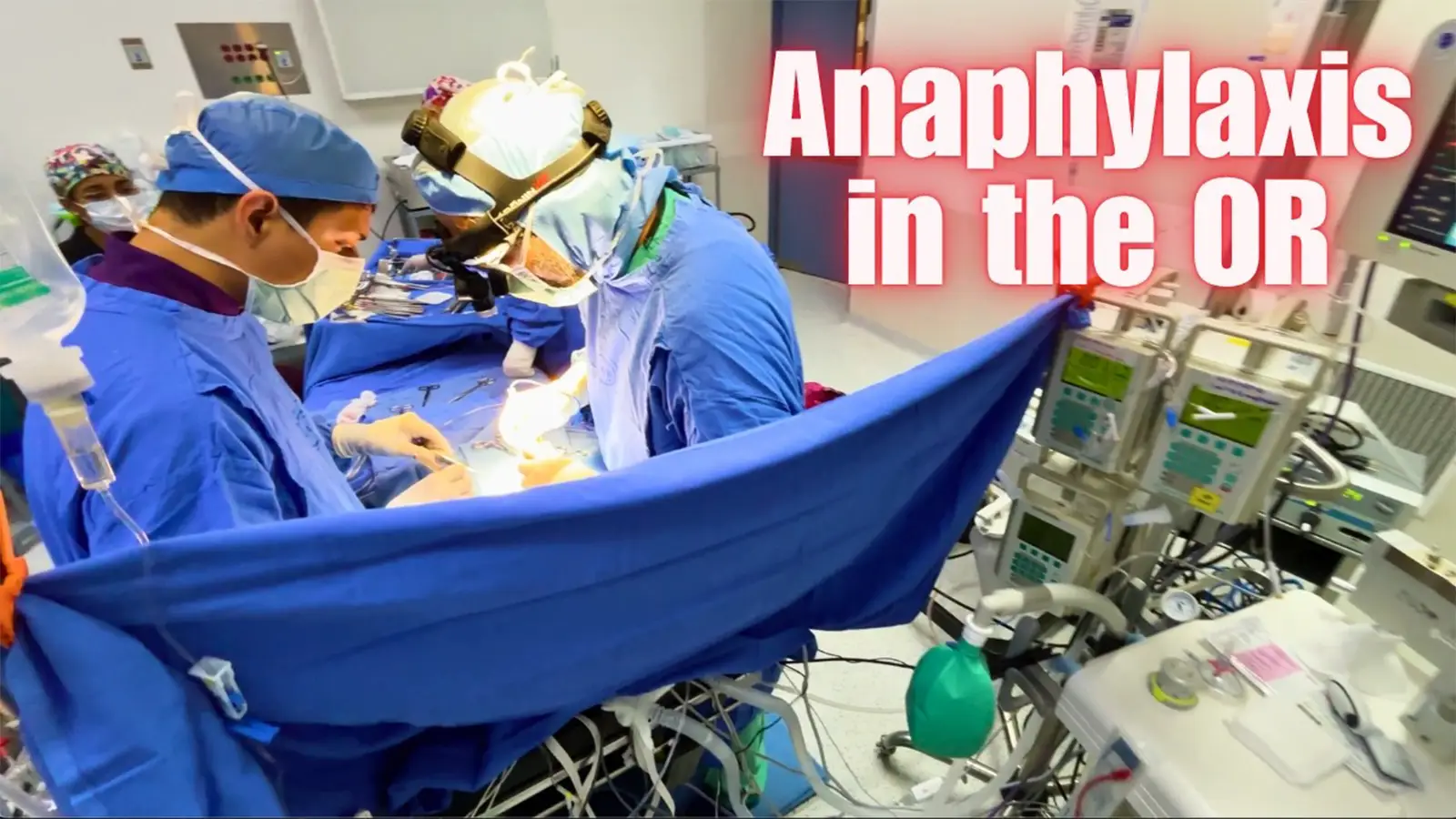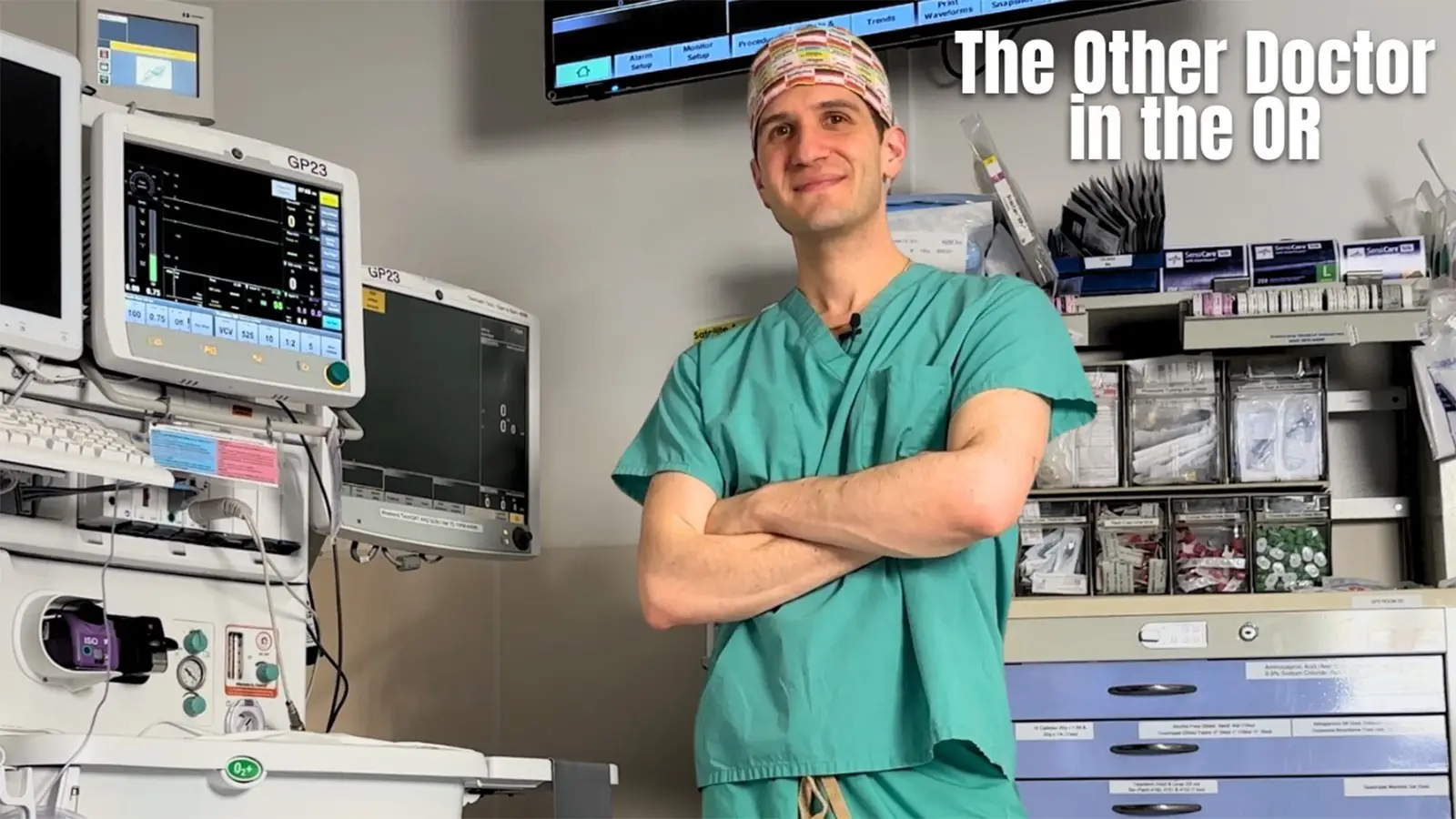
In this video, pediatric anesthesiologist Max Feinstein, MD, breaks down the full arc of anesthesia care: preoperative planning, induction, maintenance, and emergence.
Feinstein: When people watch surgery on TV, the camera follows the surgeon: the incision, the instruments, the repair. That's the story that's being told. But just a few feet away, someone else is running an entirely separate operation and almost nobody talks about it. That person is the anesthesiologist. And in this video, I want to show you exactly what they're doing from the moment you go under to the moment you wake up. My name is Max Feinstein and I'm a pediatric anesthesiologist. And on this channel, I try to pull back the curtain on what anesthesiology actually involves because I think it's one of the most misunderstood fields in all of medicine.
The first part of misunderstanding often begins with who is actually delivering anesthesia during surgery. Anesthesia care is often delivered by a team of clinicians, and depending on where you are, that might include a physician called an anesthesiologist; a certified registered nurse anesthetist, or CRNA; a certified anesthesia assistant; or in the United Kingdom, an operating department practitioner, or ODP. In the United States, where I practice, often a physician and a CRNA work together in the same room. The structure varies a lot, but for simplicity, in this video, I'll use the term anesthesiologist just because that's my own background. Just know that many people are involved with your care. And whoever is at the head of the table, one thing is always true. What they're doing looks completely different depending on the surgery.