In this video, pediatric anesthesiologist Max Feinstein, MD, discusses what causes anaphylaxis under anesthesia, how to identify it, and how to treat it.
Following is a transcript of the video (note that errors are possible).
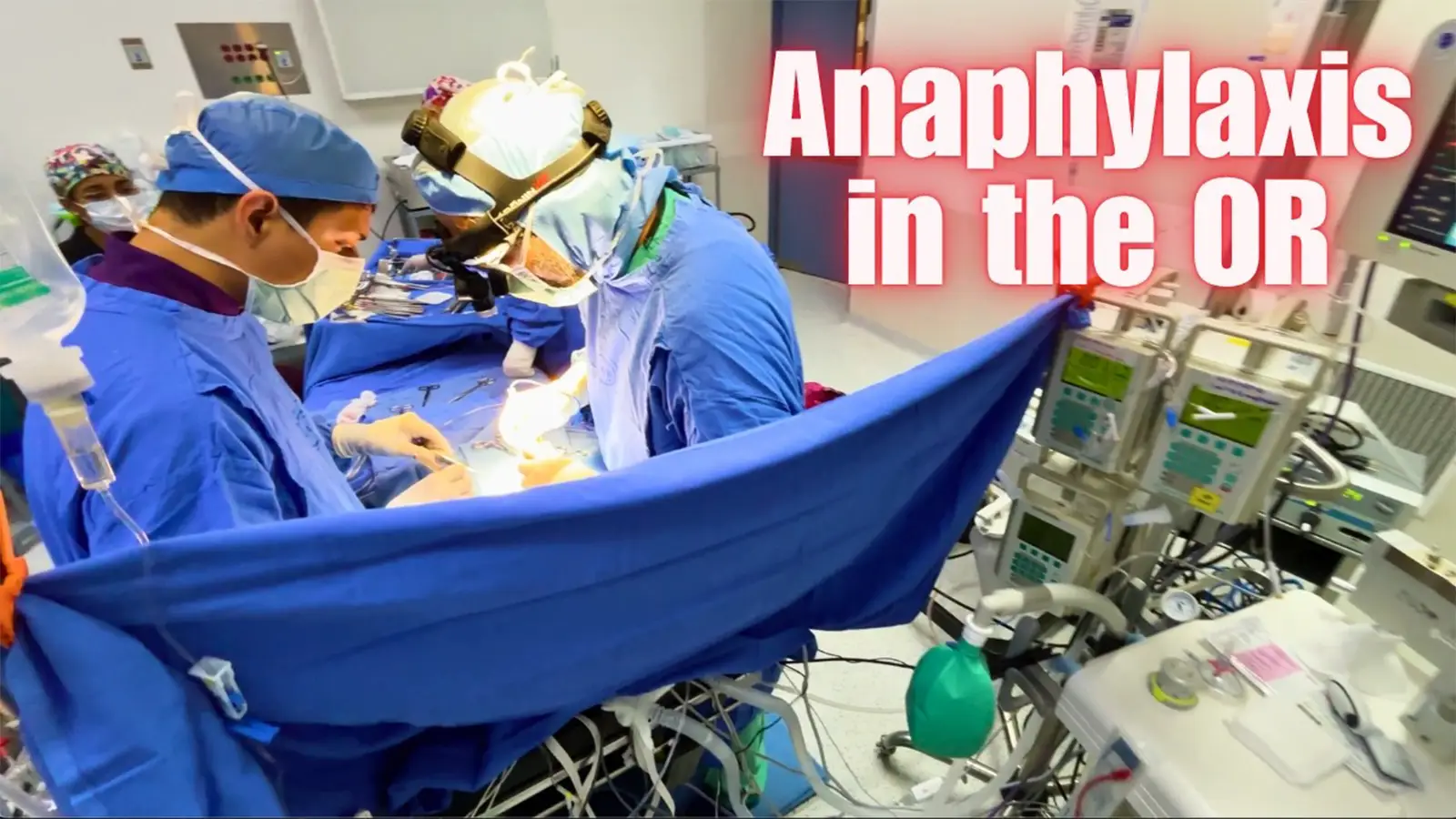
Feinstein: When someone has a severe allergic reaction, they can have difficulty breathing and skin that looks like this. But what happens when someone has an allergic reaction under anesthesia and they're not awake to tell us about the problems with breathing, and they are covered with surgical drapes so the skin is not easily seen? My name is Max Feinstein and I'm an anesthesiologist. And in this video, I show what can cause anaphylaxis under anesthesia, how we recognize it, and how it's treated. But first, let's just clarify what exactly we're talking about.
Anaphylaxis is a severe allergic reaction that is defined by the fact that it affects two or more organ systems at the same time, for example, the lungs and the skin. Or if the cardiovascular system in particular is severely affected -- for example, a significant drop in blood pressure -- that alone is considered to be anaphylaxis. Either way, the important takeaway is that anaphylaxis is a severe allergic reaction that can rapidly progress and become fatal. Other forms of allergic reactions are more mild, and by definition, they affect just one body system like the skin. But in this video, we're going to be focusing on the more severe allergic reaction, anaphylaxis, under anesthesia.