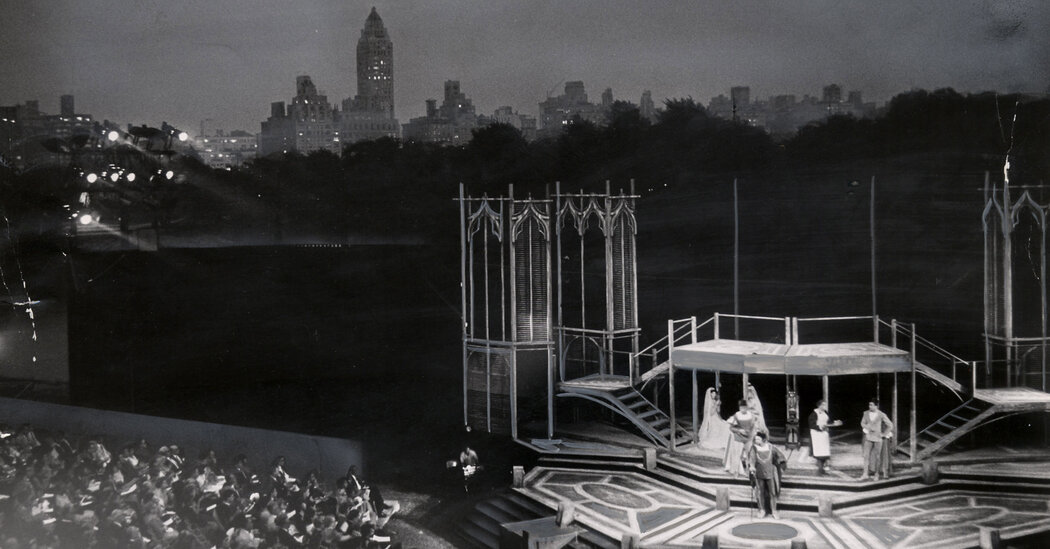
My lower Manhattan food-finding path almost always takes me by First Avenue’s Theater for the New City, a doggedly idealistic nonprofit performance space founded in 1971. General admission tickets, always wickedly cheap, are twenty dollars. For decades, though, I never noticed the clean, incised lettering above the theater doors: first avenue retail market.
The building went up in 1937 and was opened the following year in person by Mayor Fiorello H. La Guardia. Around this time, La Guardia, using Works Progress Administration funds, created a scatter of city-owned and city-run food stores, including the Bronx Terminal Market, Essex Street Market, Fulton Fish Market Complex, and Gansevoort Market, sites intended to push pushcarts off the streets—La Guardia abhorred them—and, in return, give traders shelter and access to loading docks, running water, and electricity.
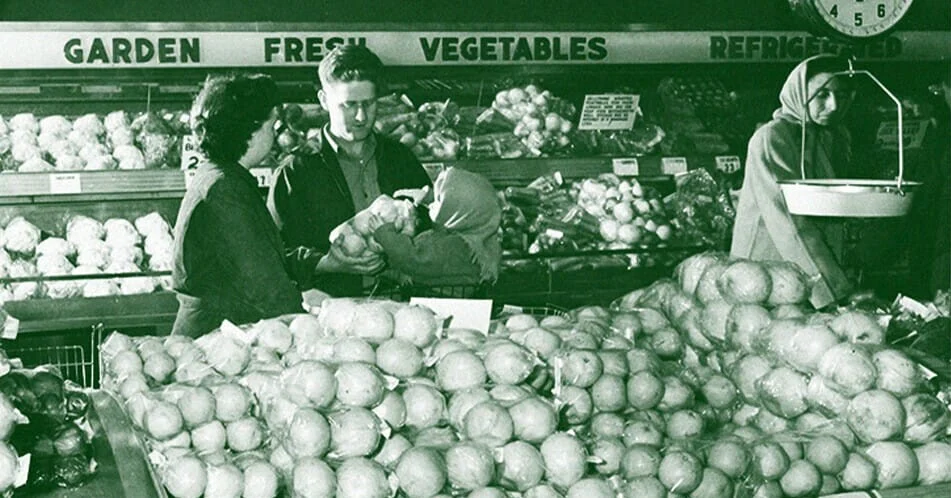
One 1938 photo shot inside the pristine First Avenue market shows scores of hatted shoppers, women and men, in a produce area, and vendors behind their wares. A hand-lettered sign stuck near what looks like potatoes reads “4 for 10.” Cents? (A thin dime equals $2.35 now.) In the late 1930s, New Yorkers, along with almost everyone else, suffered from an unexpected, almost crippling, post-Depression recession, leaving many without enough to eat. National unemployment rose to more than 20 percent. The term “food insecurity” hadn’t been invented, so “going hungry” would have to do.