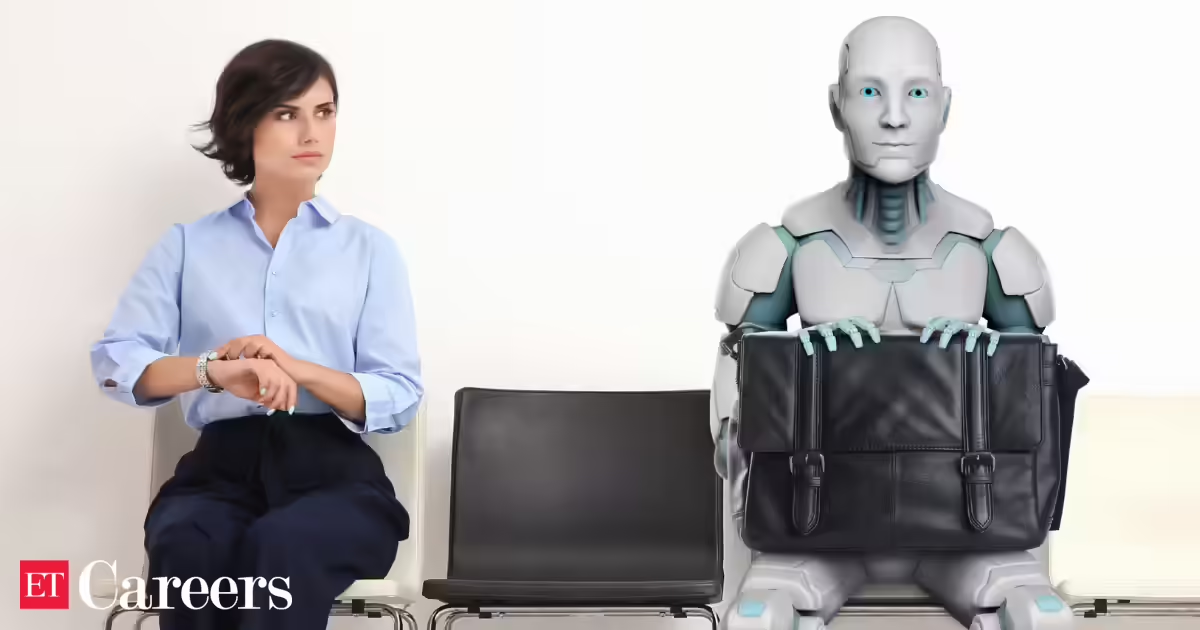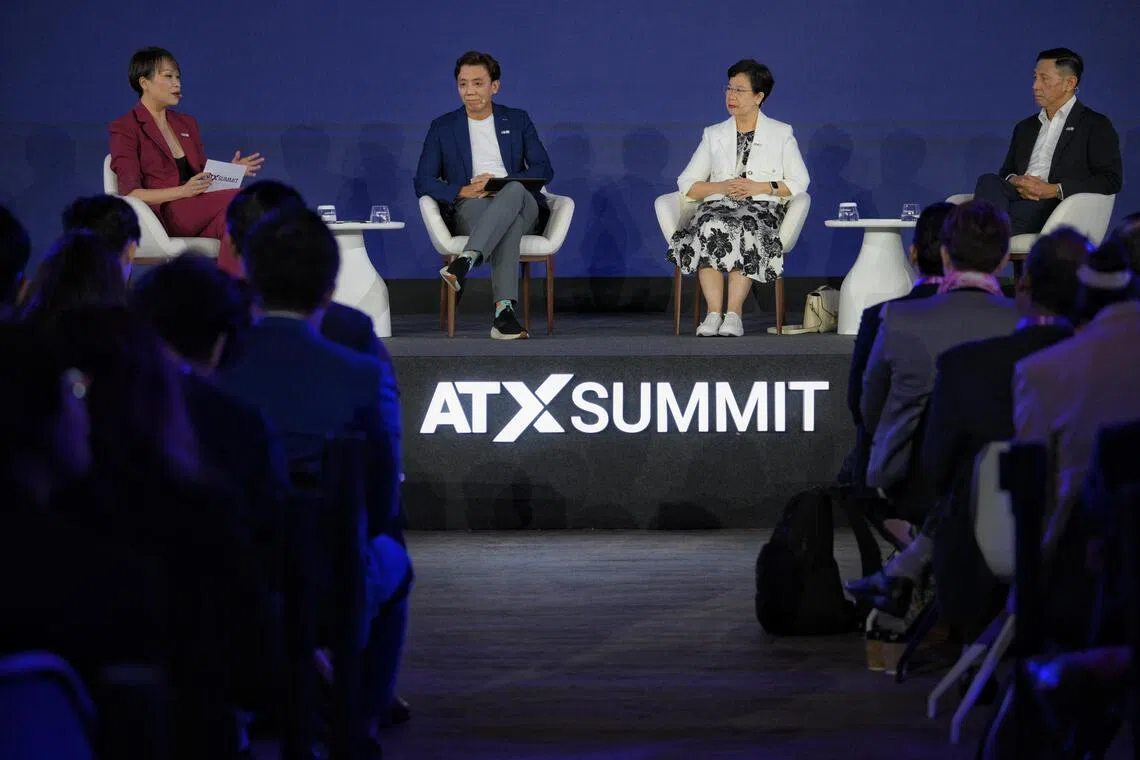
SINGAPORE - Companies here are now hiring fresh graduates with at least two years of work experience as artificial intelligence tools automate entry-level roles, said panellists, urging job seekers to cultivate leadership and communication skills to stand out.Such is the experience at telco Singtel, where AI agents have begun taking over certain entry-level work due to the redesigning of workflows, said Singtel Singapore’s chief executive Ng Tian Chong.“Now when we’re hiring fresh graduates, the jobs that they’re taking on is the equivalent of someone with maybe two years of work experience or more when they’re coming in,” said Mr Ng, noting that valuable internships are those relevant to the applied field of work.He was speaking in a panel titled ‘The Future of Work: Jobs and Skills in an AI-powered world’ on May 21, the second day of the Asia x Tech Summit held at Capella Singapore.The panel sought to explore how jobs will be redesigned, how learning will evolve, and how employers should approach workforce transformation in the era of artificial intelligence.To confront this new standard in work, the Singapore Management University has begun work on helping students conquer this “third-year jump”, said fellow panellist Professor Lily Kong, SMU’s president.While universities have historically focused on knowledge transfer, Prof Kong urged educators to increase their focus on intentionally cultivating human qualities, such as leadership and communication skills, in the age of AI.She added that such values are often shaped outside the classroom through co-curricular activities, community service work, and global exposure opportunities.One way for employers to recognise these skills is through a co-curricular transcript, which SMU has begun doing up since 2025, that lists qualities and characteristics that students have cultivated.“These are dimensions we need to pay attention to in intentional and systematic ways, and not left to fate and chance,” said Prof Kong.Soft skills such as adaptability and one’s attitudes towards learning and upskilling is a differentiating factor, said Mr Ng, adding that workers in the past have been hired for managerial roles based on their sequential experience in their resumes.But the company is now looking out for both experience and skills that they have picked up along the way.“When I meet candidates, I tell them that the 50-year-old may be more valuable because they are continually reskilling, rather than a 35-year-old who doesn’t have the attitude to want to retrain,” said Mr Ng.The shift of focus from pre-employment training to reskilling while working is central to Singapore’s goal of having no jobless growth, said Acting Minister of Transport and Senior Minister of State for Finance Jeffrey Siow, who was also on the panel.Though the government expects there to be greater job churn in the economic transition, he added that the focus is on helping citizens to bounce back and have opportunities to take on jobs that they want.As AI continues to change once defined career paths, Mr Siow advised students not to be prescriptive. He cited coding skills learnt in university six years ago, that might not be as useful today.“There are fewer safe paths, but there are more exciting paths...what matters is your attitude and whether you embrace the challenge,” said Mr Siow, adding that he hopes young Singaporeans have confidence in their “high-quality” training and strong education system.“As long as we keep the economy thriving, you will have more opportunities and more exciting pathways than your parents...We should be optimistic relative to the rest of the world.”
AI economy: Fresh grads need experience and soft skills
Fresh graduates entering the AI economy are urged to build work experience and cultivate soft skills to stand out in an evolving job market. Read more at straitstimes.com. Read more at straitstimes.com.
570 words~3 min read