As Penn Engineers prepare for graduation, many are entering a dynamic and unpredictable labor market shaped by artificial intelligence, economic uncertainty and rapidly changing expectations for entry-level candidates. For early-career engineers, that can raise urgent questions: Which skills still matter? Which tasks will be automated? And how should graduates use AI without becoming overly dependent on it?
Jamie Grant (C’98, GEd’99), Senior Associate Director for Penn Engineering at Penn Career Services, works closely with students as they explore career paths and prepare for internships and full-time roles. In a recent conversation, she discussed how students can think about AI as an “exoskeleton” for their work, why foundational engineering skills still matter and how graduates can better communicate the full range of skills they have developed at Penn.
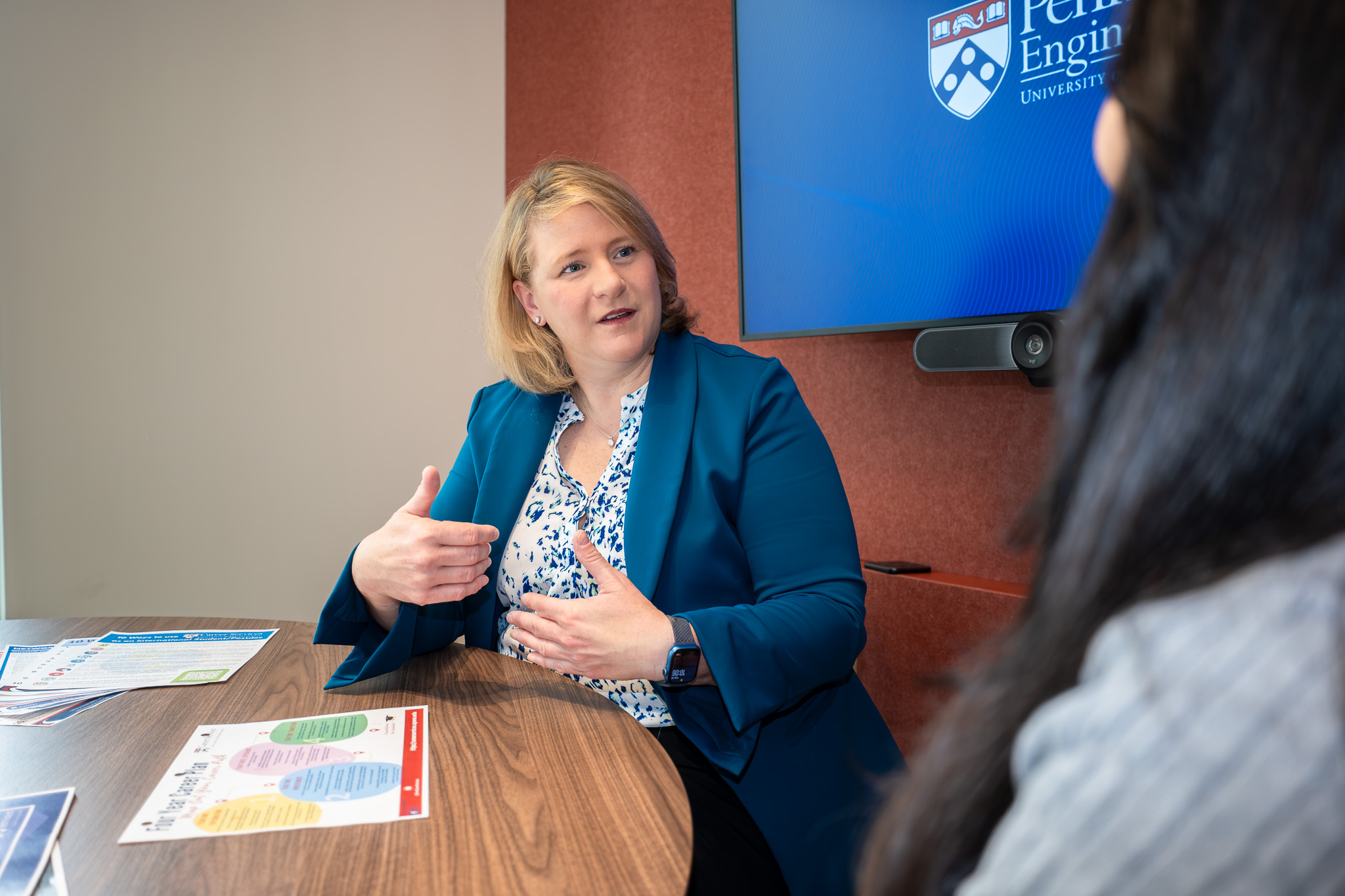
Jamie Grant has been carefully tracking the rise of AI as she helps prepare Penn Engineers for the workplace. (Credit: Sylvia Zhang)
Given the rise of AI, how are job responsibilities for engineers changing, especially for early-career engineers?
While national headlines declare that AI is erasing the entry-level job market, the story is more nuanced. It’s clear that the skills to leverage AI are becoming essential in the workforce, helping new grads to elevate how effectively and quickly they can work.