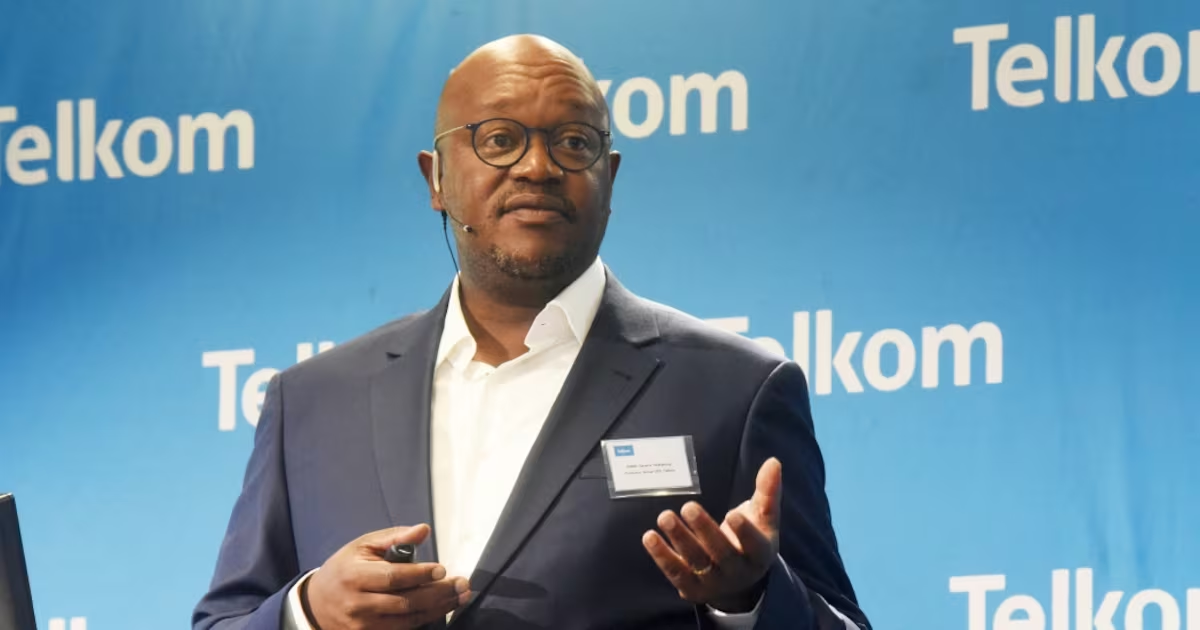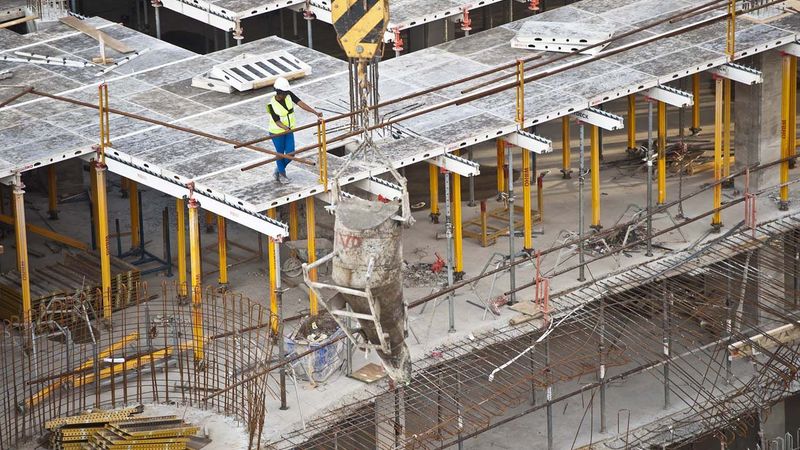
South Africa’s digital infrastructure spend is forecast to reach $71 billion between 2025 and 2050. (Image created via Gemini) South Africa’s digital infrastructure spend is forecast to reach $71 billion (R1.2 trillion) between 2025 and 2050, as investment in artificial intelligence (AI), data centres and connected infrastructure systems accelerates globally.This is one of the key findings in PwC’s Global Infrastructure Outlook 2025-2050 report. It states: “Investment in power, transport and digital infrastructure will increasingly converge to create more intelligent networks, with traditional assets operating as part of connected, digitally-enabled and electrified systems.”According to the report, SA’s cumulative infrastructure investment will total $582 billion between 2025 and 2050, with transport infrastructure accounting for $155 billion, resources infrastructure $128 billion and power infrastructure reaching $83 billion over the researched period.Digital infrastructure is the next largest, with total spend of $71 billion, followed by social infrastructure ($57 billion), water ($30 billion), agriculture ($28 billion), industrial ($26 billion) and defence ($4.3 billion) over 2025-2050, the report states.PwC says infrastructure spending in SA reached $19 billion in 2024 and annual infrastructure spending is forecast to grow 39% from current levels to $26 billion by 2050.Jarendra Reddy, infrastructure leader, PwC South Africa, explains: “The scale of infrastructure investment needed over the next 25 years has the potential to take infrastructure beyond just an assemblage of roads, railway lines, pipes, power lines and concrete structures, to a fundamentally transformed ecosystem: smarter, more resilient and interconnected across physical, digital, environmental and social systems.”This won’t be automatic, notes Reddy. “It will take ingenuity, smart prioritisation of resources, exceptional public and private sector collaboration, and acceleration of the institutional reforms in progress.”Jarendra Reddy, infrastructure leader, PwC South Africa.(Image:Supplied) The report highlights a sharp rise in local data centre infrastructure spending amid increasing AI adoption.The two key factors contributing to SA’s thriving data centre market are the accelerating uptake of cloud computing adoption and SA’s booming internet adoption.The escalating cloud demand and AI adoption from enterprises, financial institutions and government departments has led to “rapid hyperscale cloud investments” and a “surge in AI and high-performance computing demand” which are accelerating adoption for local data centre capacity, particularly in Johannesburg and Cape Town, it states.Secondly, SA’s growing strategic connectivity advantage through major submarine cable systems, including Equiano and 2Africa, has seen internet traffic doubling every two years. These form the backbone of SA’s digital economy, leading to escalating internet adoption and more firms scaling their AI workloads.Co-location data centre investors in SA include Equinix, Teraco, Africa Data Centres, NTT DATA, Open Access Data Centres and Vantage Data Centers.While there is no forecasted amount for SA’s data centre sector spending, the report points out the boom in data centre construction currently leads sub-sector growth. This, as hyperscalers Amazon, Google and Microsoft lead the charge in establishing local data centre regions, creating a gateway for regional computing power across the continent.“As the world races to unlock the full potential of AI, a surge in spending on data centre buildings is rapidly unfolding and comes in addition to investment in ICT equipment, such as chips and servers. “Between 2024 and 2027, annual global investment in data centre buildings will rise 2.2 times, from $113.8 billion to $251.8 billion. Total investment from 2024 to 2032 will top $1.5 trillion in a remarkable short-term escalation, which will be followed by a period focused on improving the utilisation, efficiency and adaptability of existing built stock.”The report adds that global infrastructure spending is entering an unprecedented investment cycle, with annual spending forecast to rise from $4.4 trillion in 2024, to $6.9 trillion in 2050.“As countries modernise transport, power and industrial systems to meet the demands of AI, electrification and urbanisation, cumulative global investment is projected to reach $151.1 trillion over the period,” PwC says.According to the report, SA is undergoing a shift away from traditional, asset-based planning toward digitally-enabled urban systems, where cities are increasingly treated as integrated technology ecosystems rather than isolated physical networks. However, infrastructure decisions made today will determine long-term economic and technological competitiveness, with planning choices setting decade-long trajectories that shape how value compounds across sectors, it cautions.“South Africa's cities are not merely assemblages of roads, pipes and power lines. They're living ecosystems where human potential either flourishes or fails. Between 2025 and 2050, $582 billion in baseline infrastructure spend is forecast across the country, positioning this period as a critical window to shape digitally-driven urban development.”Johannesburg is currently ramping up smart city plans after a stalled rollout.ITWeb previously reported that the City of Joburg’s 2025/26 draft Integrated Development Plan looks to renew the city’s strategic focus on digital transformation and infrastructure.“There is a need for a renewed strategic focus on strengthening infrastructure, governance and digital transformation,” the plan states, reaffirming that transforming Johannesburg into a smart city is now a strategic priority.The City of Cape Town is steadily becoming a connected and digitally-enabled city, through initiatives such as its intelligent infrastructure, open data efforts to support transparency and innovation, and renewable energy projects which aim to build a more resilient urban system, according to University of Cape Town research, analysing the city’s digital strategy. Its smart city initiative, SmartCape, also aims to increase internet connectivity and digitise everyday government services, making them more accessible and efficient for residents.South Africa’s infrastructure spend is forecast to reach $26 billion by 2050. (Image source: PwC’s Global Infrastructure Outlook 2025-2050) According to PwC: “Africa will see the world’s fastest-growing infrastructure investment rate, with annual spending to increase nearly 1.8 times, reaching $96 billion by 2050. This reflects demographic change and significant infrastructure gaps.”Asia-Pacific, adds the report, will remain the engine of global infrastructure activity, accounting for more than half of total investment through to 2050, propelled by urbanisation, industrial expansion and rapid build-out of power and digital networks.According to PwC, execution risks remain a concern despite the scale of planned investments in Africa.“Execution risk, fragmented planning, inconsistent community engagement, supply-chain vulnerability and outdated delivery models could dilute the economic impact of the unprecedented investment volumes,” the report states.System-level planning, new financing and partnership models, and modern delivery and commercial models should be prioritised to improve infrastructure delivery outcomes.“Africa stands at the threshold of a transformative era in infrastructure investment, potentially leading the world in growth over the next quarter-century,” asserts Reddy.“Driven by demographic change and rapid urbanisation, this is more than just mobilising capital; it is a generational opportunity to embed long-term strategies, forge future-ready, locally-relevant infrastructure solutions, and revolutionise project delivery with digital and AI-driven solutions. “By embracing forward-thinking commercial approaches and smart financing partnerships, Africa can secure a resilient and prosperous future.”
SA’s digital infrastructure spend tipped to hit R1.2tn
South Africa is forecast to invest $71 billion in digital, transport and smart city systems by 2050, to converge them into intelligent, digitally-enabled infrastructure networks.
1,096 words~5 min read