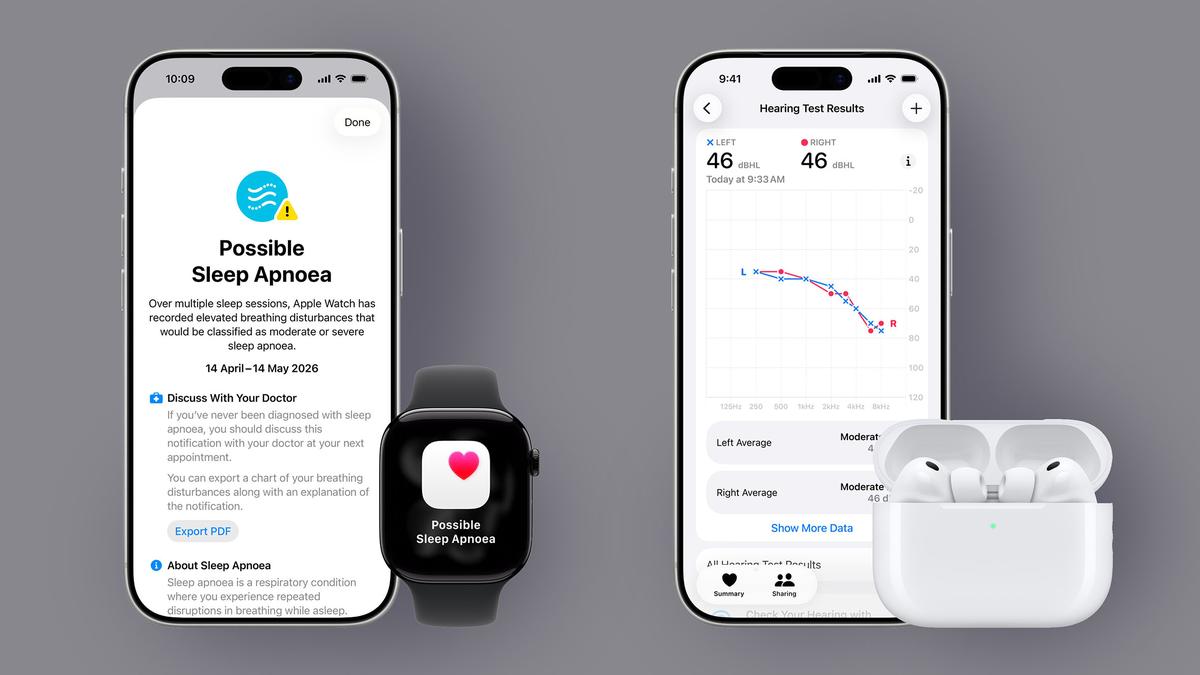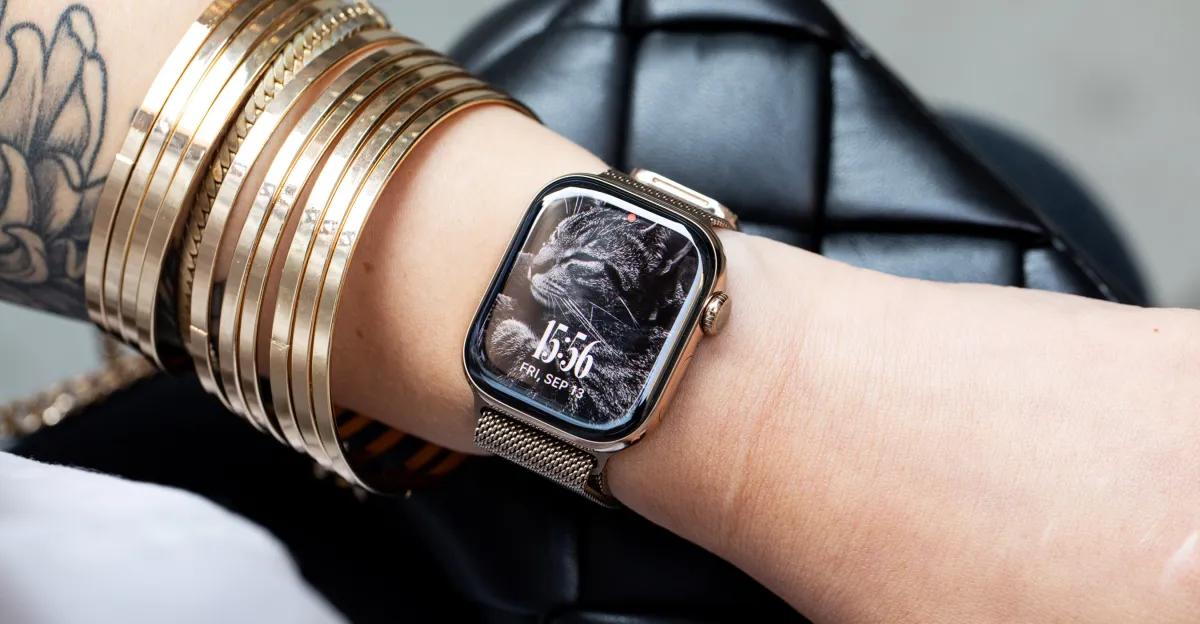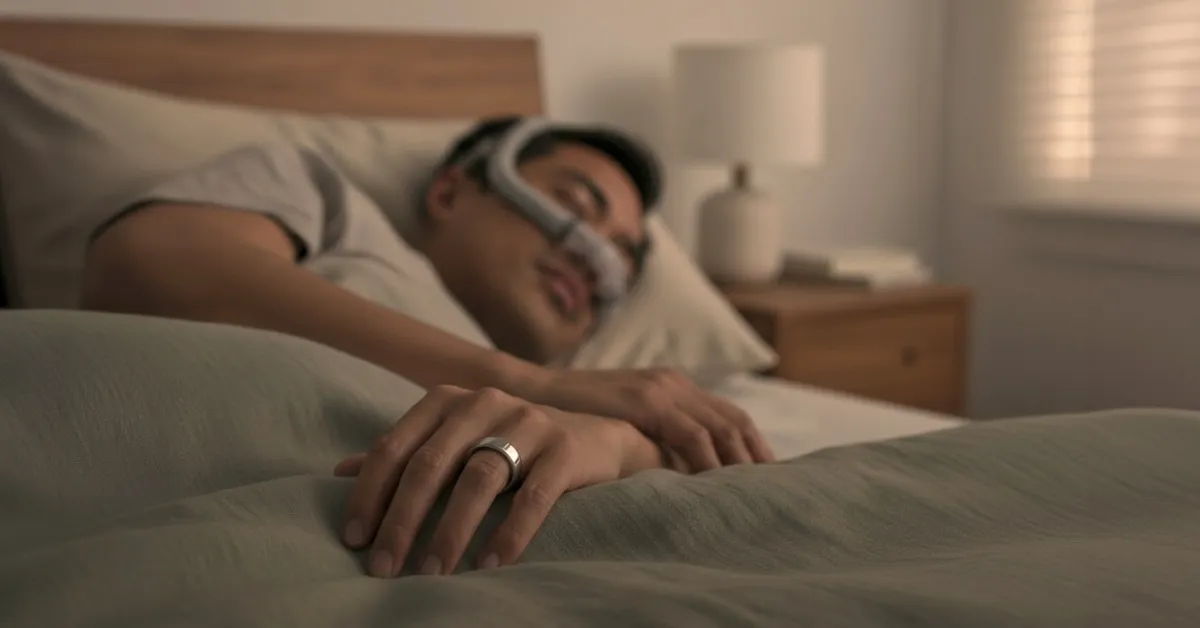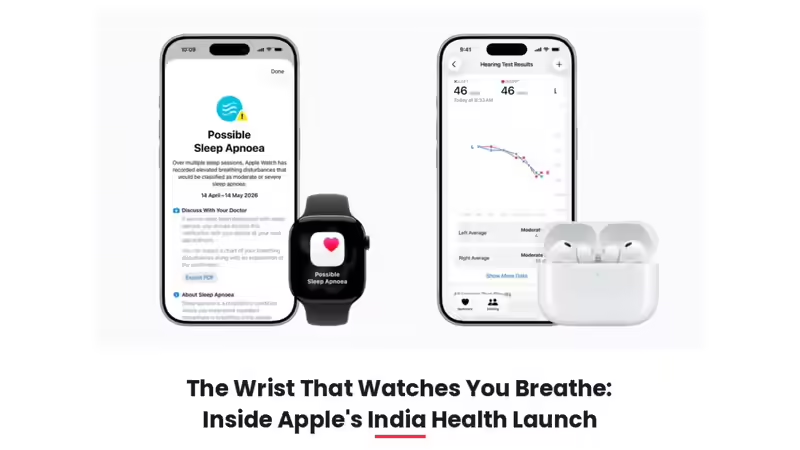
Roughly one billion people on this planet have sleep apnea. About 80 per cent of them have never been diagnosed. In India, where Type 2 diabetes is a national emergency and obesity sits as a structural problem in the over-40 demographic, that undiagnosed pool tilts darker still.Today, two of Apple's most quietly ambitious health features arrive in India to chip away at that number. Sleep apnea notifications on Apple Watch. A clinically validated Hearing Test on AirPods Pro 2 and the newer AirPods Pro 3. Both are free. Both ride on hardware Indian buyers already own. Both have lived in roughly 150 countries since late 2024, finally clear of India's medical-device approval pathway.To understand what Apple actually built — and what is still missing from today's announcement — Gadgets Now spoke with Dr Rajiv Kumar, who works on Medical Affairs and Research at Apple, on a video call on Tuesday. Kumar is one of the architects of the Sleep Apnea Notification Feature, internally referenced as SANF. A paediatric endocrinologist by training, he joined Apple from Stanford Children's Health in 2016 and has spent close to a decade building the clinical architecture around features most users see only as toggles in the Health app. He appeared on screen with stubble and hair both shot through with silver, articulate and surgical in his choice of words — every clause placed where he wanted it, nothing wasted.Sumbul Desai, Apple's vice president of Health and Fitness, put it in formal terms. "At Apple, we believe technology should empower people to take control of their health, and that starts with giving users tools to detect conditions they may not even know they have," she said in a statement marking the India rollout. "From sleep apnea notifications on Apple Watch to a hearing test with AirPods Pro, we're excited to bring these meaningful capabilities to our users in India."That is Apple's narrative. Kumar's account is more interesting.The three principlesKumar opened with three principles familiar to anyone who has covered Apple's health team since Sumbul Desai joined the company in 2017. They run in order, every time."Any information we surface should be meaningful and actionable," he said. "We are not just surfacing data for the sake of showing it or to engage people; rather, it is to say, 'Here is something about you, and here is what you can do about it.'"Second, the science. "We take the science of health very seriously. Therefore, all of our health features are rigorously validated."Third, privacy. "Privacy has always been the trust of our users, and every user has control over all of their health data."Repeat that three times, in that order, until the phrase becomes a mantra. The mantra is genuine. Sleep apnea notifications are a clean case study.What is launching todaySleep apnea notifications work on Apple Watch Series 9, Apple Watch Series 10, and Apple Watch Ultra 2 — and the newer Series 11 and Ultra 3 lineup that has shipped since. The Hearing Test works with AirPods Pro 2 (running the latest firmware) and AirPods Pro 3 paired with a compatible iPhone or iPad. This is, in other words, a software switch flipping on regulatory approval. Apple did not ship new chips for India. Apple did not gate the features behind a new Series. The accelerometer in a two-year-old Apple Watch has been collecting the data all along; today the algorithm gets permission to talk back.For context, on Apple's broader accessibility push for 2026 — Apple Intelligence describing photos for blind users, eye-tracked wheelchair control on Vision Pro, on-device subtitles for any video. The health features that arrive today sit as siblings of that work: built into hardware most users already wear, validated at clinical scale, shipped without an upgrade tax.The 30-day pit laneSleep apnea is a prevalent disorder in which breathing momentarily stops during sleep, preventing the body from getting enough oxygen. The condition is estimated to affect more than one billion people worldwide. Untreated, it lifts the risk of hypertension, Type 2 diabetes, and cardiac problems."While that is a big number, the more staggering part of it is that most of those people are undiagnosed — roughly about 80 per cent go undiagnosed," Kumar said. "Despite being so prevalent, and despite the known benefits of finding it earlier and intervening earlier, it is just one of those things that people are not otherwise aware of. When left untreated, it can cause significant physiological stress on the body. It increases our risk of conditions like hypertension, Type 2 diabetes, and heart disease."The Apple Watch uses its accelerometer — the same sensor that powers fall detection and step counting — to monitor wrist movements while a user sleeps. Apple's press materials describe Breathing Disturbances as "an innovative new Apple Watch metric that uses the accelerometer to detect small movements at the wrist associated with interruptions to normal respiratory patterns during sleep." Once every 30 days, the Watch runs the analysis. If the numbers cross the threshold for a consistent pattern, the notification fires. The Watch does not diagnose; it raises a flag.Why 30 days? The lookback window runs longer than much of Apple Watch's health stack, which generally works in shorter cycles. Kumar pointed to the algorithm's training data."We collected multiple nights of data, providing multiple reference points and checkpoints across an incredibly diverse dataset," he explained. "We found in algorithm training that having that 30-day lookback period, and evaluating the proportion of nights affected, correlated strongly with moderate-to-severe sleep apnea. It proved robust against a single bad night of sleep, or maybe a week where things were off due to an illness, travel, or other external variables. Really, that 30-day lookback period makes the algorithm more robust by evaluating who you are as an individual, rather than just focusing on how last night went."In F1 telemetry terms, this is not a one-lap measurement. It is a rolling average across a race weekend. One scrappy lap fails to change a driver's race classification; sustained pace does. The Watch wants to see the pace.The validation study underlying the feature is, by Apple's own account, unprecedented in size for sleep apnea technology. The press release puts it plainly: "In the clinical validation study, every participant identified by the algorithm had at least mild sleep apnea." Given that the system is calibrated to flag moderate-to-severe cases, that specificity number is remarkable.The question Apple's algorithms had to solve about womenHere is where the conversation got interesting. Sleep apnea presents differently in women than in men, and that fact has produced a generation of underdiagnosis. Women with apnoea often present with fatigue, insomnia, or mood swings rather than the cartoon-snorer stereotype that medical training built around male case studies. Train an algorithm on the cartoon-snorer profile and the result is a tool that misses half the affected population.Put to Kumar directly, the answer is a small marvel of engineering elegance."Traditionally in health and health research, women are often overlooked or underrepresented in studies," he acknowledged. "For things like heart disease and sleep apnea, often the metrics that are published are not representative of the entire population. It is really important for us at Apple, for all of our health products and features, that we train on a very wide and diverse dataset — not only for sex, but also body mass index, skin colour, geolocation, and other factors that are quite important to us."Standard answer so far. Then the engineering twist."To your specific question, though, you're absolutely right that sleep apnea from a symptomatology standpoint can present differently between men and women," Kumar continued. "Here, our feature is looking specifically at those pauses in respiration overnight. It is not tuned to symptoms or clinical presentation, but rather to whether someone is having a pause and experiencing true apneic episodes while they are breathing. Because of that approach, we have equivalent performance across all sexes, backgrounds, BMIs, and ages."Read that twice. Apple solved the female-underdiagnosis problem by sidestepping the symptom-classifier entirely. The feature measures the physical event — the pause — rather than the downstream signs the pause produces. A pause is a pause whether the wearer is a 28-year-old woman with insomnia or a 58-year-old man who saws logs through the night.This is the kind of design discipline that separates serious health engineering from wellness theatre.The boundary of Apple's clinical responsibilityApple's clinical responsibility ends at a specific point: the diagnosis. After that, the feature steps aside. Kumar uses the phrase "intelligent guardian" to describe it."Basically, we consider this an intelligent guardian feature," he said. "This is something running in the background to help make you aware of a condition. It is very similar to how our irregular rhythm notification feature works for atrial fibrillation: if someone has AFib, we say, 'We think you have atrial fibrillation, you should go confirm it.' It is the same story here."Once a user is on a CPAP machine — the standard intervention for diagnosed sleep apnea — the feature deactivates. "Once you've been diagnosed with sleep apnea and are intervening with a CPAP machine, then this feature, in its current state, is no longer available to you — both because CPAP is the active intervention and because it affects those specific signals," Kumar explained.CPAP adherence is famously low — between 30 and 60 per cent of patients abandon the machine within a year. Apple could, theoretically, build a CPAP-companion app. Apple chose to stop at detection. Kumar's read tells you why. Detection is one job. Treatment compliance is a different job. The Watch does the first job and steps aside."We are hoping to chip away at that 80 per cent of people who are affected and do not know it," he said.From the recording studio to the audiometric boothThe Hearing Test feature on AirPods Pro is the second half of today's India announcement, and it has a longer development arc. The story actually starts before Apple Watch existed."Going back into the history of hearing, we released our first hearing test as a ResearchKit module many years ago, even before the Apple Hearing Study launched," Kumar said. "The idea of using a mobile device for hearing tests has always been a very cool use of technology that we wanted to engage with."The Apple Hearing Study itself launched in November 2019 — one of the largest longitudinal hearing-health studies ever attempted, with about 160,000 participants. The partners are heavyweight: the University of Michigan School of Public Health on the methodology, the World Health Organization on the global frame."We found a huge opportunity and a significant benefit here," Kumar said. "However, we also found that there were some differences depending on the type of headset used and how much sound leakage might be happening."The gold-standard clinical hearing test — pure-tone audiometry — works by playing tones at different frequencies in a sealed audiometric booth and asking the patient to indicate the quietest version they can hear. Audiometric booths live in clinics, not homes.Then AirPods Pro 2 changed the math. "Once AirPods Pro became available — where one can have a really tight acoustic seal — we realised this is very similar to an audiometric booth," Kumar said. "We can basically replicate that same idea of being in a booth with over-the-head headphones, but do it right in the canal and play those tones at the same frequencies."The test itself takes about five minutes per ear. Apple's press materials describe the result: "When a user completes the test, they will see an easy-to-understand summary of their results, including a number representing hearing loss in each ear, a classification, and recommendations. The results, which include an audiogram, are stored privately and securely in the Health app, and can be shared with a healthcare provider to have more informed conversations."The feature earned FDA Class II medical device authorisation in September 2024. "We compared performance at each frequency across eight frequencies for both ears, evaluating a four-frequency average (called a 4-PTA), an eight-frequency average, and the overall classification of hearing loss," Kumar said of the validation. "We found that for all of these metrics, we performed really quite well with high accuracy. It is on par with an in-lab test, but you can do it from the convenience of your home."Why not AirPods MaxAn obvious question: why does the Hearing Test work only on AirPods Pro 2 and AirPods Pro 3? AirPods Max have arguably the best passive seal in Apple's audio lineup. The over-ear pads form their own quiet chamber.Kumar's answer was half engineering, half market math. "I think for our initial goals of trying to reach the most significant number of people possible, we know that AirPods Pro has a very wide circulation around the world," he said. "So for this software feature, we started there. We can't really talk about where we are going in the future, but that was the appropriate place to start to help the most people possible."The unsaid context: AirPods Pro outsells AirPods Max by an order of magnitude. Apple ships features where the install base lives. The Pro 2 and Pro 3 acoustic seal is also a known quantity for in-canal frequency response. AirPods Max has a different acoustic profile because the speaker sits centimetres from the eardrum rather than millimetres.India's audiologist shortage and the honking-traffic problemThis is where the conversation came home to India.India has roughly 2,000 certified audiologists for a population of 1.4 billion-plus. That ratio is grotesque. The ENT specialists exist, but the audiology bench — the people who run hearing tests, calibrate hearing aids, and counsel patients on hearing loss progression — fails to scale anywhere near the demand.Kumar acknowledged the gap directly. "India certainly has a massive population, many of whom are affected by hearing loss, and accessing care is not straightforward," he said. "Unlike other areas of the world, it's harder to find an audiologist than it is to find someone if I had changes in my vision or needed to get glasses; there's just a massive unmet need."Was the AirPods Hearing Test designed to triage users toward a specialist, or to substitute for a first visit? Kumar drew the distinction carefully."Again, we want to make things actionable. We don't want to surface data that people can't do anything about," he said. "The goal here is not to flood the clinicians, but to help people have awareness earlier over time. We worked hand-in-hand with audiologists, ear-nose-throat doctors, patient advocacy groups, and people from around the world to really understand how to craft this feature."He continued: "The idea is not to replace a clinician, but to increase that awareness to help someone understand what is going on, and then identify what they can do next. At a certain level, a hearing aid might be the nearest-term best step. But sometimes in the earlier stages of hearing loss — where one is trying to figure things out — just reducing loud sounds in their environment, positioning themselves differently at work, school, or on public transportation, or protecting their ears based on their occupation can make a big difference."Then the question Gadgets Now had been saving for the end: how does the test handle ambient noise in a country where Delhi auto-rickshaws use the horn the way a guitarist uses a wah pedal — continuously, expressively, and at significant volume?The answer turned out to be two-layered, and the engineering is genuinely clever."The way AirPods Pro works is that there are multiple tip sizes to find just the right fit for your canal," Kumar said. "Before each test, you can conduct a Tip Fit Test. Basically, sound reverberates within the ear canal, and if that sound leaks, the system indicates it is not a great seal. That is one part of creating that audiometric booth experience."Layer two is real-time monitoring during the test. "We actually have microphones on the inside of the ear canal in the AirPods that are actively sampling the environment," Kumar explained. "If the environment becomes too loud — to the point where we think the test is unreliable or untrustworthy — then we will pause or stop the test."The clever bit comes when ambient noise sits at the borderline. "If the ambient noise is loud enough where we think it may affect results but not change the overall outcome, the algorithm will allow the test to continue," Kumar said. "However, on the final data display, it will specify which frequencies might have been affected. For instance, if a siren was playing in the background and it affected certain frequencies, the system notes that while it didn't change the fact that the person crossed a threshold, there was significant background noise. A clinician or someone interpreting their results can then see that while that specific frequency might not be perfectly reliable, the overall test remains valid. We try to put all that metadata there as well."An audiologist reading the result sees not just the hearing-loss curve but the metadata — which frequency band was tested through a passing truck and may need a clean-room retest. This is the kind of design detail that separates "we made a hearing test app" from "we built a hearing test that survives Indian traffic."The musicians-and-tinnitus questionTinnitus is the chronic occupational hazard of working musicians, sound engineers, and anyone who has spent significant time in live venues without ear protection. Gadgets Now asked whether the Hearing Test could help musicians track tinnitus progression over time.Kumar held back on roadmap specifics. "We don't talk about things on our roadmap or what's coming in future features," he said, "but I can share that our acoustics engineering team includes some of the best acoustics engineers around the world, and I would say 90 per cent of them are musicians or come from that field. They are very passionate about that space. We have a very strong understanding of that community and its needs, and we are very strong advocates for it."Translation: the team has the personal stake.What India is still waiting forThe conspicuous absence from today's announcement is the over-the-counter Hearing Aid feature. In the United States, Germany, Saudi Arabia, the United Kingdom, Singapore, and dozens of other markets, AirPods Pro 2 and Pro 3 can function as software-based hearing aids, using a personalised audiogram to amplify speech and ambient sound for users with mild-to-moderate hearing loss. The feature earned FDA authorisation in September 2024 — the first software hearing aid ever cleared in the United States.In India, it remains pending. Apple is reportedly working on bringing this feature to Indian users as well. The Hearing Aid feature is Class II medical device territory in most jurisdictions, and India's approval timeline runs longer than the firmware timeline Apple controls in Cupertino. The intent is there. The paperwork lags.When that approval lands, Apple will have delivered something India's hearing-impaired community has waited for in vain — a clinical-grade hearing aid that costs roughly Rs 25,000 (the price of an AirPods Pro 3) rather than the Rs 1.5 lakh to Rs 4 lakh that conventional clinical hearing aids command at retail. The arithmetic alone reshapes the market.The bigger arcWhat Apple has shipped to India today is part of a longer compounding bet on the body as the primary product surface. The Watch reads the wrist; the AirPods read the ear canal; the iPhone is the dashboard for both. Add the accessibility work — the — and a pattern crystallises. Apple is building, feature by feature, the most ambitious clinical-grade software stack any consumer technology company has attempted.Most of it ships free. Most of it runs on hardware buyers already own. Most of it requires only that a regulator in Delhi or Washington or Berlin says yes.In a country where 2,000 audiologists serve 1.4 billion people, and where 80 per cent of the world's sleep apnea cases walk around undiagnosed, that arithmetic is the whole story.end of article
The Wrist That Watches You Breathe: Inside Apple's India Health Launch
Apple brings advanced health features to India. Sleep apnea notifications on Apple Watch and a hearing test on AirPods Pro are now available. These free tools use existing devices to help users detect potential health issues. This initiative aims to reach millions of undiagnosed individuals. Apple's commitment to accessible health technology is highlighted by these significant launches.
3,306 words~15 min read