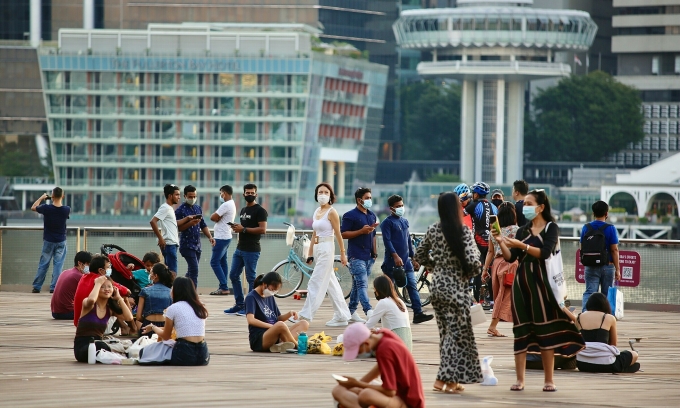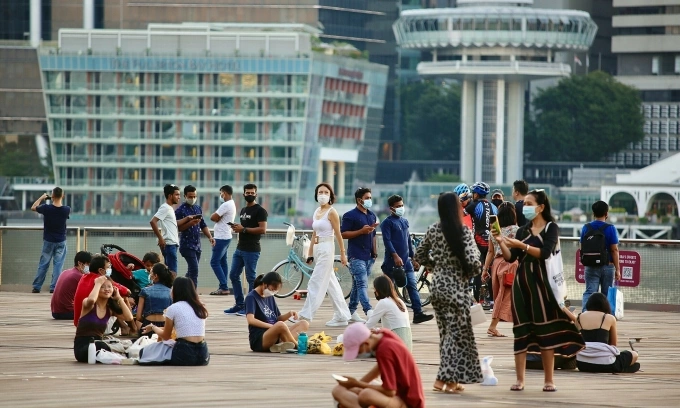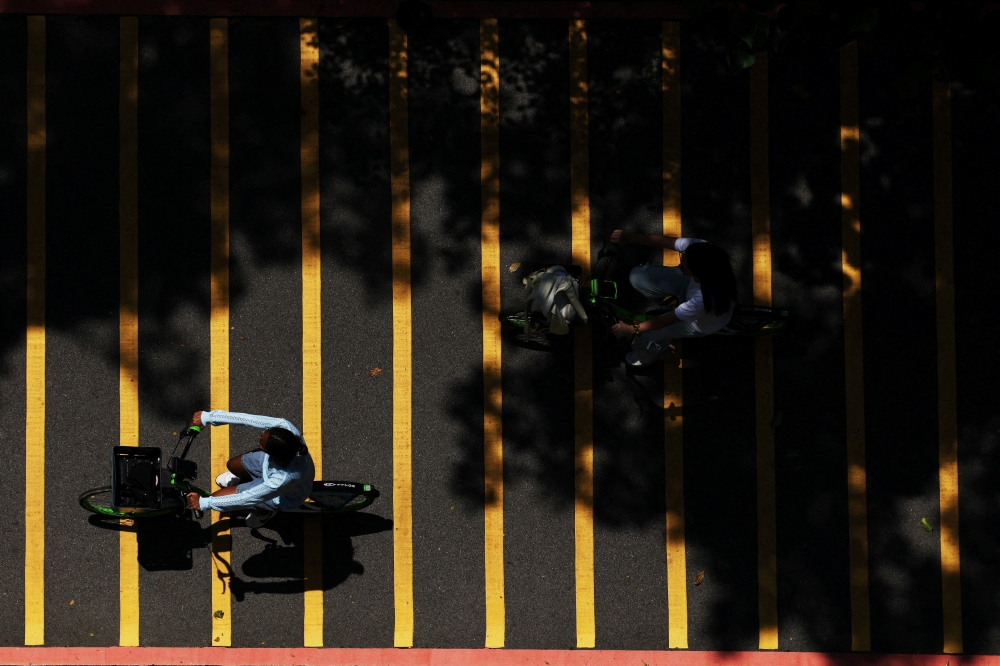
People ride bicycles at a park in Singapore. A new study has found that taking paternity leave alone may not be enough to encourage Singapore couples to have more children. — Reuters pic (New users only) It's tax relief season! Get up to RM300 when you save with Versa! Plus, enjoy an additional FREE RM10 when you sign up using code VERSAMM10 with a min. cash-in of RM100 today. T&Cs apply. By Malay Mail Thursday, 21 May 2026 3:11 PM MYT SINGAPORE, May 21 — Fathers who took paternity leave in Singapore were no more likely to have a second or third child than those who did not, according to a new study that suggests leave policies alone may not be enough to reverse falling birth rates.The study, led by National University of Singapore professor of paediatrics Jean Yeung, found no statistically significant difference in couples having additional children regardless of whether fathers took one week, two weeks, or no paternity leave at all.Based on data from 1,835 households in the Singapore Longitudinal Early Development Study (SG-LEADS), the research examined families with children born between 2013 and 2019, reported The Straits Times (ST).At the time, Singapore offered two weeks of government-paid paternity leave, before it was doubled to four weeks in January 2024 and made mandatory in April 2025.Around 24 per cent of fathers in the study took one week of paternity leave, while 48 per cent used the full two weeks available. The remaining 28 per cent did not take any leave.The findings differ from studies in Nordic countries, where paternity leave has been linked to higher birth rates.Prof Yeung said Singapore’s relatively short leave duration and entrenched gender norms may explain the gap.“Those countries tend to have more egalitarian gender roles than in Singapore,” she told ST.“One possibility is that two weeks is still too short to meaningfully change a couple’s intention to have another child,” she added.The study also pointed to structural and cultural barriers that continue to place childcare responsibilities largely on women despite high female workforce participation.“There is also unequal allocation of maternity and paternity leave in Singapore, with 16 weeks for the mother and two weeks for the father, which further reinforces the norm of mothers being the primary caregivers for young children,” Prof Yeung said.She added: “This unequal division of labour may increase the opportunity costs associated with having additional children for women.”The study found fathers working as machine operators, assemblers and cleaners were less likely to take paternity leave, while higher-income households were more likely to have a second child.Prof Yeung said long working hours and male-dominated workplace cultures could also discourage fathers from taking leave or being more involved in caregiving.“Such institutional and cultural constraints may reduce families’ perceived capacity to balance work and family responsibilities, ultimately weakening their willingness or ability to have additional children,” she said.She welcomed Singapore’s recent expansion of paternity and shared parental leave, but said broader cultural changes and stronger employer support would still be needed to normalise active fatherhood.
Singapore’s paternity leave push yet to move fertility needle, researchers say
SINGAPORE, May 21 — Fathers who took paternity leave in Singapore were no more likely to have a second or third child than those who did not, according to a new study that...
504 words~2 min read