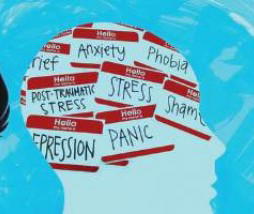
The World Health Organization (WHO) is convening in Geneva, Switzerland this week for the 79th World Health Assembly, where mental health is among the more than 75 agenda items that will be discussed.More than one billion people – roughly one in eight people globally – are currently living with a mental health condition, according to the WHO. And that number is rising.Of those affected, young people are among the hardest hit, while men face higher rates of suicide and women are experiencing disproportionately higher rates of anxiety and depression.Despite the scale of the crisis, mental health is chronically underfunded – median government spending globally on mental health is just two percent of health budgets, according to the WHO.What are mental health disorders?Mental health disorders are conditions that affect how people feel, think and behave.The WHO and the Diagnostic and Statistical Manual of Mental Disorders (DSM-5) categorise mental health conditions into several groups.Mood disorders, such as depression and bipolar disorders, affect a person’s mental state, often leading to prolonged periods of sadness or mood swings.Anxiety disorders include generalised anxiety disorder (GAD), panic disorder, social anxiety and phobias, which are characterised by fear or worry.Psychotic disorders, such as schizophrenia, involve delusions, distorted thinking and hallucinations.Trauma-related disorders, which include post-traumatic stress disorder (PTSD), develop in response to distressing or life-threatening events.There are also other mental health conditions such as eating disorders, personality disorders, obsessive compulsive disorders, dissociative disorders and substance use disorders.Explore the table below to find out more about conditions.Mental health prevalence globallyMental health disorders are widespread and on the rise globally.According to the WHO, one in eight people lives with a mental health condition, with anxiety and depressive disorders being the most common types.Mental health disorders tend to affect people across income groups. However, treatment in low- and middle-income countries is scarcer.Spending on mental health ranges from $0.04 per capita in low-income countries to $0.34 per capita in lower-middle income countries and $65.89 in high-income countries, according to the WHO Mental Health Atlas 2024, which collected data from 75 countries.The prevalence of mental health disorders across WHO regions in 2019 was:
The numbers behind global mental health and its different disorders
Nearly one in eight people in the world lives with a mental disorder, and one person dies by suicide every 43 seconds.
917 words~4 min read