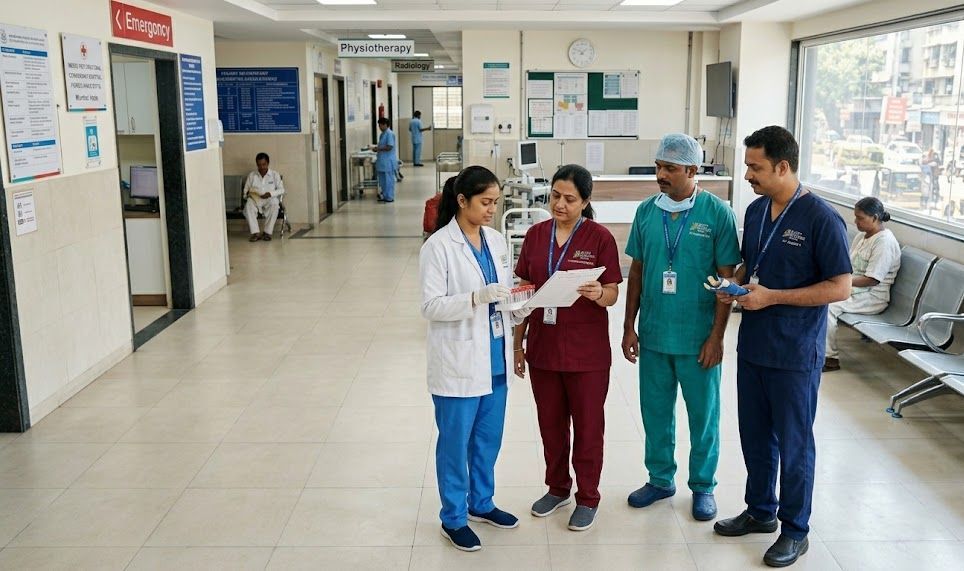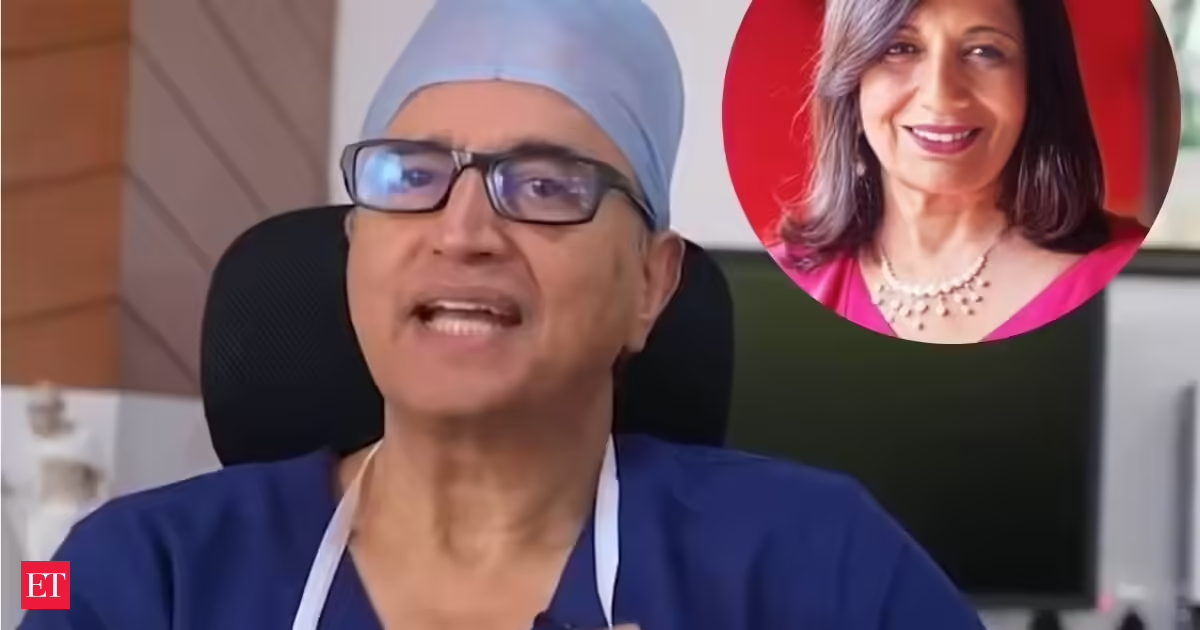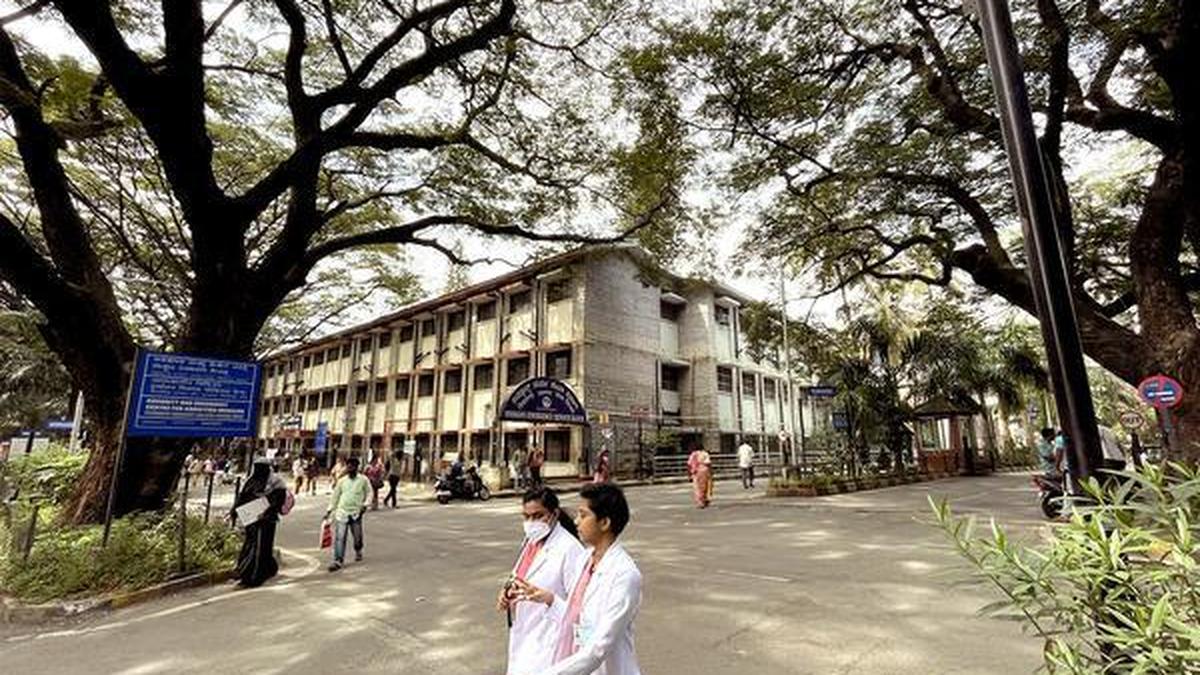
Narayana Institute of Cardiac Sciences (NICS), part of Narayana Health, has become the first organisation in India to be validated for Stage 6 of the HIMSS Analytics Maturity Assessment Model.The AMAM measures a healthcare organisation's capabilities and maturity in healthcare analytics.WHY THIS MATTERSFor Narayana Health managing director and group CEO Dr Emmanuel Rupert, the milestone is significant because of the environment in which it was achieved.India's healthcare system serves 1.4 billion people across wide economic, geographic, and infrastructure differences, while operating largely in a self-pay environment where providers face constant pressure to deliver quality care at a fraction of the cost of comparable systems elsewhere."For Narayana Health, this validates a long-held conviction: that high-quality care and cost efficiency are not opposing forces, and that data intelligence and AI is the infrastructure that holds both together," he said.Narayana Health founder and chairman Dr Devi Shetty said the self-pay model shaped the organisation's analytics strategy from the start. Without an insurer buffer, inefficiencies in bed utilisation, avoidable readmissions, and prolonged hospital stays have direct cost implications for patients and families.That pressure pushed the organisation to focus on operational and financial precision. Senior doctors were given visibility into metrics such as length of stay, procedure material costs, blood transfusions, re-exploration after surgery, mortality, morbidity, and infection rates — an approach Dr Shetty said helped reduce mortality and morbidity while improving productivity and cost efficiency.The organisation also leveraged utilisation analytics to understand demand patterns, geographic access gaps, and the relationship between pricing, volumes, and outcomes. According to Narayana Health, those insights have informed decisions on where to open new facilities, how to price packages, and where preventive or early-intervention programmes could have the greatest population-level impact.Vivek Rajagopal, group chief analytics and AI officer at Narayana Health, said the move from fragmented reporting to enterprise analytics was driven less by technology than by people and process.One early decision was to treat data intelligence and AI as a business function, not a technology function. The analytics team sits outside IT and reports to the CEO, with a dedicated centre of excellence wired into business operations.Rajagopal said this meant analytics was not treated as a support service waiting to be asked for reports, but as part of how the organisation thinks, decides, and operates.Another key decision was to avoid waiting for perfect data before starting. He said Narayana Health rejected the idea that data quality had to be fully solved before analytics could begin. Instead, the organisation launched its data intelligence programme with the data it had, using early insights to expose gaps, inconsistencies, and process weaknesses.That approach allowed data intelligence and data quality to improve together.In 2019, the organisation also decided to modernise its technology stack. Rather than choosing platforms first, it built a wishlist of future capabilities, then identified the tools that could support those goals. Where the market could not meet its needs, Narayana Health built its own tools internally.Rajagopal said the organisation eventually moved beyond dashboards and reports toward what it calls democratisation and institutionalisation of analytics. Different users — from frontline clinicians and bed managers to finance leaders and executives — needed intelligence in different forms, leading to a multimodal delivery approach that included dashboards, reports, mobile-first tools, conversational AI, workflow-embedded insights, and zero-learning-curve interfaces.During the validation, HIMSS noted that Narayana Health had moved from fragmented, spreadsheet-based reporting across around 15 hospitals to a centralised enterprise intelligence platform supporting more than 200 solutions across clinical, operational, financial, and supply chain domains.AI IN CLINICAL WORKFLOWSOne of the clearest examples of the organisation's AI approach is Medha Scribe, its home-built ambient AI scribe deployed for echocardiography, ultrasound, and radiology workflows at NICS.Dr Rupert described echocardiography as a high-volume, documentation-intensive service line, where each report carries more than 100 structured parameters. After Medha Scribe was deployed, the average turnaround from study billing to report sign-off fell from 7.1 hours to 2.3 hours, a 68% reduction, with 100% adoption and no additional reporting workforce.The model has since been extended into other high-volume radiology modalities, outpatient consultations, discharge summaries, and operating theatre notes. Dr Rupert said the deployment reflects the organisation's view that AI should augment clinicians inside existing workflows, with human-in-the-loop validation, rather than run as a parallel system.Structured EMR data has also supported India-specific clinical evidence. The organisation developed the NH Pre-Operative Risk Score for CABG, which it said outperformed EuroSCORE and STS models in its population, as well as ECG-based AI models for early detection of low ejection fraction, valvular abnormalities, and coronary artery disease in low-resource settings.Operationally, analytics-driven visibility into outpatient delays helped reduce outpatient waiting times by 30%, while discharge turnaround dropped by 33% over time. Financially, analytics-led budgeting improved forecast-to-actual alignment, while procurement intelligence helped reduce contract leakages and optimise inventory days by 40%.WHAT THE VALIDATION REVEALEDRajagopal said the HIMSS AMAM framework was valuable beyond the Stage 6 designation because it forced the organisation to stop measuring itself only against its own progress.The framework required Narayana Health to assess what was demonstrably in place, not merely asserted. It also required the organisation to document not just what had been built, but how consistently analytics was being used, how deeply it was embedded in clinical and operational workflows, and what governance structures ensured integrity.Rajagopal said the process created a common language across clinical, technology, finance, and executive teams, helping align different views of analytics maturity and support future investment decisions.It also gave the organisation a clearer roadmap toward Stage 7.According to Rajagopal, the validation surfaced a central gap: in some areas, execution had moved ahead of formalisation. The organisation was doing the right things, but had not always systematised them.The first area is outcome attribution. Narayana Health measures outcomes and adoption, but Rajagopal said it is working toward a standardised methodology that links specific analytics and AI initiatives to quantified improvements across clinical, operational and financial domains.The second is AI transparency at portfolio scale. While model-level governance is clinician-led, the organisation now needs a single enterprise view of every model in production, including its intended use, validation evidence, subgroup performance and lifecycle status.The third is patient voice. Patient-reported outcomes have begun in pockets, but Rajagopal said they are not yet feeding clinician workflows or enterprise outcome dashboards in a structured, decision-grade way."As we deploy an increasing number of predictive models and AI-assisted tools across clinical and operational domains, the structures that govern their development, validation, deployment and ongoing monitoring become critically important," he said.That includes accountability for model performance, processes to detect and correct drift or bias, clinical oversight of AI-generated insights, and transparency that allows clinicians to trust — and appropriately question — model outputs.Rajagopal said outcome attribution will also require linking data across the care pathway to isolate the effect of specific interventions, control for confounding factors, and build a credible evidence base.Integrating patient-reported outcomes and experience data, he added, will give the organisation a fuller picture of care quality, including how patients experience care, functional recovery, and quality of life after treatment.For Dr Rupert, the broader significance of the milestone extends beyond Narayana Health itself."Achieving HIMSS AMAM Stage 6 is not a technology award. It is an institutional certification that our organisation makes decisions — clinical, operational, and financial — grounded in trusted, standardised, enterprise-grade data intelligence," Dr Rupert said."For India, we hope it demonstrates that this level of maturity is achievable here — built not despite our constraints, but in many ways because of them. The pressure to do more with less has always driven sharper thinking about what data actually matters and how it should be used," he added.
Narayana Institute of Cardiac Sciences becomes India's first HIMSS AMAM Stage 6 hospital
The organisation says analytics and AI became essential to balancing affordability, efficiency, and clinical outcomes in India's predominantly self-pay healthcare environment.
1,262 words~6 min read