Jurisprudence
May 20, 20264:20 PM
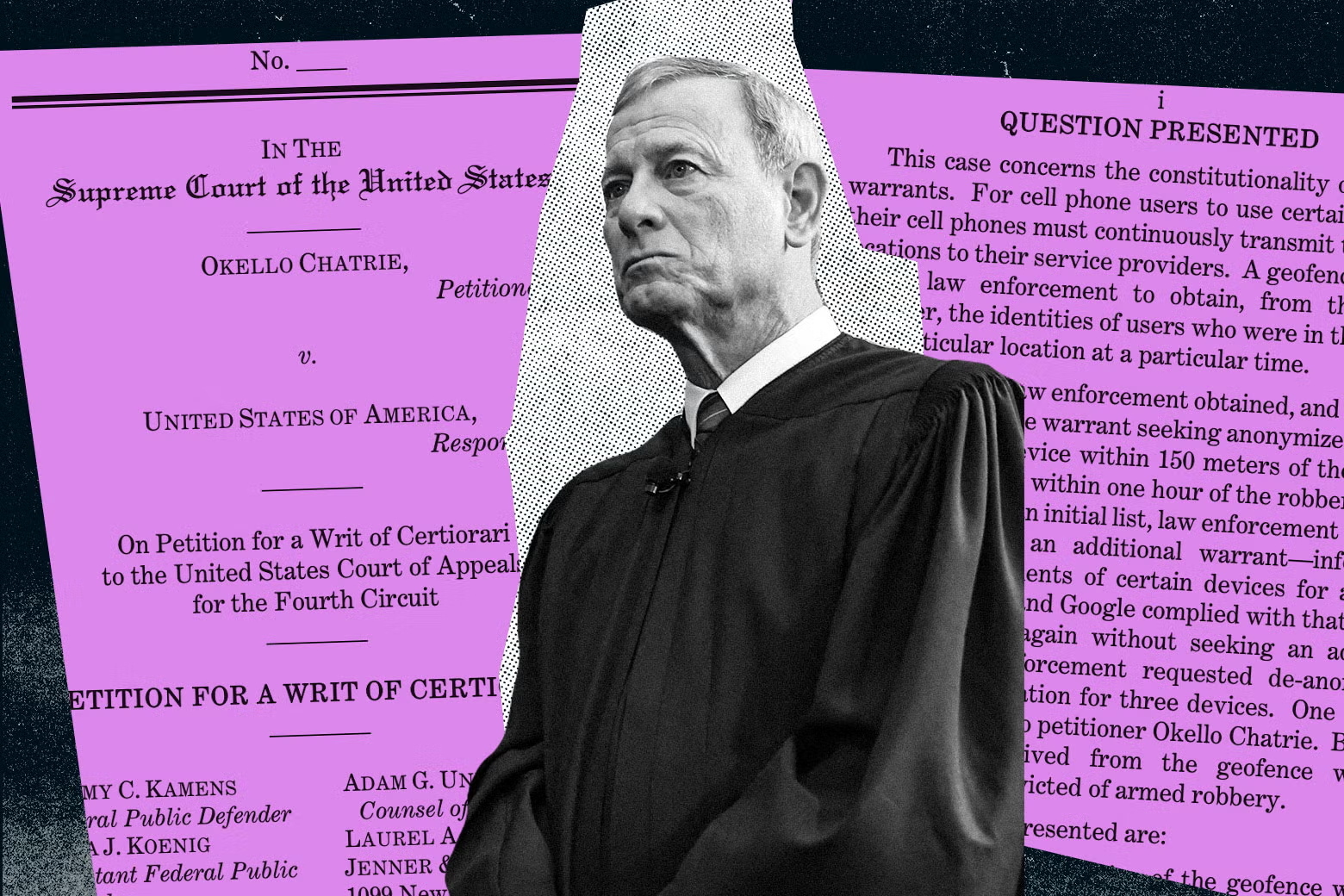
Photo illustration by Slate. Photo by Chip Somodevilla/Pool/AFP via Getty Images.
Amid the appropriate furor surrounding the Supreme Court’s gutting of the Voting Rights Act at the close of the Supreme Court’s term, some of the biggest oral arguments of the court’s final sitting have gone a bit under the radar. In one of the term’s last cases, Chatrie v. United States, the Supreme Court last month confronted how its Fourth Amendment jurisprudence will continue to evolve in the face of modern surveillance technology. The case asks whether the Fourth Amendment still means what Americans think it means as surveillance becomes automated, invisible, and broad enough to treat entire groups of ordinary people as searchable by default.
The facts in Chatrie arrive wrapped in the familiar language of a violent crime. In 2019, a man entered a credit union outside Richmond, Virginia, carrying a cellphone and a gun. He handed a teller a note threatening violence against employees and their families. He forced workers onto the floor, escorted employees to the safe, and fled with nearly $200,000. Surveillance footage showed him holding a phone to his ear shortly before the robbery. Witnesses described him. Detectives ran down leads. When the investigation stalled, detectives obtained what is known as a geofence warrant, directing Google to identify devices located within roughly 150 meters of the bank during the relevant hour. Google searched its location history database and produced anonymized information tied to devices inside that perimeter. Police reviewed the movement patterns, requested expanded data for selected users, and eventually sought identifying information connected to several accounts. One belonged to Okello Chatrie.