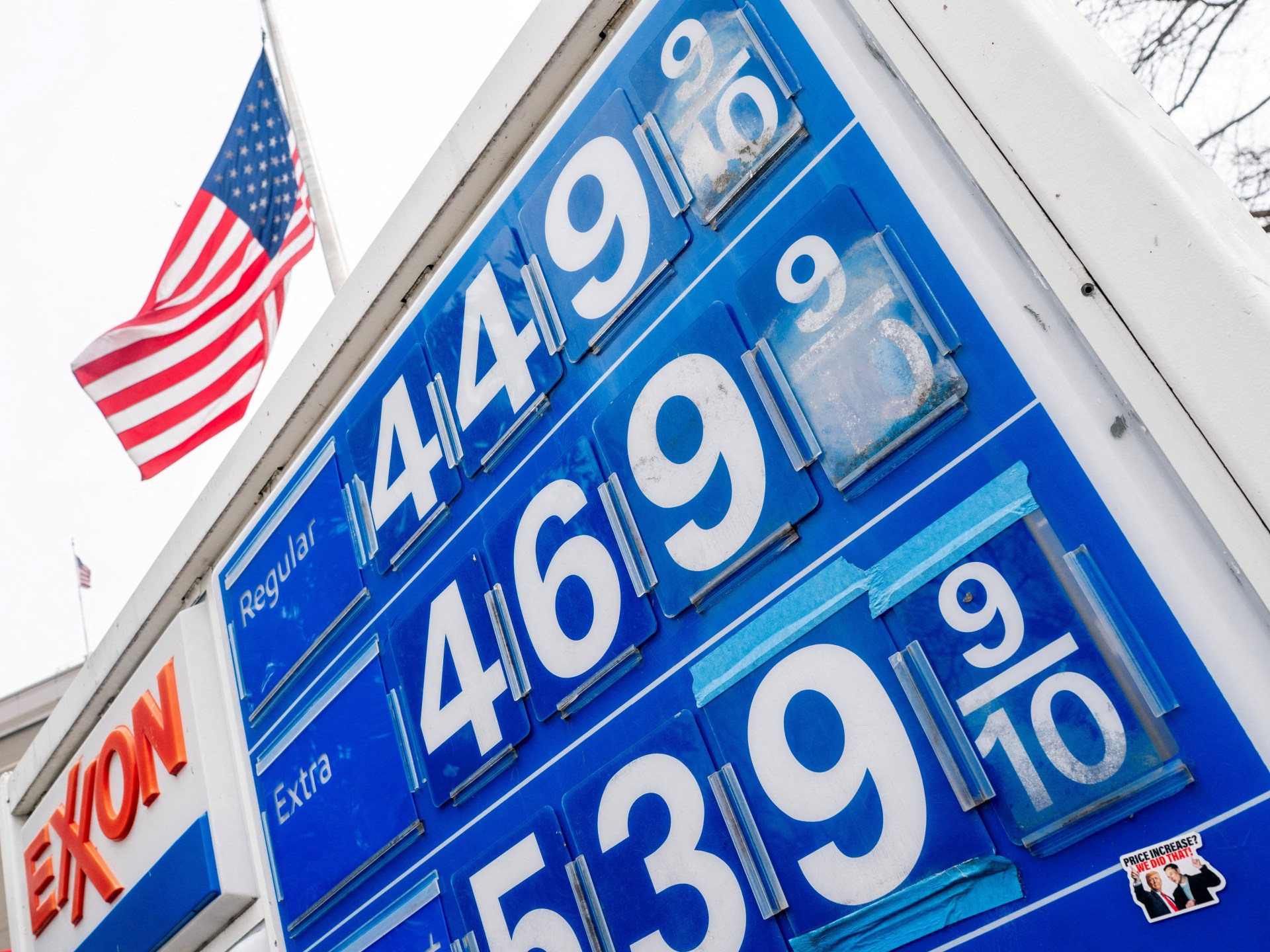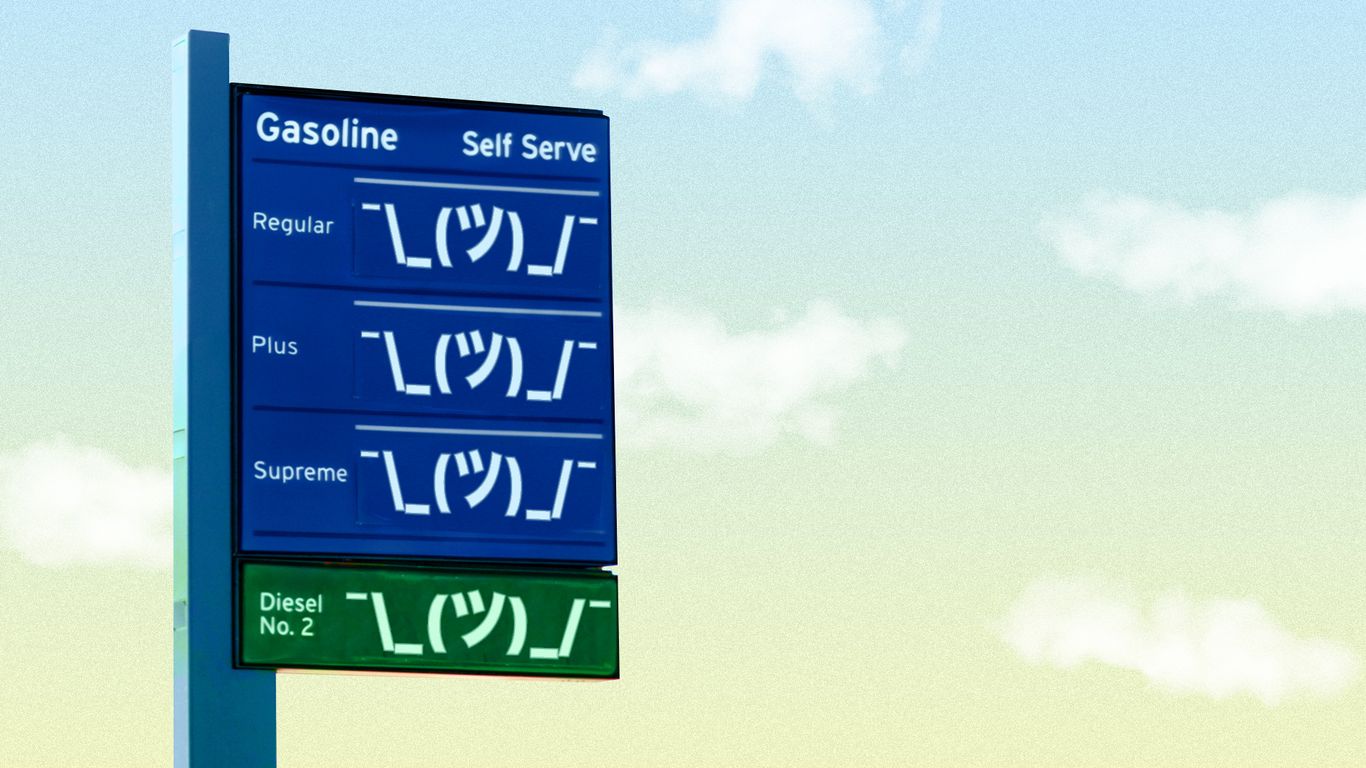
The energy crisis in the U.S. is starting to eat into American wallets, and though it's hardly an apocalyptic scenario, it sure feels awful.Why it matters: Unlike in Asia and Europe, the U.S. is relatively insulated from the threat of actual gasoline or oil shortages, and price increases are so far manageable.The intrigue: That's good for the economy and for stock prices, and cold comfort to basically everyone else who is forced to pay more to fill up the tank.By the numbers: The increase in gas prices has been kind of Hobbesian: nasty, brutal and taking place over a very short period. Since Feb. 27, the day before the war, the average price of a gallon of unleaded gas has risen 47%, to $4.39. (It went up 9 cents just Thursday night!)That's lower than what it was during the 2022 period, and if you adjust for inflation, it's even lower still. And gas makes up a small share of Americans' overall spending.The big picture: Even if a lot of people can absorb the increase, the whiplash of the record-breaking rise in gas prices is making people feel bad — we're seeing low consumer sentiment.It's the latest chapter in the current vibecession, where the economy holds up, but no one feels particularly great about it.How it works: Higher gas prices can force people to make choices that they don't want to make — trading down on spending for groceries or restaurants or clothing, says David Tinsley, senior economist at the Bank of America Institute.For the economy overall, those shifts may not be noticeable, as people keep spending levels the same. But for individuals, it stinks.Tinsley, who is British, puts it this way: "They don't necessarily want to make those choices. So they can be quite cheesed off."Zoom in: Spiking gas prices are already eating into Americans' paychecks.In March, the median lower-income household spent 4.2% of its income on gasoline, up from 3.9% a year earlier and above 2019 levels, according to Bank of America internal customer deposit data.While that's below the levels of inflation seen in 2022, gas prices are still climbing.Middle-income earners are doing better, but there are signs of stress.For a middle-wage earner, an hour of work would pay for about 7 gallons of gas in March, per calculations that economist Jared Bernstein did for Axios. Before the war, you would get 10 gallons for your efforts.Yes, but: For now, some folks can cushion the blow by tapping their tax refunds or using credit cards. But there are signs of growing credit stress, as well. TransUnion reported Thursday that higher inflation is weighing on Americans with poor credit scores."They're struggling more," says Michele Raneri, vice president and head of U.S. research at TransUnion. Folks don't have much cushion to fall back on if they have a difficult month.Friction point: In 2022, consumers were able to absorb sky-high gas prices because their paychecks were going up. Now, things look worse.In March, wages and salaries grew at just 1% for low-income households, per BofA data. That's compared with 5.6% at the high end.What to watch: Driving levels in March and April are trending slightly lower than last year, according to data tracked by JPMorgan Chase. "We are already seeing higher pump prices begin to curb discretionary driving in the U.S.," Natasha Kaneva, head of global commodities strategy at the bank, tells Axios.The bottom line: High gas prices are manageable, but they still hurt.Editor's note: This story has been updated with the latest gas prices.
Gas prices surge — and the pain outpaces the reality
It's the latest chapter in the current vibecession.
583 words~3 min read