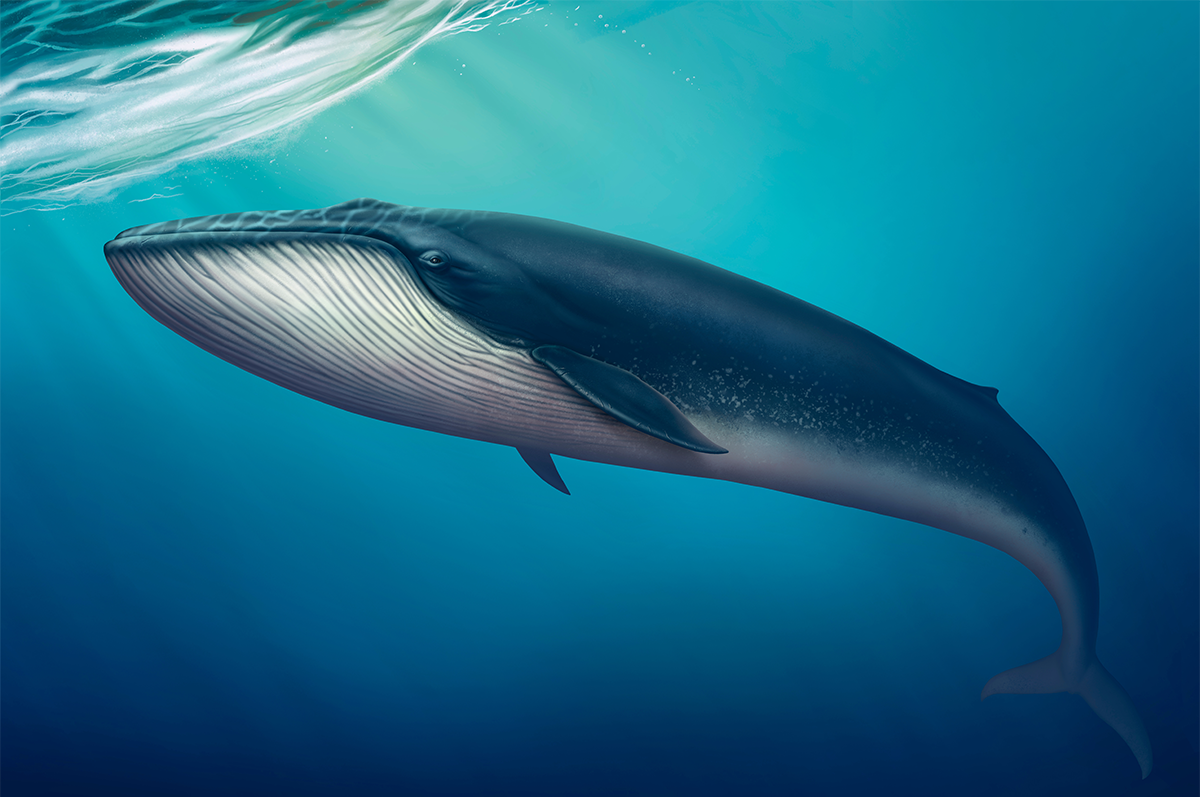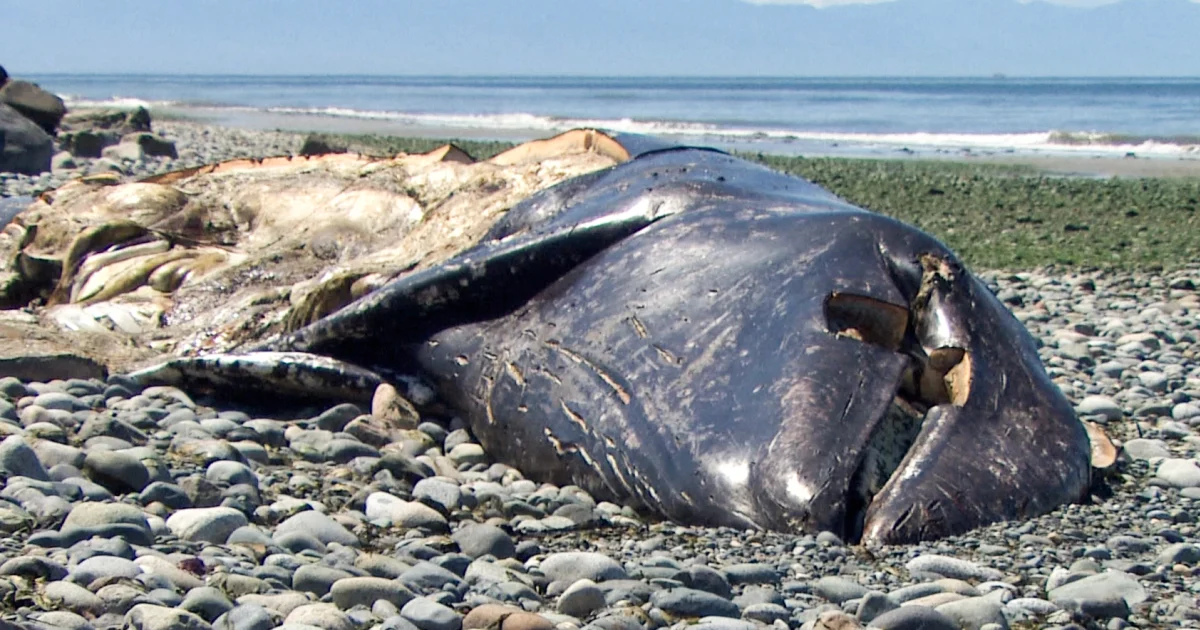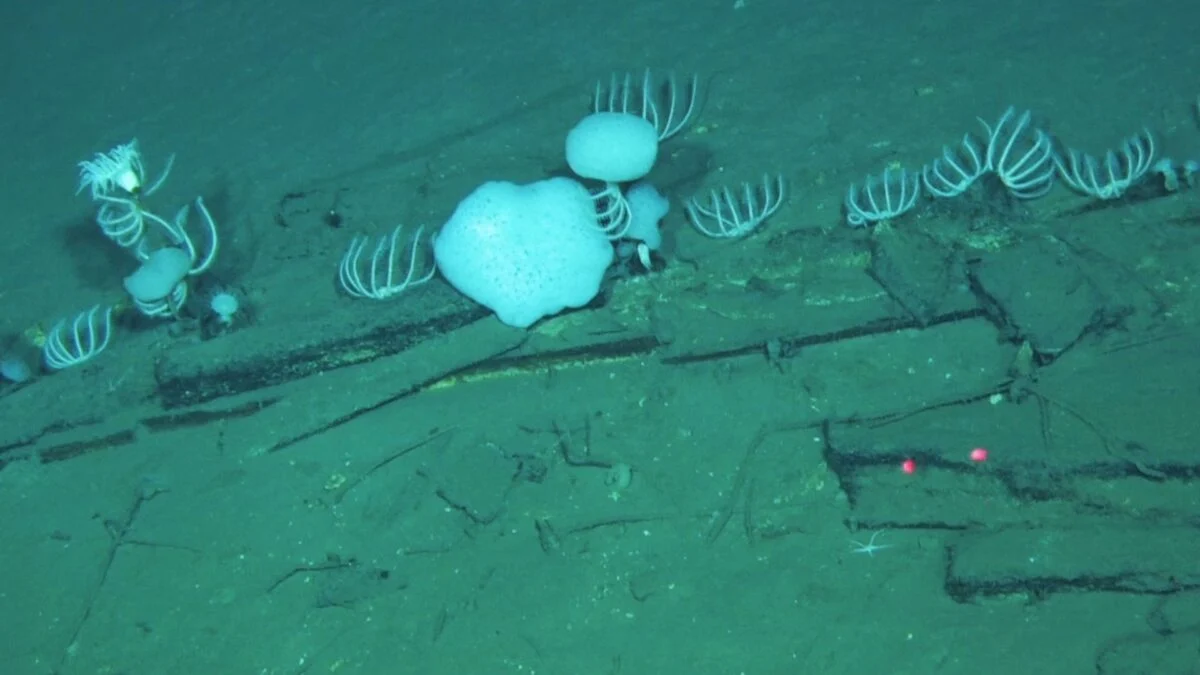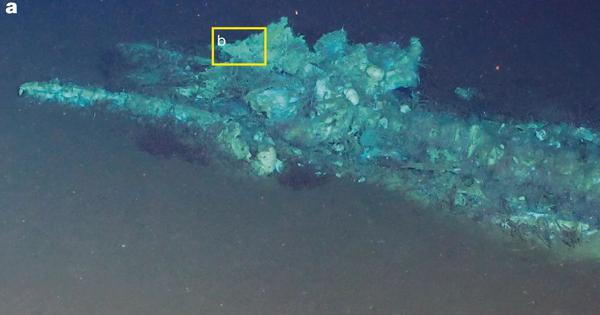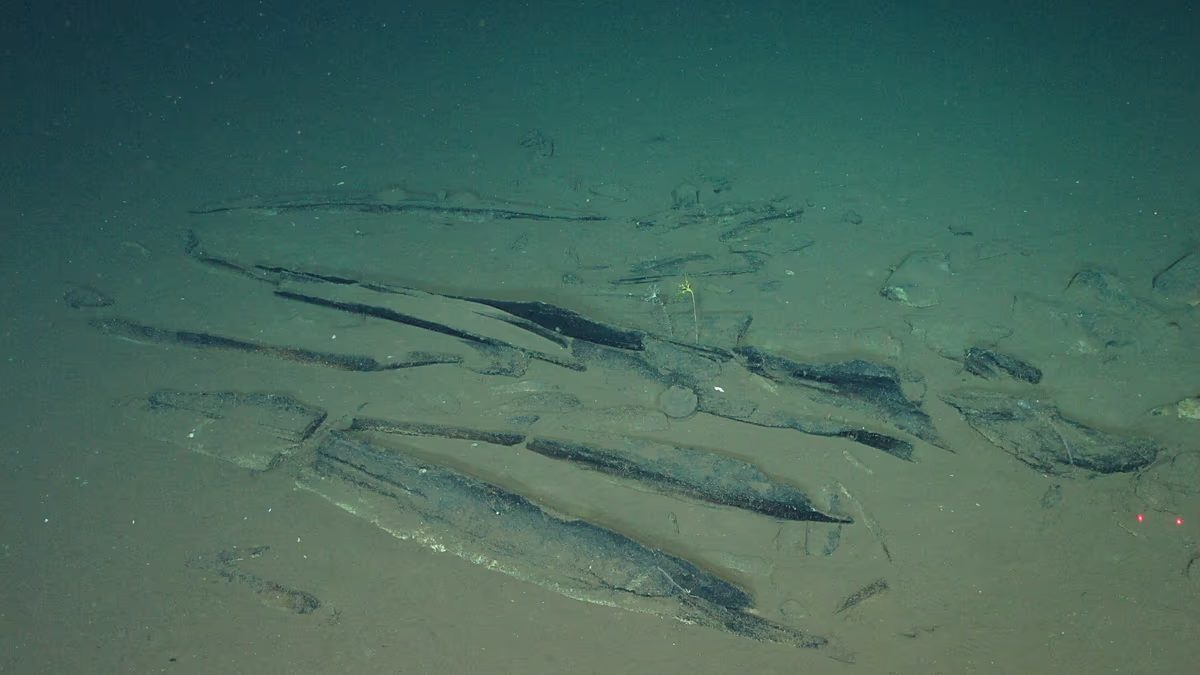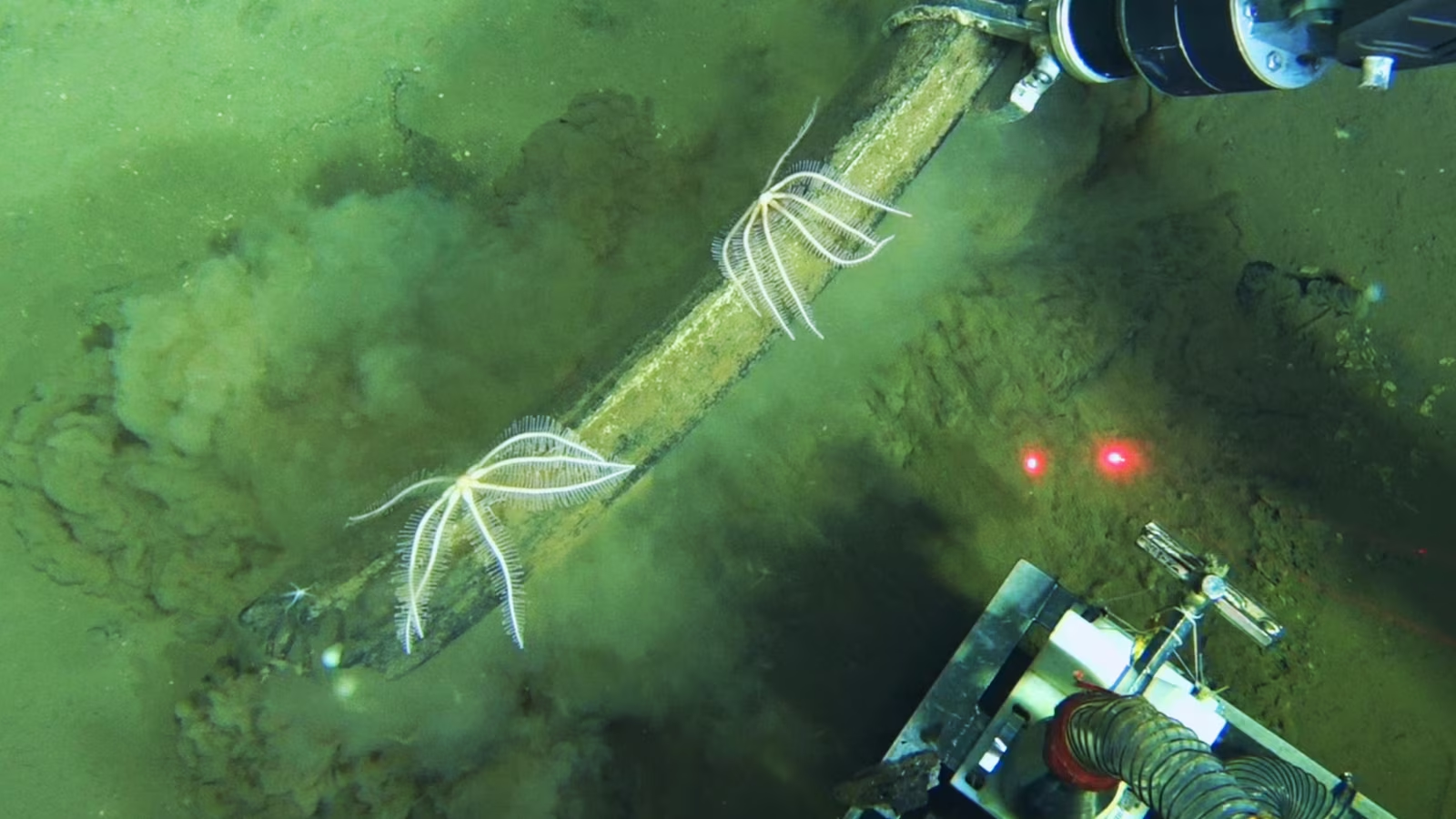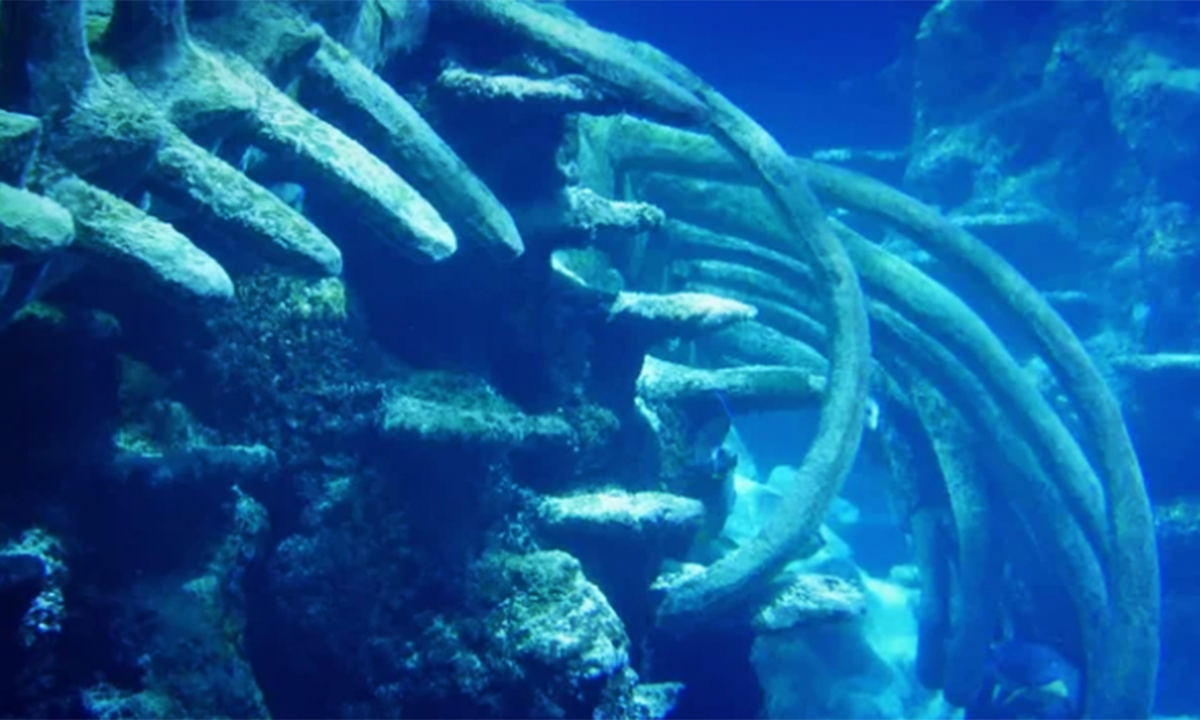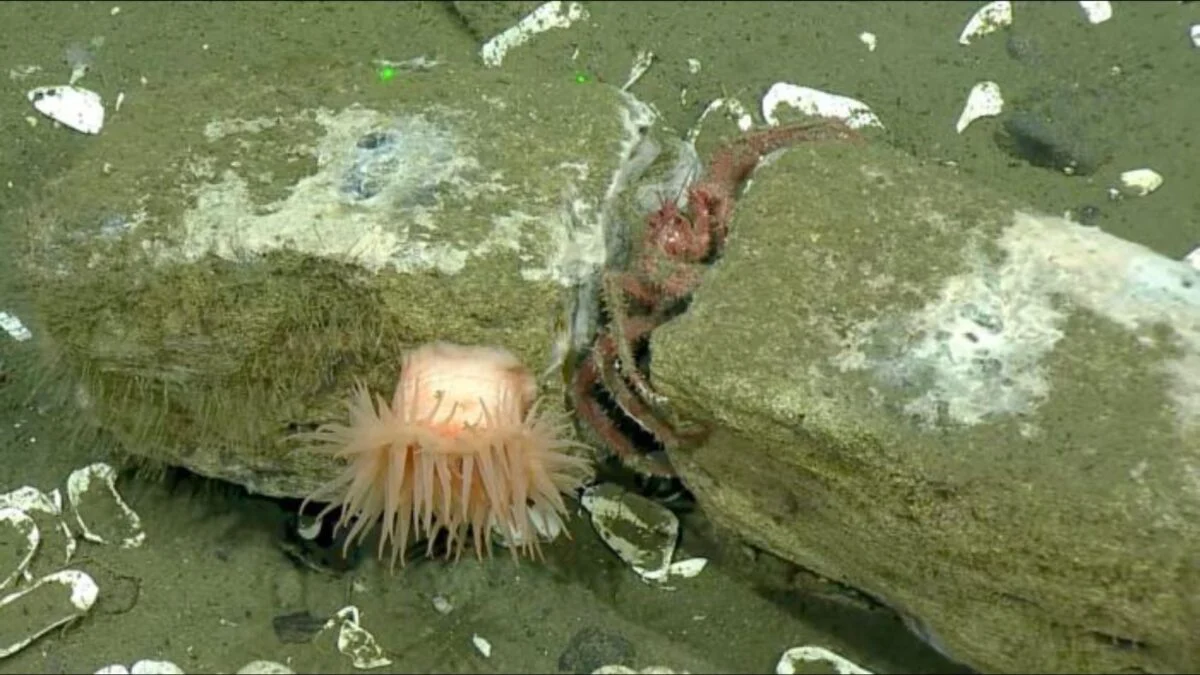
One whale’s unfortunate death can be an entire ecosystem’s blessing, recent research shows. A large international team of marine researchers monitored the seafloor surrounding the corpse of a whale that had sunk 4,920 feet (1,300 meters) deep in the waters near Vancouver Island, Canada. Over a 15-year-long span, and probably longer, the whale sustained a rich community of deep-sea life, they found. The researchers expect that the whale will continue to be an ocean buffet for years to come. A large macrourid fish hovering around the dead whale, possibly eating small invertebrates living in the bones. Tube worms are known to colonize jawbones. © Ocean Networks Canada, Ocean Exploration Trust Whale falls Scientists first began to document the appearance of whale corpses along the deep ocean floor in the 1970s—a phenomenon known as a whale fall. The sheer mass of a whale that sinks to the bottom of the ocean can provide a sudden burst of bountiful resources to the area. And the usually cold temperatures and high pressure found in the ocean depths allow the whale to stay intact far longer than it would had it died in shallower waters. The dead whale still goes through varying stages of decomposition, which benefits different types of life. At first, opportunistic scavengers will feast upon the soft tissues of the whale, usually picking it clear within months. After that, creatures will live off the bones and remaining organic matter of the whale. Following that, there’s the sulfophilic stage, where anaerobic bacteria survive by breaking down the lipids inside a whale’s bone. These bacteria create sulfur, rather than oxygen, from this process, thus creating a unique environment for other deep-sea organisms to thrive in. Lastly, the remaining mineral skeleton left of the whale can help create reefs.
Watch Deep-Sea Creatures Feed on a Whale That's Been Dead for Over 20 Years
Recent research and video footage shows the longevity of whale falls in the northeast Pacific ocean.
634 words~3 min read