President Donald Trump’s settlement with the IRS was updated Tuesday to include a provision that appears to bar the government from prosecuting Trump and his family for certain crimes and end any IRS audits against him, a sweeping move that Democrats and legal experts have criticized as a way for the president to get around restrictions on him pardoning himself.
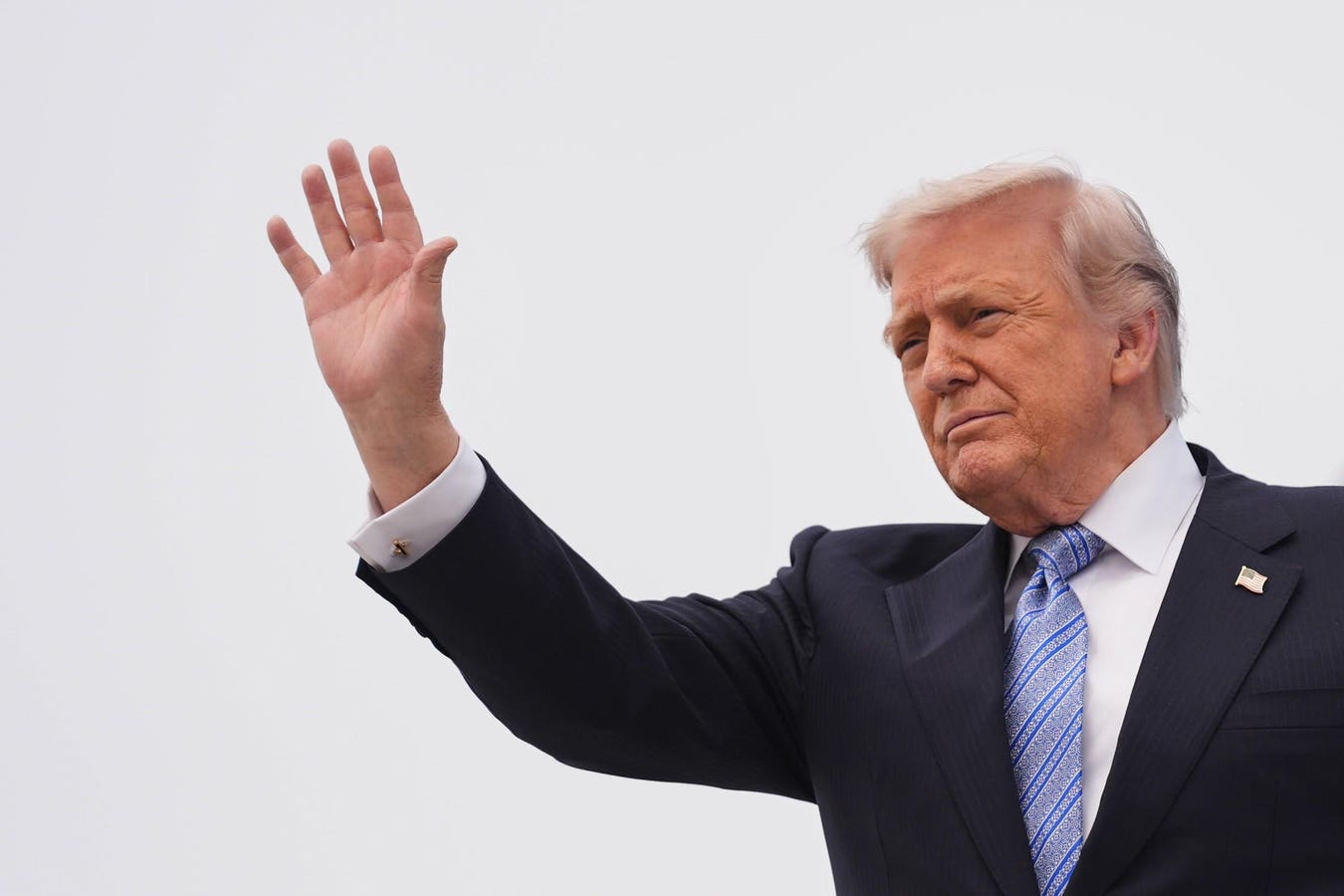
President Donald Trump waves as he boards Air Force One on May 15 in Beijing.
Trump and the government first announced the settlement of his $10 billion lawsuit against the IRS on Monday, saying he was dropping the case in exchange for the creation of a $1.8 billion “anti-weaponization” fund, but an addendum to the settlement agreement was added Tuesday.
That addendum says the U.S. is “forever barred” from prosecuting or bringing civil claims against Trump, his two oldest sons, the Trump Organization and other “affiliated individuals” for actions that already happened by the date of the settlement, both tied to the IRS suit and for “any matters currently pending or that could be pending” before other government agencies.
Legal experts have interpreted the provision to mean the government must drop any ongoing tax audits for Trump, his oldest sons and the Trump Organization, and more broadly cannot prosecute Trump or sue him in civil court for tax and many other types of charges.