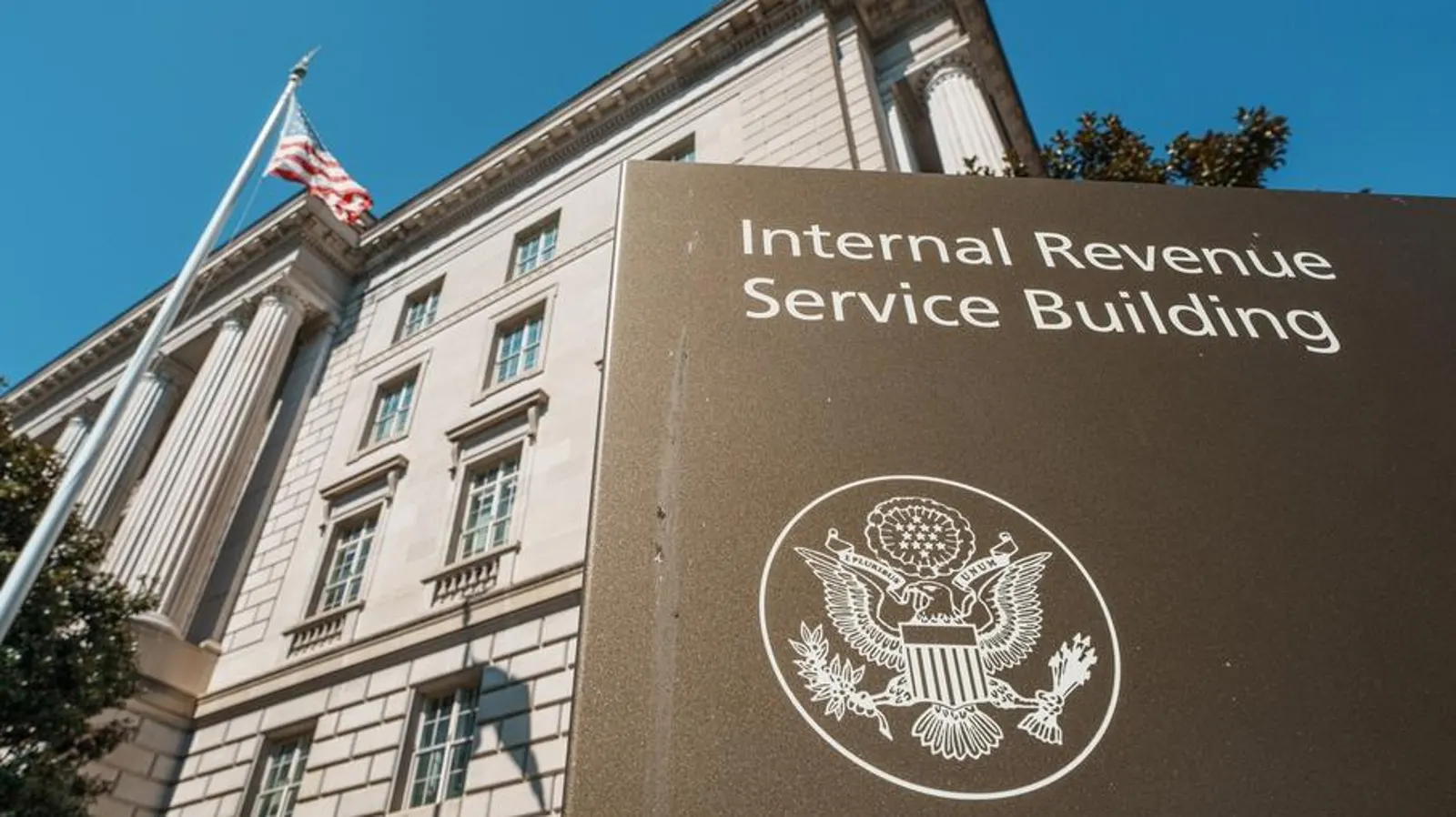
Authored by Tom Ozimek via The Epoch Times,The acting head of the U.S. Department of Justice said on May 19 that the agency added new terms favorable to President Donald Trump to the settlement of the president’s lawsuit over alleged IRS leaking of his tax returns.In a one-page addendum to the settlement, Acting U.S. Attorney General Todd Blanche said on May 19 that the IRS would no longer pursue claims against Trump, members of his family, or his businesses over allegedly unpaid taxes.The May 18 settlement, in which the president agreed to drop a $10 billion lawsuit against the IRS, provided that an almost $1.8 billion Anti-Weaponization Fund would be established to compensate alleged victims of the weaponization of law enforcement.Trump, two of his sons, and the Trump family business, had sued in federal court in Florida in January, alleging that the IRS and its parent agency, the U.S. Department of the Treasury, had failed to prevent a former contractor from leaking Trump’s tax returns to the media.The plaintiffs alleged the agencies failed to take mandatory precautions to prevent the former IRS contractor from unlawfully obtaining access to their confidential tax records and giving that information to The New York Times and ProPublica between 2019 and 2020.As part of the settlement, the plaintiffs themselves will receive “a formal apology but no monetary payment or damages of any kind,” the DOJ said in a May 18 statement.The plaintiffs agreed to drop their claims “in exchange for the creation of this fund,” and in addition they agreed to withdraw two administrative claims they filed for damages “resulting from the unlawful raid of Mar-a-Lago and the Russia-collusion hoax.”“The machinery of government should never be weaponized against any American, and it is this Department’s intention to make right the wrongs that were previously done while ensuring this never happens again,” Blanche said in the statement.“As part of this settlement, we are setting up a lawful process for victims of lawfare and weaponization to be heard and seek redress,” he said.The May 19 release states that the federal government is “forever barred and precluded” from moving forward with “examinations” of Trump, “related or affiliated individuals,” and related companies and trusts. The document covers “tax returns filed before the effective date” of the settlement, which was May 18.The settlement provides that the Anti-Weaponization Fund will be controlled by five individuals whose appointment will be announced by the attorney general within 30 days.One of the fund’s members will be selected in consultation with congressional leadership.The members are to serve until the fund is “concluded,” unless they resign or are removed by the president, who will be allowed to dismiss any member without providing a reason, according to the settlement.The fund will establish its own rules for “submitting, receiving, processing, and granting or denying claims,” subject to procedures it may make public at its own discretion.The settlement states that the fund will have the authority “to issue formal apologies, issue monetary relief owed to claimants as a result of their legal rights, grant claims in whole or in part, deny claims in whole or in part, defer review of claims, and receive and request evidence or other support for claims, including requesting information from, or consulting with, federal agencies.”During congressional testimony on May 19, Blanche told lawmakers that those who experienced “weaponization” may receive payments. He declined to promise that the fund would refrain from making payments to Trump campaign donors or individuals involved in the Jan. 6, 2021, security breach at the U.S. Capitol.Blanche said Trump did not set up the settlement fund and the members of the fund will act independently.“The president did not direct me to do anything,” he said, adding that payments could go to members of any political party, and would not be limited to Jan. 6 defendants.Critics in Congress moved swiftly to condemn the addendum. Oregon Sen. Ron Wyden, the top Democrat on the Senate Finance Committee, argued that the settlement clause runs afoul of a statute that makes it unlawful for executive branch officials to direct the IRS to open or close an audit targeting any individual taxpayer. Under the statute, coverage extends to the president and vice president, their respective office staffs, and cabinet-level officials — though the attorney general is specifically carved out of the definition. Wyden closed his statement with a direct warning, according to CNBC, saying neither the president nor his chosen legal counsel could place his relatives beyond legal accountability.On the House side, Ways and Means ranking member Richard Neal posted to social media labeling the addendum outright "corruption," charging that Trump had converted the executive branch into a shield for his own finances, according to CNN.Sen. Patty Murray (D-Wash.) was critical of the fledgling fund and how it will be administered.“What we’re talking about is nothing short of the sitting president of the United States looting from the Treasury for his own gain,” she said.“Do you seriously think this arrangement is appropriate?” Murray added.Defending the clause to CNBC, a department spokeswoman framed it as routine legal practice. "As is customary in settlements, both sides have executed waivers of a variety of claims that were or could have been brought," she wrote in an email, adding that the restriction applied only to audits already open at the time of signing and would not prevent future IRS scrutiny.
Trump's IRS Settlement Bars Tax Audits Of Trump & Family
The IRS is "forever barred" from pursuing "examinations" of Trump, "related or affiliated individuals," and related businesses...
891 words~4 min read