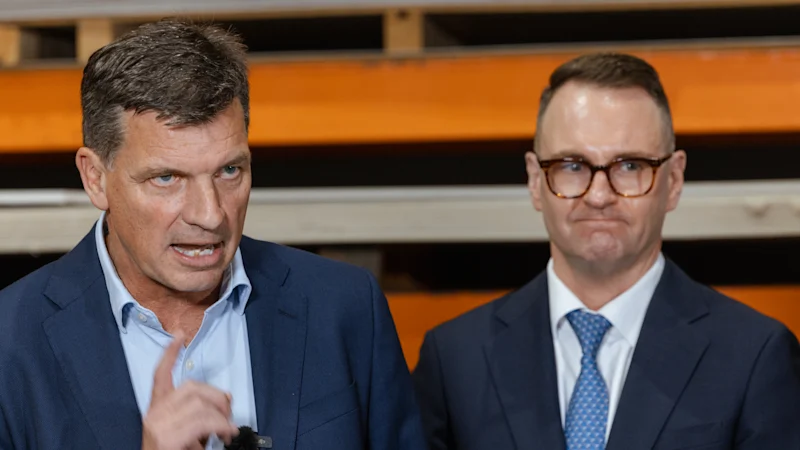
May 21, 2026 — 5:00amIf the federal government’s changes to capital gains tax and trusts are a worry, assistant Treasury minister Andrew Leigh has a slightly bigger problem – the end of the world.From superintelligent computers that decide humanity is an impediment to their Terminator-inspired vision, to a mass bioterrorism attack that leaves the globe awash with zombies, Leigh will use a speech on Thursday to warn the chances of global extinction could be as high as one in six over the coming century.Whether it’s zombies or killer robots, Andrew Leigh says we have to be open to the end of humanity.Economics is often described as the gloomy science. Leigh’s address, to honour the memory of renowned Australian economist Lyndhurst Giblin, takes gloomy to pitch black.He will argue that that while economics is about the choices made to deal with scarce resources, it struggles with the hardest of all questions.“The discipline has said relatively little about the ultimate scarcity: the possibility that there may be no future over which to make choices at all,” he will tell the Tasmanian branch of the Economic Society of Australia.Think your life is small? Leigh makes it feel infinitesimal.“Our species is only a few hundred thousand years old, while the sun has billions of years left to burn. Roughly 100 billion humans have lived so far,” he will say.“If humanity endures, the number who might yet live could reach into the trillions, with one estimate suggesting that there could be a billion-billion future people for every person who has ever lived.“Humanity may still be in its infancy. If so, extinction would mean more than the loss of those alive today: it would foreclose all the human lives that might otherwise come after us.”An asteroid ended the earthly rule of the dinosaurs. Plenty of environmentalists believe climate change will end humanity.But Leigh notes that while nuclear wear and climate change are definite risks to humanity’s existence, the bigger threat may come from artificial intelligence or synthetic biology.As countries embrace medical breakthroughs and the productivity gains offered by AI, Leigh says the seeds of our own destruction may be sown.“Modern economies may be systematically better at generating dangerous capabilities than at building the safeguards needed to control them,” he will say.“Technological progress raises productivity, but it also expands the set of ways in which humanity can do irreparable harm to itself. The same engine that delivers prosperity may, at advanced stages, increase fragility.” Photo: Matt GoldingLeigh, perhaps the only government minister to deliver a speech that features footnotes and strings of algebraic equations, will argue not all is lost.He will say governments need to develop policies to deal with the “hazard rate” of a new technology while putting in place preventive measures even to remote dangers. Economists also have a role to play.“Economists have become adept at analysing equity and efficiency. We now need to bring the same seriousness to survivability,” he will say.Cut through the noise of federal politics with news, views and expert analysis. Subscribers can sign up to our weekly Inside Politics newsletter.From our partners
An economist’s plan to fight the zombie apocalypse
Worried about capital gains tax or high-priced petrol? Frontbencher Andrew Leigh says Australia is facing bigger problems.
512 words~2 min read