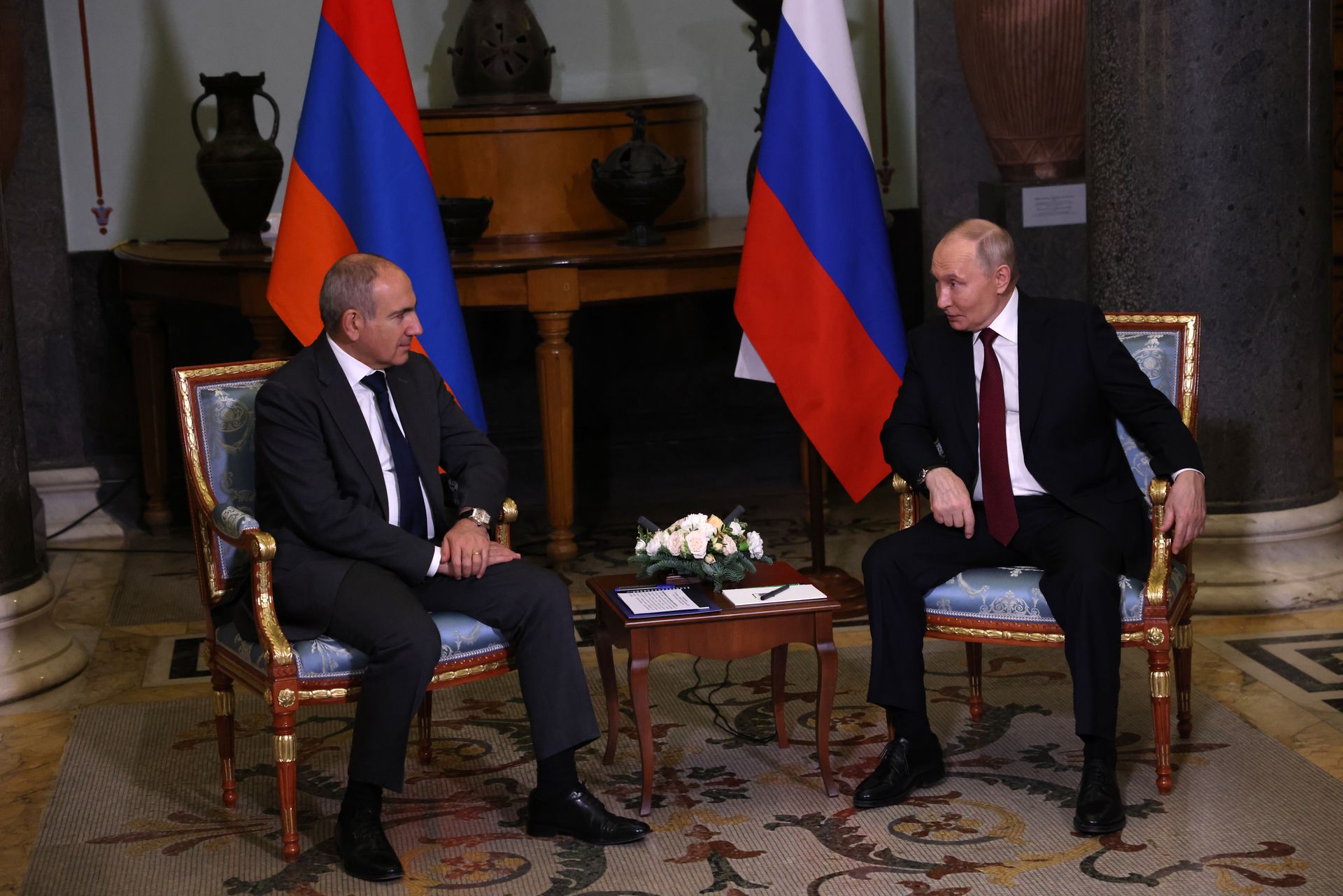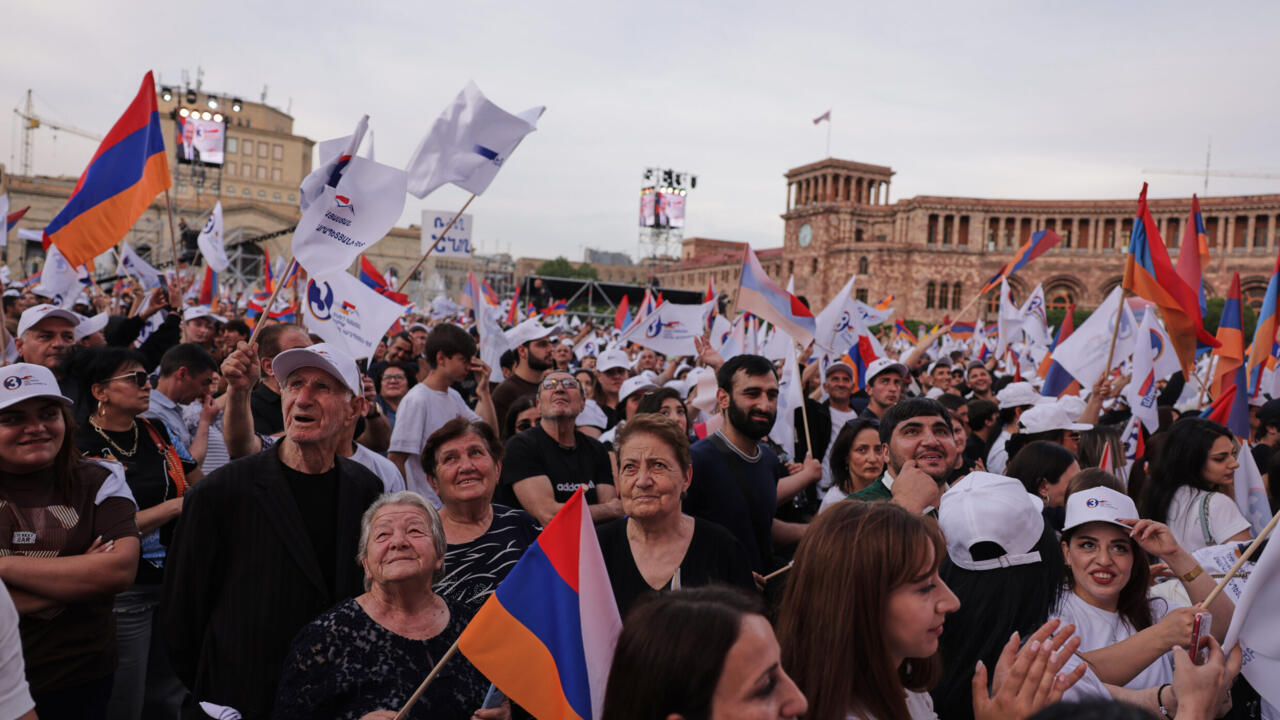
Years of slowly growing tensions between Yerevan and Moscow have crescendoed in recent weeks as Armenia prepares for national elections on June 7. The competition is expected to be riddled with attempts by Moscow to exert its influence.
In April, Armenia hosted the European Political Community (EPC) summit. For comparatively small Armenia, historically aligned with Russia, it is difficult to overstate the importance of a diplomatic event that brought dozens of European leaders to Yerevan. The event was especially memorable as Volodymyr Zelensky became the first Ukrainian president in 24 years to visit Armenia.
A few days later, Pashinyan skipped his usual trip to Moscow for Russia’s all-important May 9 Victory Day commemoration. Even as Armenia had begun to drift away from Russian influence in recent years, Pashinyan had continued to attend the symbolically important parade.
The next day, statements from Russian officials about Armenia became increasingly hostile. In reference to the EPC, Kremlin spokesman Dmitry Peskov said that the meeting platformed “anti-Russian statements” with no balance provided by Armenia’s leadership. He went on to say the event was “inconsistent with the spirit of relations” between Armenia and Russia.