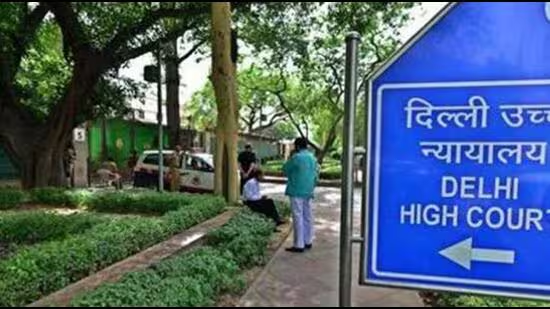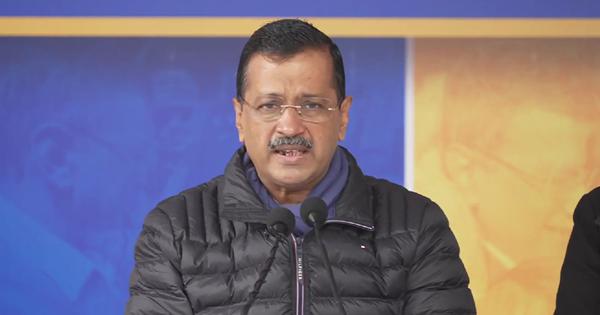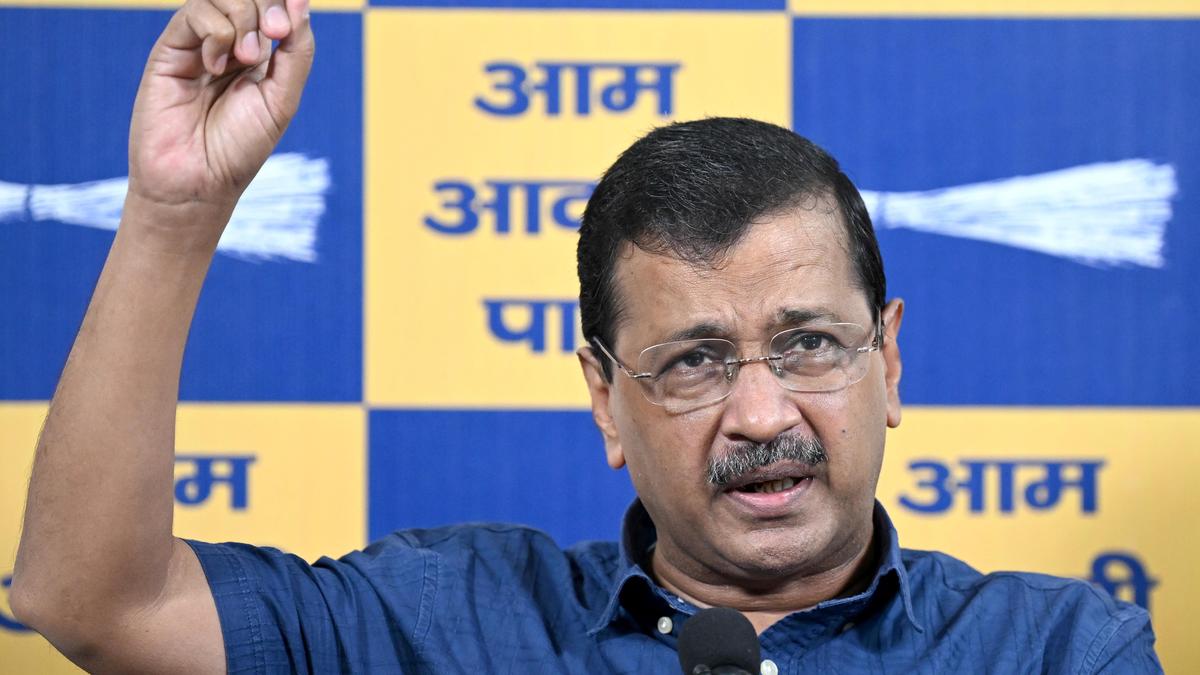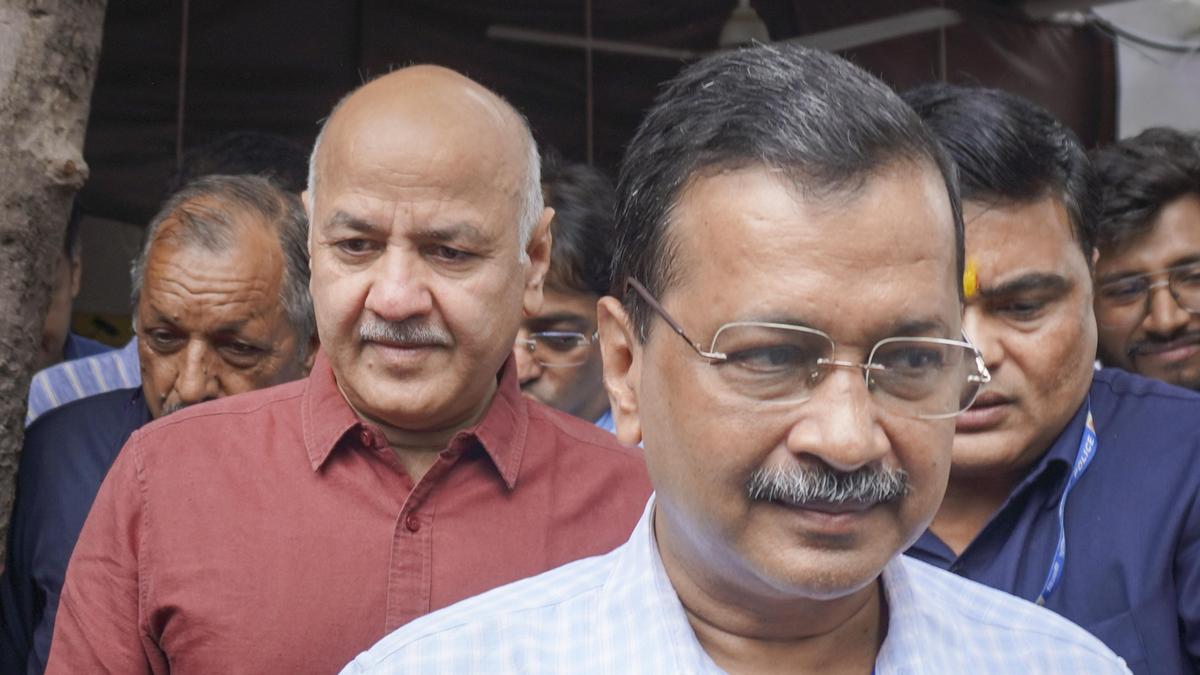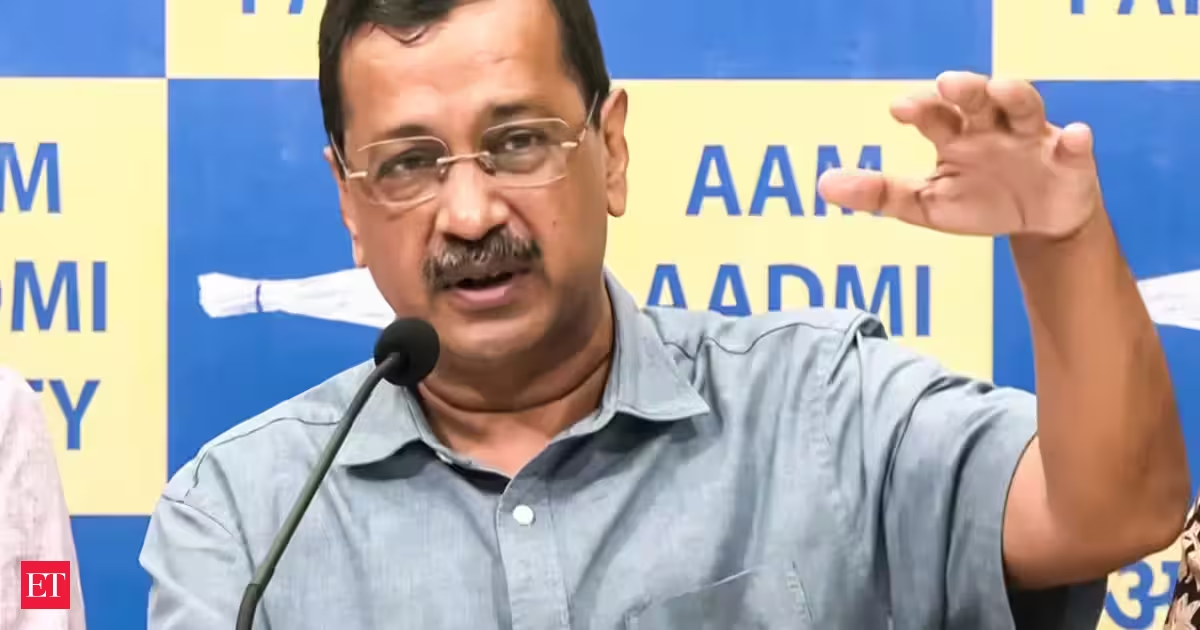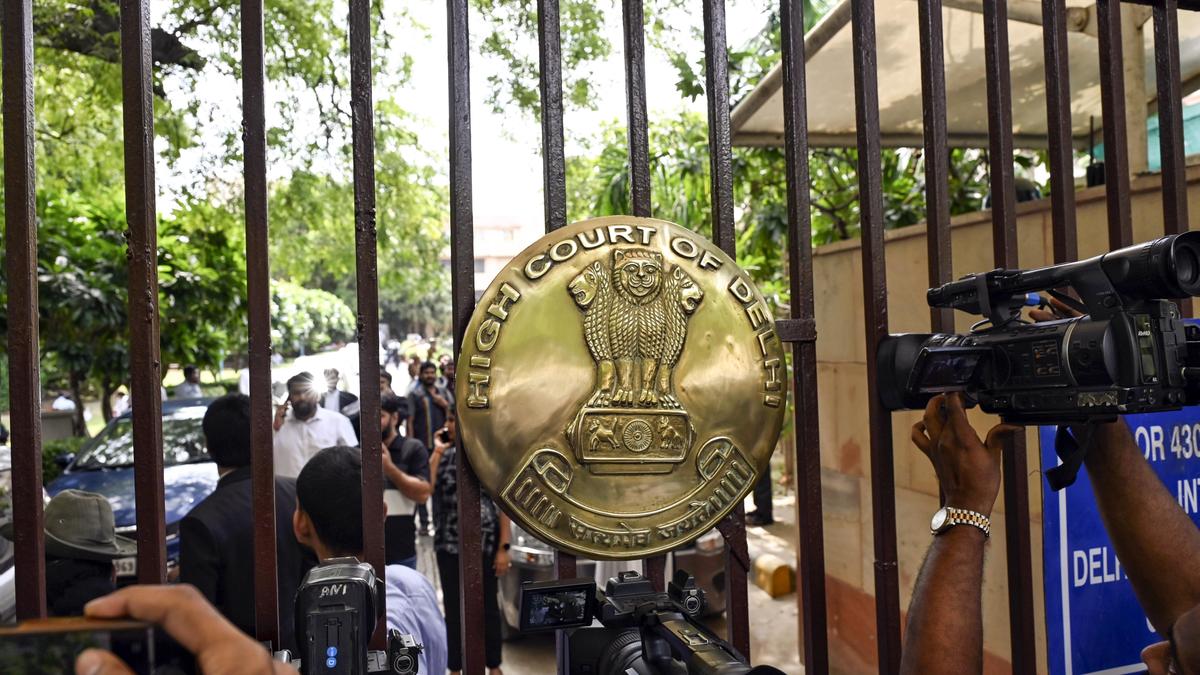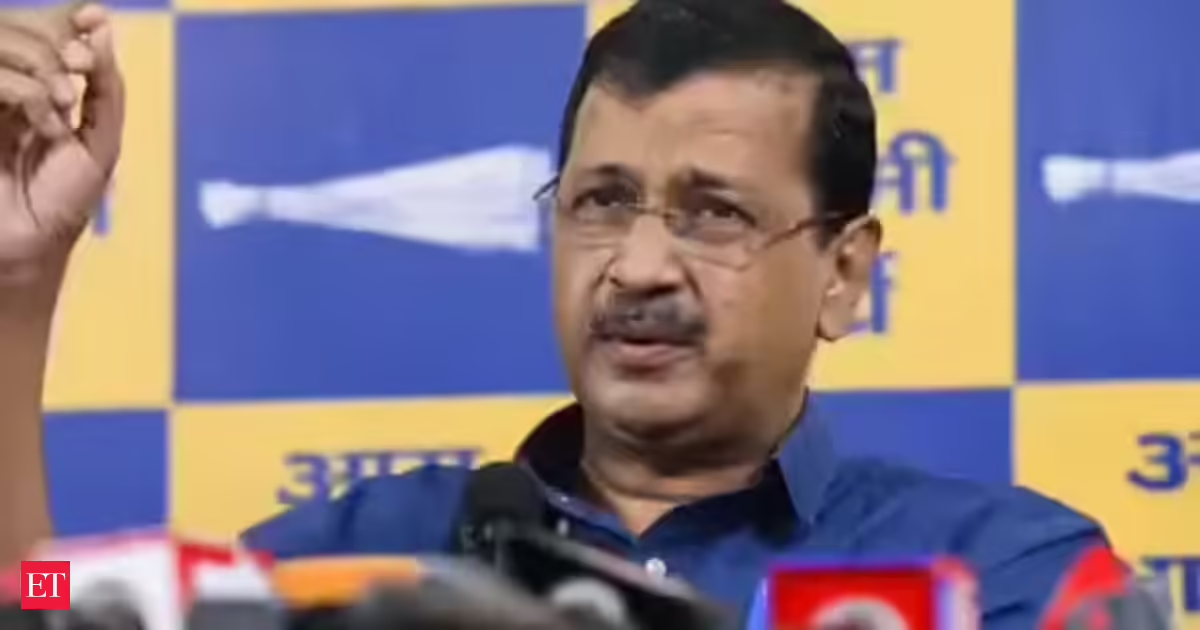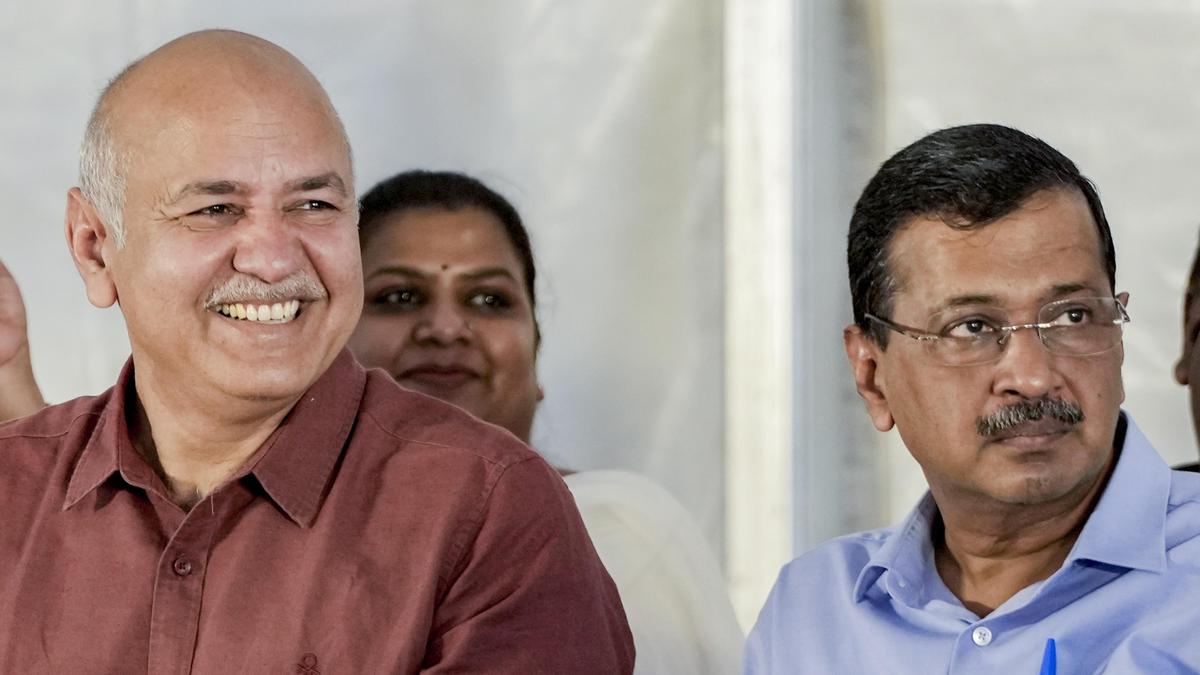
The Delhi high court on Wednesday dismissed a petition seeking deregistration of the Aam Aadmi Party (AAP) over allegations that its leaders, including party convenor Arvind Kejriwal and Manish Sisodia, acted contrary to constitutional principles through their conduct during proceedings before Justice Swarana Kanta Sharma in the Central Bureau of Investigation’s (CBI) plea challenging the trial court’s discharge order in the excise policy case.The bench clarified that a political party cannot be deregistered merely on allegations. (Representative Image/iStock)A bench comprising Chief Justice DK Upadhyaya and Justice Tejas Karia observed that the grounds cited by petitioner Satish Aggarwal for seeking deregistration-- alleging that its members, through their conduct failed to bear true faith and allegiance to the Constitution of India-- were “not only misplaced, but also far-fetched and highly misconceived.”“The counsel for the petitioner has strenuously urged the court that the manner in which respondents number 4 (Arvind Kejriwal), 5 (Manish Sisodia) and 6 (Durgesh Pathak) have conducted in the proceedings of the criminal revision petition will amount to undermining the authority, majesty and dignity of this court and such ground is enough for the ECI [Election Commission of India] to consider de-recognition of the political party to which these individuals belong. In a situation where any such conduct or act is found and established, where any individual is found to have undermined the court’s dignity, the appropriate remedy is available under the Contempt of Court Act. The petition is not only too far-fetched, but misconceived and highly misplaced,” the court said.The court observed that, in terms of the Supreme Court’s ruling in Indian National Congress v. Institute of Social Welfare, the ECI can deregister a political party only in limited circumstances: when registration was obtained through fraud or forgery, when the party amends its nomenclature, rules or regulations in violation of section 29A(5) of the Representation of the People Act (RPA), 1951, or when the party informs ECI that it no longer bears faith and allegiance to the Constitution or the principles of socialism, secularism, and the sovereignty and integrity of India.Also Read:Delhi HC issues notice to Kejriwal, others in contempt caseThe bench clarified that a political party cannot be deregistered merely on allegations that it failed to uphold constitutional values, as there is no specific provision under the Act permitting such deregistration.Once a political party is registered, ECI has no power of review, since the law has conferred no such authority upon it to revisit or cancel registration on the ground of alleged constitutional violations or breach of undertaking made at the time of registration, it added.“The law as settled by the Supreme Court in the Indian National Congress’s case is that no proceeding for de-registration can be taken by the ECI against a political party for having violated section 29A(5) of the RPA on the complaint, since there does not exist any specific provision in the Act for the said purpose. The commission while exercising its power to register a political party under article 29A of the RPA, acts as a quasi-judicial authority, the decision rendered in a quasi judicial order and once a political is registered, no power of review having been conferred on the ECI, the commission does not enjoy any power to review the order registering the political party for having violated the provisions of the Constitution or breach of the undertaking given at the time of registration,” the court said.Regarding Aggarwal’s plea seeking to bar Kejriwal, Sisodia and Pathak from contesting elections on the ground that they allegedly lacked allegiance to the Constitution and therefore did not fulfil the qualifications prescribed by Parliament, the court said the contention was “absolutely baseless and bereft of any consideration.”An unprecedented face-off between Justice Sharma and Kejriwal began after the trial court discharged him and other AAP leaders in the excise policy case, prompting the CBI to approach the high court.On March 9, Justice Sharma stayed the trial court’s direction for departmental action against a CBI officer and deferred Enforcement Directorate (ED) proceedings. Kejriwal sought to transfer the matter from her bench. Chief Justice DK Upadhyaya rejected this on March 13.On April 5, Kejriwal, Sisodia, and others sought Justice Sharma’s recusal, which she dismissed on April 20. On April 27, Kejriwal informed Justice Sharma that he would boycott the proceedings. Sisodia and Pathak followed suit.On May 5, the court said it would appoint senior advocates as amicus curiae to represent the three leaders, but the matter was deferred on three occasions.On May 14, Justice Sharma initiated contempt proceedings and withdrew herself from hearing CBI’s appeal and contempt petition, saying that the law did not permit a judge who had initiated contempt proceedings in relation to a matter to continue hearing it.On Tuesday, two benches of the high court heard the contempt case and CBI’s appeal after Justice Sharma’s withdrawal.While a bench of Justices Navin Chawla and Ravinder Dudeja issued notice in the contempt petition, Justice Manoj Jain asked CBI to inform Kejriwal, Sisodia and Pathak about the appeal being allocated to his bench.
‘Far-fetched, highly misconceived’: Delhi HC rejects petition to deregister AAP
Once a political party is registered, ECI has no power of review, since the law has conferred no such authority upon it to revisit or cancel registration | India News
835 words~4 min read