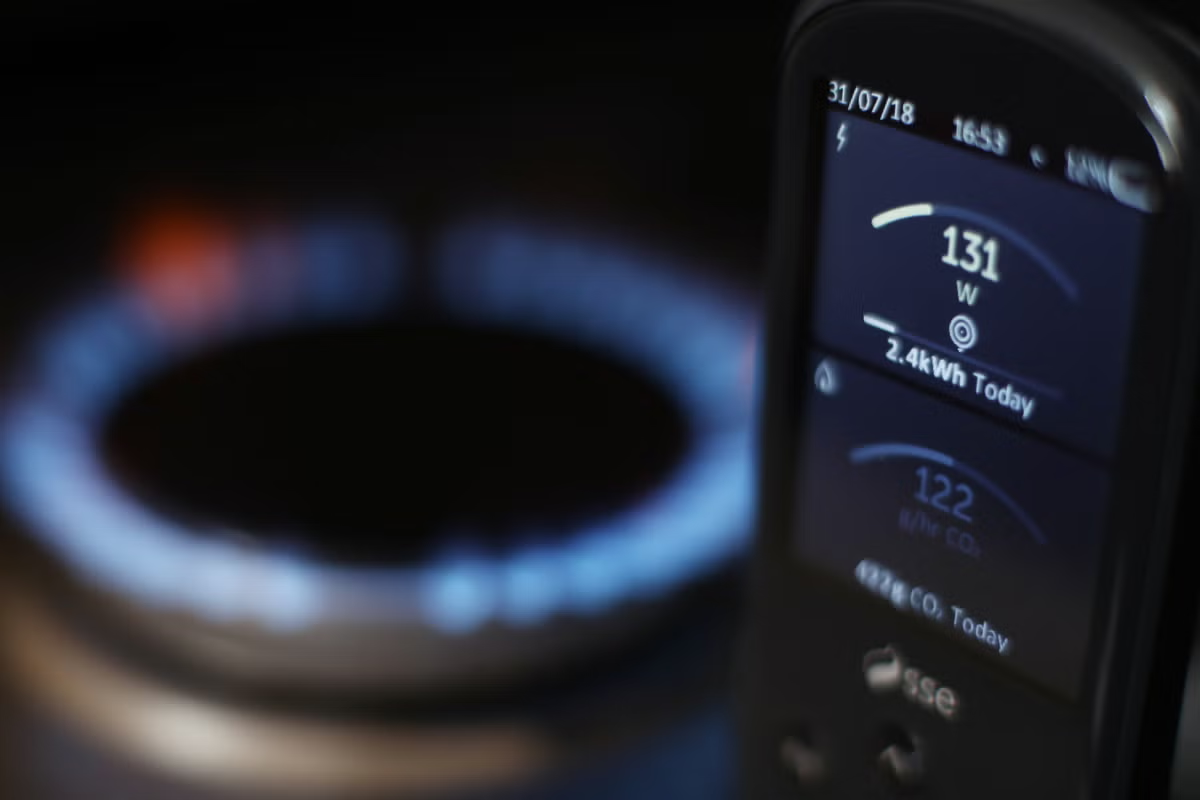
Analysts said they expected the rate to shoot back up in the coming months after the US-Iran conflict sent oil and gas prices soaring.The Consumer Prices Index (CPI) rose by 2.8 percent in the 12 months to April, down from 3.3 percent in March, the Office for National Statistics (ONS) said in a statement.Analysts' consensus forecast had been for a slowdown to 3.0 percent in April."There was a notable fall in annual inflation led by lower electricity and gas prices," ONS chief economist Grant Fitzner said."This was due to the government's energy bill support package... along with lower global wholesale energy prices before the conflict in the Middle East," he added.'Lull before storm'Prime Minister Keir Starmer welcomed the inflation drop as his Labour government said it was cancelling a pre-war plan to hike motorists' fuel duty.The Treasury added that it would scrap hauliers' UK road tax for one year and cut the fuel duty on diesel used by farmers, rail freight operators and other off-road users."Families across the United Kingdom are facing impacts of a war that we did not choose," Starmer, who is battling to remain as prime minister after election losses for his Labour party, told parliament."This government is stepping in to keep fuel costs down for millions of drivers and putting money back in the pockets of working people," he added in a separate statement. The government's help with the cost of living comes after Labour suffered heavy losses to the hard-right Reform UK and the left-wing Greens in local and regional elections this month. That triggered a Labour leadership challenge, with Wes Streeting resigning as health minister as he bids to oust Starmer.Ruth Gregory, deputy chief economist at Capital Economics, said the drop in British CPI inflation "feels like the lull before the storm"."We expect inflation to hover around three percent until July," she said.Susannah Streeter, chief investment strategist at Wealth Club, said that while "the softer-than-expected inflation reading will come as welcome relief to policymakers and households... concerns remain that higher energy costs and geopolitical tensions could yet feed through".Worries over a renewed inflation spike, after prices surged following the Covid pandemic and Russia's invasion of Ukraine, are pushing up government bond yields around the world.The return on the 30-year US Treasury bond reached the highest level since 2007 on Tuesday, while UK rates have hit peaks not seen for decades.Consumer inflation jumped in both the United States and eurozone in April, to 3.8 percent and 3.0 percent year-on-year respectively.
UK inflation drops ahead of expected war-fuelled jump
Britain's annual inflation rate fell more than expected in April, largely due to a drop in energy prices in the months before the Middle East war, official data showed Wednesday.
415 words~2 min read